
Effectiveness of Zykadia Monotherapy for Lung Cancer?
Medical Supporter — Information Notice
This article is a summary of international medical information and is not medical advice; it cannot replace the diagnosis or treatment plan of your attending physician. The medical technologies, drug information and clinical data presented here are compiled from public literature and official statements of major Japanese medical institutions; the applicability and outcome of any therapy vary with each patient and must be assessed individually by a qualified physician.
At the European Society for Medical Oncology (ESMO) held in Barcelona, Spain from September 27 to October 1, 2019, Laura Q. Chow presented the comparative verification results of the effectiveness and safety of the ALK inhibitor Zykadia monotherapy in the ASCEND-7 Phase 2 clinical trial for ALK-positive non-small cell lung cancer patients with brain metastases.
The ASCEND-7 trial targeted ALK-positive non-small cell lung cancer patients with at least one detectable extracranial lesion, using Zykadia at 750mg once daily. The primary endpoint was the overall response rate (ORR), and the secondary endpoints included disease control rate (DCR), intracranial response rate, and extracranial response rate in this Phase 2 clinical trial.
Prior to this trial, the treatment history of patients was as follows: Arm 1: Brain radiation therapy + ALK inhibitor therapy (N=42); Arm 2: ALK inhibitor therapy (N=40); Arm 3: Brain radiation therapy (N=12); and Arm 4: No prior brain radiation therapy + ALK inhibitor therapy (N=44).
The results of this trial are as follows, with the primary endpoint (ORR) being: Arm 1: 35.7% / Arm 2: 30.0% / Arm 3: 50.0% / Arm 4: 59.1%.
The most important secondary endpoint, the disease control rate (DCR), was: Arm 1: 66.7% / Arm 2: 82.5% / Arm 3: 66.7% / Arm 4: 70.5%.
Median duration of response (DOR): Arm 1: 10.8 months / Arm 2: 12.8 months / Arm 3: Not reached / Arm 4: 9.2 months.
Median progression-free survival (PFS): Arm 1: 7.2 months / Arm 2: 5.6 months / Arm 3: Not reached / Arm 4: 7.9 months.
Median overall survival (OS): Arm 1: 24.0 months / Arm 2: Not reached / Arm 3: Not reached / Arm 4: Not reached.
Intracranial ORR: Arm 1: 39.3% / Arm 2: 27.6% / Arm 3: 28.6% / Arm 4: 51.5%.
Intracranial DCR: Arm 1: 75.0% / Arm 2: 82.8% / Arm 3: 85.7% / Arm 4: 75.8%.
Extracranial ORR: Arm 1: 31.0% / Arm 2: 42.5% / Arm 3: 41.7% / Arm 4: 61.4%.
Extracranial DCR: Arm 1: 69.0% / Arm 2: 92.5% / Arm 3: 66.7% / Arm 4: 72.7%.
Regarding safety, over 50% of patients in each group experienced side effects such as diarrhea, nausea, increased ALT, vomiting, increased AST, and decreased appetite.
Based on the results of the ASCEND-7 clinical trial, Laura Q. Chow concluded that the ALK inhibitor Zykadia showed high overall response rates in ALK-positive non-small cell lung cancer patients with brain metastases, regardless of whether they had previously used ALK inhibitors.
Data Source: Ceritinib Targets Brain Metastases in Patients with ALK-positive NSCLC [ESMO 2019 Oncology news]
Medical Supporter was formerly certified as an international medical visa guarantor by Japan's Ministry of Foreign Affairs and the Ministry of Economy, Trade and Industry (B-066).
Considering medical care in Japan? Need information and support?
We help you organize the information needed for medical travel to Japan, liaise with Japanese medical institutions, and arrange a second-opinion consultation.The first consultation is free; an advisor will help you clarify the next steps.
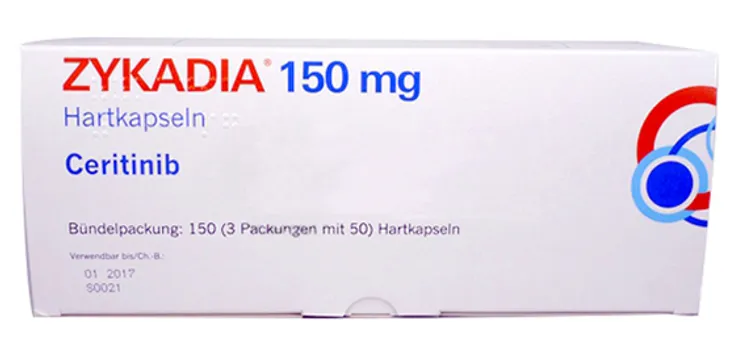 Figure 1
 Figure 2
 Figure 3
 Figure 4