![[Small Cell Lung Cancer Advanced Treatment] Second-Line Breakthrough: Lurbinectedin Demonstrates Significant Response...](/images/blog/lunguselurbinectedin-0.webp)
[Small Cell Lung Cancer Advanced Treatment] Second-Line Breakthrough: Lurbinectedin Demonstrates Significant Response Rate in Refractory Small Cell Lung Cancer
Medical Supporter — Information Notice
This article is a summary of international medical information and is not medical advice; it cannot replace the diagnosis or treatment plan of your attending physician. The medical technologies, drug information and clinical data presented here are compiled from public literature and official statements of major Japanese medical institutions; the applicability and outcome of any therapy vary with each patient and must be assessed individually by a qualified physician.
Lurbinectedin: A New Option for Relapsed Small Cell Lung Cancer
Small cell lung cancer (SCLC) is characterized by good initial treatment responses, but it is highly prone to drug resistance and relapse. For a long time, second-line treatment options have been extremely limited. A single-arm Phase 2 basket trial published in The Lancet Oncology brings new hope for relapsed patients: the novel agent Lurbinectedin demonstrated significant second-line treatment potential.
1. Clinical Trial: Data in Previously Treated Patients
This trial enrolled 105 patients with SCLC who had progressed after platinum-based chemotherapy, treating them with Lurbinectedin (3.2 mg/m²) every three weeks.
Key Clinical Data:
- Objective Response Rate (ORR): 35.2% — a highly positive result for second-line SCLC patients
- Duration of Response (DoR): Median 5.3 months
- Disease Control Rate (DCR): 68.6% — indicating the majority of patients derived clinical benefit
2. Safety Profile and Side Effect Characteristics
The primary adverse effects of Lurbinectedin relate to its bone marrow suppression:
- Common reactions: Mainly neutropenia (46%) and leukopenia
- Management strategy: Although Grade 3–4 hematological toxicity rates were higher, severe febrile neutropenia occurred in only 5% of patients. No patients died due to adverse events, demonstrating an acceptable safety profile under careful supportive care
3. Why Is Lurbinectedin Gaining Attention?
Lurbinectedin is a novel transcription inhibitor that effectively suppresses the activity of tumor-associated macrophages and induces cancer cell apoptosis. The drug has now received approval in multiple countries and has become an important consideration for Japanese physicians managing relapsed SCLC.
Medical Supporter — Your Expert in Advanced Lung Cancer Treatment Access
The window for second-line treatment is narrow. If you or a family member is facing relapsed SCLC, the Medical Supporter team can help you obtain the latest second-line treatment recommendations from Japan, connecting you with leading lung cancer specialists with extensive Lurbinectedin clinical experience, to maximize your treatment opportunities.
Medical Supporter was formerly certified as an international medical visa guarantor by Japan's Ministry of Foreign Affairs and the Ministry of Economy, Trade and Industry (B-066).
Considering medical care in Japan? Need information and support?
We help you organize the information needed for medical travel to Japan, liaise with Japanese medical institutions, and arrange a second-opinion consultation.The first consultation is free; an advisor will help you clarify the next steps.
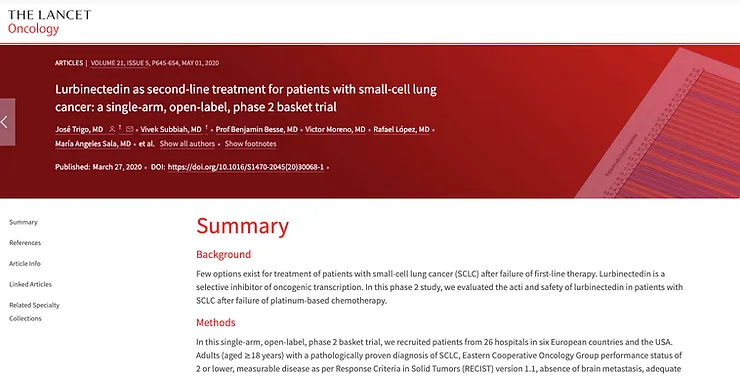 Figure 1
 Figure 2
 Figure 3
 Figure 4