![[Lung Cancer Immunotherapy] Toripalimab Combined with Chemotherapy Shows Significant Survival Benefit in CHOICE-01 Trial](/images/blog/lungcancerusetoripalimab-0.webp)
[Lung Cancer Immunotherapy] Toripalimab Combined with Chemotherapy: First-Line Survival Breakthrough in CHOICE-01 Trial
Medical Supporter — Information Notice
This article is a summary of international medical information and is not medical advice; it cannot replace the diagnosis or treatment plan of your attending physician. The medical technologies, drug information and clinical data presented here are compiled from public literature and official statements of major Japanese medical institutions; the applicability and outcome of any therapy vary with each patient and must be assessed individually by a qualified physician.
In the treatment of metastatic non-small cell lung cancer (NSCLC), immune-chemotherapy combination has become the gold standard for first-line treatment. Published in the Journal of Clinical Oncology (JCO), the CHOICE-01 Phase III trial data adds high-quality clinical evidence to this field. The results demonstrate that the novel anti-PD-1 antibody Toripalimab combined with chemotherapy provides long-term survival benefits for a broad population of advanced patients.
1. CHOICE-01 Trial: Comprehensive Improvement in Survival Endpoints
This randomized, double-blind trial enrolled 465 previously untreated advanced patients and compared Toripalimab + chemotherapy versus placebo + chemotherapy.
Key Clinical Data:
- Progression-Free Survival (PFS): The combination arm achieved a median PFS of 8.4 months, compared to 5.6 months in the chemotherapy-alone arm, significantly delaying disease progression.
- Overall Survival (OS): Results showed a significant benefit trend. In the interim analysis, the median OS in the combination arm had not yet been reached (indicating the majority of patients remained alive), while the control arm was 17.1 months.
- Biomarker Findings: The study further found that patients with higher tumor mutational burden (TMB) benefited more significantly from this combination regimen.
2. Safety and Adverse Event Management
The safety profile of Toripalimab combination therapy is comparable to currently known immune-combination regimens:
- Common reactions: Primarily chemotherapy-related myelosuppression, as well as immune-related rash or endocrine changes.
- Management advantages: Most adverse events were within manageable ranges, and the rate of serious adverse events in the combination arm was essentially equivalent to the chemotherapy arm, indicating that adding the immunotherapy agent did not significantly increase the physical burden on patients.
3. Why Consider the Latest Immune Combinations for First-Line Treatment?
First-line treatment for lung cancer is the most critical opportunity to "lay a strong foundation." Leading Japanese cancer centers apply such regimens in conjunction with NGS genetic testing to assess TMB status, precisely matching patients to the most appropriate immune combination regimen. The success of Toripalimab provides patients with a more diverse, cost-effective, and highly efficacious treatment option.
Medical Supporter — Your Precision Navigator to Japan's Leading Specialists
Facing diverse immunotherapy options, you need precise guidance. The Medical Supporter team can assist you in translating detailed diagnostic reports and communicating with authoritative Japanese physicians to evaluate the optimal positioning of Toripalimab or other cutting-edge immune regimens in your first-line treatment.
Medical Supporter was formerly certified as an international medical visa guarantor by Japan's Ministry of Foreign Affairs and the Ministry of Economy, Trade and Industry (B-066).
Considering medical care in Japan? Need information and support?
We help you organize the information needed for medical travel to Japan, liaise with Japanese medical institutions, and arrange a second-opinion consultation.The first consultation is free; an advisor will help you clarify the next steps.
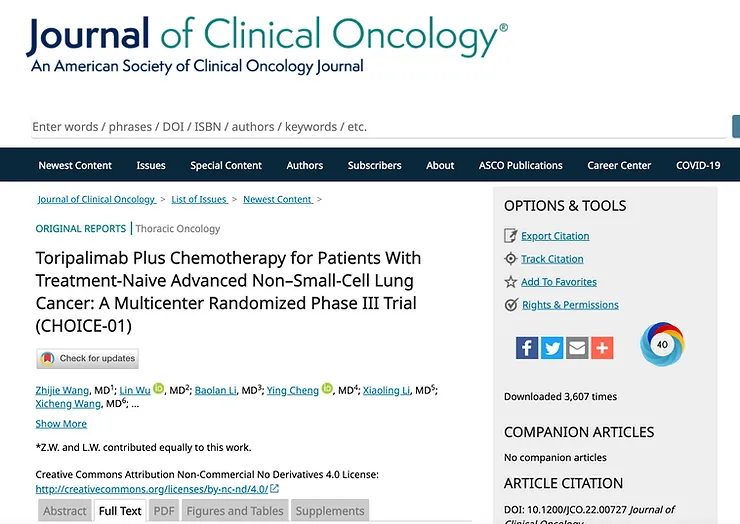 Figure 1
 Figure 2
 Figure 3
 Figure 4