
(Melanoma) What Are the Comparison Results of Keytruda vs. Yervoy?
Medical Supporter — Information Notice
This article is a summary of international medical information and is not medical advice; it cannot replace the diagnosis or treatment plan of your attending physician. The medical technologies, drug information and clinical data presented here are compiled from public literature and official statements of major Japanese medical institutions; the applicability and outcome of any therapy vary with each patient and must be assessed individually by a qualified physician.
- September 25, 2019
- Read time: 2 minutes
On July 22, 2019, Caroline Robert published in The Lancet "Comparative efficacy and safety of anti-PD-1 antibody Keytruda versus anti-CTLA-4 antibody Yervoy in melanoma patients in the KEYNOTE-006 Phase 3 clinical trial (5-year long-term follow-up analysis)."
The KEYNOTE-006 trial was a multinational, multicenter Phase 3 clinical trial using 1:1:1 randomization. Primary endpoints were progression-free survival and overall survival; secondary endpoint was objective response rate.
- Keytruda group (2-week cycle, Keytruda 10 mg/kg, N=279)
- Keytruda group (3-week cycle, Keytruda 10 mg/kg, N=277)
- Yervoy group (3-week cycle, Yervoy 3 mg/kg, N=278)
Results at a median follow-up of 57.7 months showed that the primary endpoint median progression-free survival was: Keytruda group 8.4 months / Yervoy group 3.4 months. The Keytruda group showed a 43% reduction in progression risk, with significant improvement and a hazard ratio of 0.57.
The other primary endpoint, median overall survival, was: Keytruda group 32.7 months / Yervoy group 15.9 months. The Keytruda group showed a 27% reduction in progression risk, with significant improvement and a hazard ratio of 0.73.
Regarding safety, the incidence of Grade 3–4 adverse events was: Keytruda group 17% (N=96) / Yervoy group 20% (N=50). Serious adverse event incidence was: Keytruda group 14% (N=75) / Yervoy group 18% (N=45). The most common Grade 3–4 adverse events included colitis (Keytruda 2% / Yervoy 6%), diarrhea (Keytruda 2% / Yervoy 3%), and fatigue (Keytruda <1% / Yervoy 1%).
Based on the KEYNOTE-006 trial's 5-year follow-up results, Caroline Robert concluded: In melanoma patients, anti-PD-1 antibody Keytruda monotherapy demonstrated significant improvement in 5-year progression-free survival and 5-year overall survival compared to Yervoy monotherapy.
[Important Note] Medical Supporter's translations of overseas clinical trial data and pharmaceutical information are not intended to encourage participation in clinical trials or use of new drugs. The translated information is for reference only and not intended as medication guidelines. Please discuss with healthcare professionals and refer to the original text below the article for accurate information.
Source: Pembrolizumab versus ipilimumab in advanced melanoma (KEYNOTE-006): post-hoc 5-year results from an open-label, multicentre, randomised, controlled, phase 3 study. (Lancet Oncol. 2019 Jul 22. pii: S1470-2045(19)30388-2. doi: 10.1016/S1470-2045(19)30388-2.)
Medical Supporter was formerly certified as an international medical visa guarantor by Japan's Ministry of Foreign Affairs and the Ministry of Economy, Trade and Industry (B-066).
Considering medical care in Japan? Need information and support?
We help you organize the information needed for medical travel to Japan, liaise with Japanese medical institutions, and arrange a second-opinion consultation.The first consultation is free; an advisor will help you clarify the next steps.
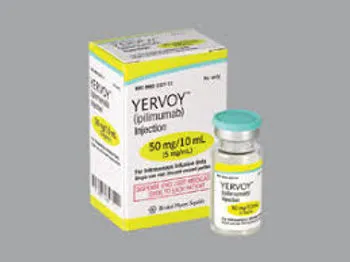 Figure 1
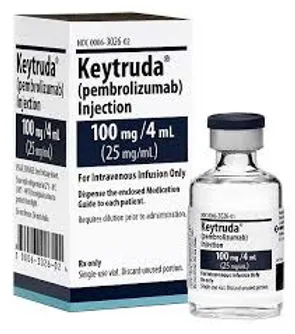 Figure 2
 Figure 3
 Figure 4
 Figure 5