
(Lung Cancer) Ensartinib (Not Yet Approved in Japan) for ALK-Positive NSCLC with Brain Metastases: What the Study Reported
Medical Supporter — Information Notice
This article is a summary of international medical information and is not medical advice; it cannot replace the diagnosis or treatment plan of your attending physician. The medical technologies, drug information and clinical data presented here are compiled from public literature and official statements of Japanese medical institutions; the applicability and outcome of any therapy vary with each patient and must be assessed individually by a qualified physician.
- April 10, 2017
- 1 min read
Ensartinib (X-396), a small-molecule compound with ALK inhibitory activity as well as activity against MET, ABL, Axl, EPHA2, LTK, ROS1, and SLK, has shown efficacy in ALK-positive advanced non-small cell lung cancer (NSCLC) with brain metastases.
Phase 1/2 study results were presented at the European Lung Cancer Conference (ELCC) 2017 in Geneva, Switzerland. The trial enrolled 30 patients with ALK-positive NSCLC with brain metastases who had progressed on prior ALK inhibitor therapy.
Results in brain metastases patients (N=30):
- Objective response rate (ORR): 40%
- Disease control rate (DCR): 87%
These results suggest that ensartinib may have meaningful intracranial activity in ALK-positive NSCLC patients with brain metastases who have progressed on prior ALK inhibitor therapy.
Disclaimer: Medical Supporter translates overseas clinical trial data and pharmaceutical information for informational purposes only. Please consult your healthcare provider for medical decisions.
Source: ELCC 2017, Geneva
Lung Cancer | ALK-Positive | Brain Metastases
-
Clinical Trial Medications
- (Lung Cancer) Phase II results for Topotecan and Topotecan + Berzosertib combination.
- (Lung Cancer) Efficacy of Trastuzumab deruxtecan in HER2-mutant non-small cell lung cancer (NSCLC).
- (Lung Cancer) Clinical outcomes of anti-B7-H3 antibody-drug conjugate DS-7300.
※ The drug Ensartinib mentioned in this article is currently not approved in Japan. This content is only a summary of published research. To learn about the options that can be considered now, we suggest talking first with your attending physician.
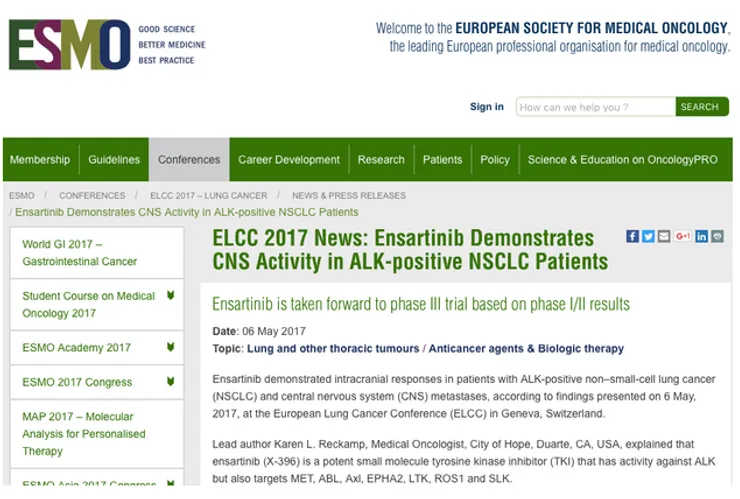 Figure 1
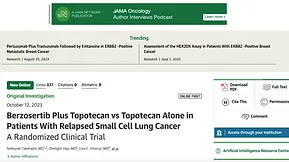 Figure 2
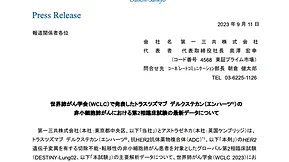 Figure 3
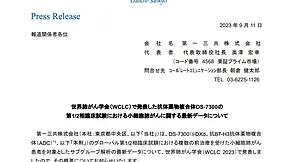 Figure 4