
Introduction to Dendritic Cells
Medical Supporter — Information Notice
This article is a summary of international medical information and is not medical advice; it cannot replace the diagnosis or treatment plan of your attending physician. The medical technologies, drug information and clinical data presented here are compiled from public literature and official statements of major Japanese medical institutions; the applicability and outcome of any therapy vary with each patient and must be assessed individually by a qualified physician.
Content revised 2026-08-19: adjusted the individual-case survival attribution and removed a leftover, unlinked drug-name fragment.
Dendritic cells (DCs), named after the first two letters of their English term, are a critical cornerstone of immunotherapy. Often described as the 'police' of the human immune system, these vital immune cells are strategically positioned in tissues that interface with the external environment, such as the underlying layers of the skin, the digestive tract, nasal mucous membranes, and the liver. DCs constitute approximately 0.2% of white blood cells, which themselves account for about 5% of the total blood volume. Isolating dendritic cells from a blood sample typically involves centrifuging to first separate white blood cells, followed by specialized procedures to identify and extract DCs. While medical examination centers in Taiwan capable of isolating white blood cells are less common, major medical centers are generally equipped with the necessary facilities to extract white blood cells from whole blood.
While dendritic cells were discovered as early as the 19th century, their unique and mysterious physiological functions were only elucidated in 1973 through the pioneering research of American scientist Dr. Ralph M. Steinman. It was he who named them based on their distinctive tree-like (dendritic) shape. Nearly forty years later, Dr. Steinman, for his discovery of dendritic cells as crucial initiators of the human immune system and for unraveling the link between innate and adaptive immunity, shared the 2011 Nobel Prize in Physiology or Medicine with two other scientists: Professor Bruce Beutler of Scripps Research Institute and Dr. Jules A. Hoffmann, a researcher at the French National Centre for Scientific Research. Tragically, Dr. Steinman passed away from cancer shortly before receiving the award, having undergone immune cell therapy himself. Media reports often highlight him as a scientist who personally underwent immunotherapy. It is important to clarify, however, that as a physician, Dr. Steinman was well aware that he was participating in an experimental clinical trial, and the efficacy of such treatments is unknown until rigorously tested. Despite being a pancreatic cancer patient, like Steve Jobs, albeit with slightly different affected areas, he significantly outlived the typical prognosis for his condition. However, a single case cannot establish treatment efficacy, and the causal relationship between his disease course and the therapy he received has not been confirmed by controlled trials.
Dendritic cells are specifically tasked with identifying and targeting invading 'enemies' within the body. They possess an inherent and unique ability to recognize foreign invaders that do not belong to the human body and effectively 'tag' them. When a dendritic cell detects a non-self cell that appears suspicious, it can undergo 'fusion' with it. Through specific 'binding' with different functional groups of the foreign entity, the dendritic cell then transmits this crucial information to T cells, the command center of the human immune system, essentially instructing the immune system on which enemies to attack. However, there are exceptions, such as dendritic cells' inability to effectively combat the HIV virus. Beyond merely apprehending foreign invaders, dendritic cells can directly engulf, encapsulate, and even destroy these threats. Simultaneously, they 'tear' the enemy into fragments recognizable by other immune cells and present these fragments on their surface, forming 'antigens.' In response to the dendritic cell's intelligence report, T cells become activated and launch an attack against these foreign intruders. Thus, dendritic cells perform comprehensive functions of detection, attack, and recognition, playing an indispensable and multifaceted role within the immune system.
This explanation aims to provide a deeper understanding of dendritic cells. For further information, please refer to the Wikipedia entry on dendritic cells: https://goo.gl/B44gVx
Medical Supporter was formerly certified as an international medical visa guarantor by Japan's Ministry of Foreign Affairs and the Ministry of Economy, Trade and Industry (B-066).
Considering medical care in Japan? Need information and support?
We help you organize the information needed for medical travel to Japan, liaise with Japanese medical institutions, and arrange a second-opinion consultation.The first consultation is free; an advisor will help you clarify the next steps.
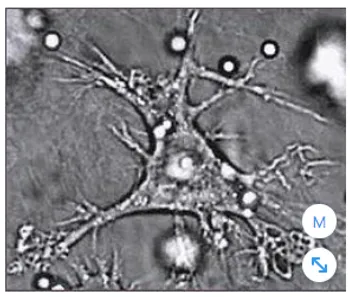 Figure 1
 Figure 2
 Figure 3
 Figure 4