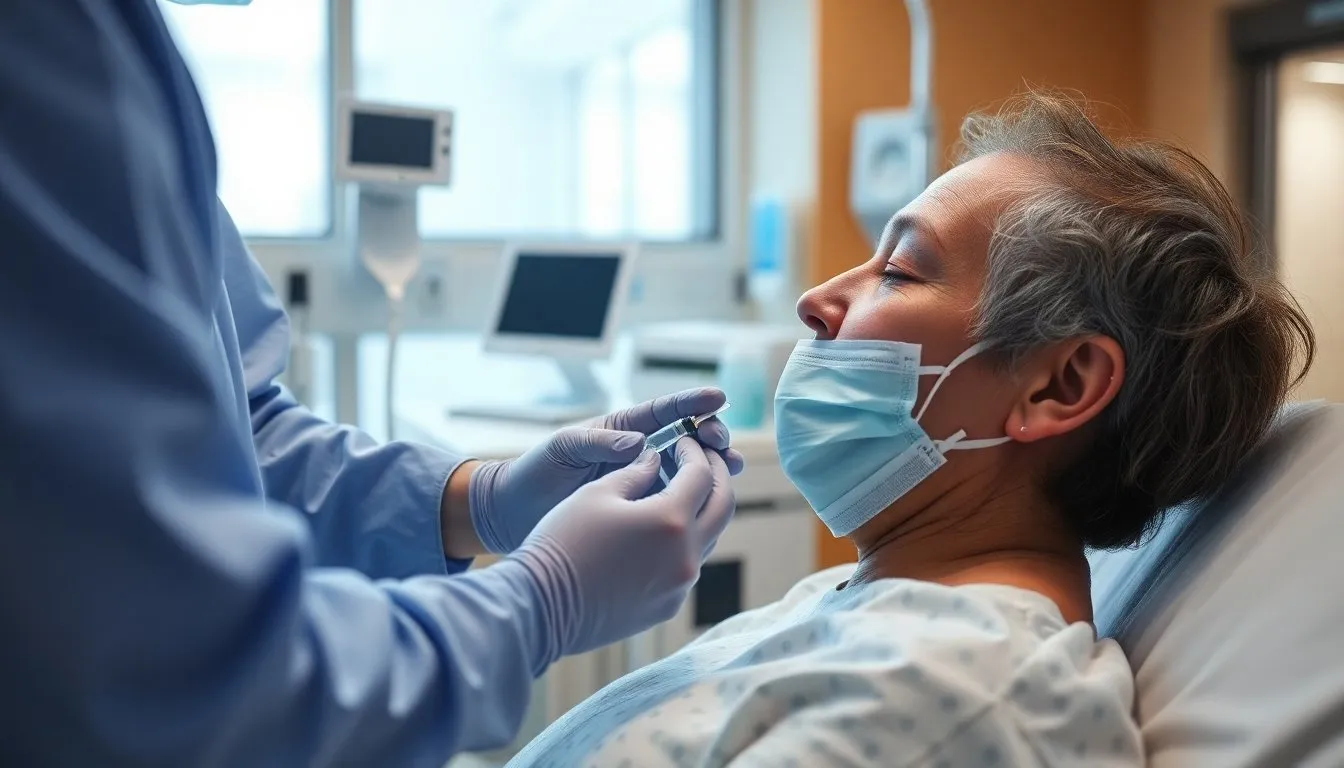
Application for Approval of Opdivo as Adjuvant Treatment for Urothelial Carcinoma
Medical Supporter — Information Notice
This article is a summary of international medical information and is not medical advice; it cannot replace the diagnosis or treatment plan of your attending physician. The medical technologies, drug information and clinical data presented here are compiled from public literature and official statements of major Japanese medical institutions; the applicability and outcome of any therapy vary with each patient and must be assessed individually by a qualified physician.
On March 31, 2021, Ono Pharmaceutical announced the submission of an application for supplemental approval of Opdivo (nivolumab) as an adjuvant treatment for patients with urothelial carcinoma.
This application is based on the results of the Phase 3 CheckMate-274 (ONO-4538-33) trial. This trial randomized patients with muscle-invasive urothelial carcinoma at high risk of recurrence after surgery 1:1 to receive either Opdivo monotherapy (240 mg every two weeks) as adjuvant therapy or a placebo. The primary endpoint of disease-free survival (DFS) showed significant improvement in both the overall population and patients with PD-L1 expression of 1% or higher in the Opdivo group.
Clinical trials for Opdivo are also underway for other indications, including esophageal cancer, gastric cancer, liver cancer, urothelial carcinoma, ovarian cancer, bladder cancer, prostate cancer, pancreatic cancer, and biliary tract cancer.
Source: https://www.ono.co.jp/news/20210331.html
Medical Supporter was formerly certified as an international medical visa guarantor by Japan's Ministry of Foreign Affairs and the Ministry of Economy, Trade and Industry (B-066).
Considering medical care in Japan? Need information and support?
We help you organize the information needed for medical travel to Japan, liaise with Japanese medical institutions, and arrange a second-opinion consultation.The first consultation is free; an advisor will help you clarify the next steps.
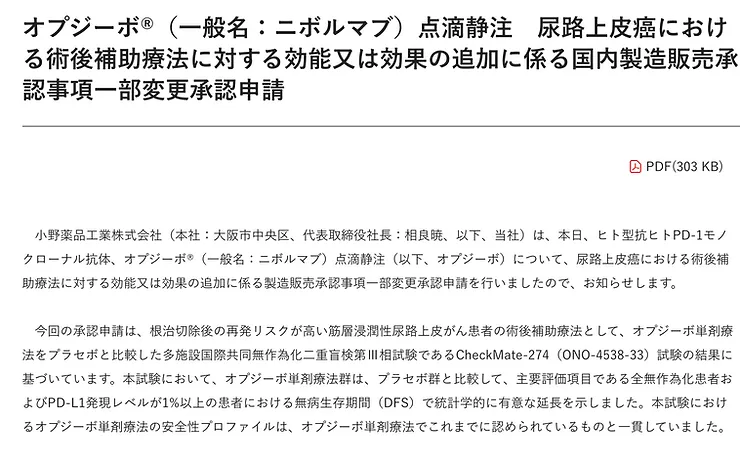 Figure 1
 Figure 2
 Figure 3
 Figure 4