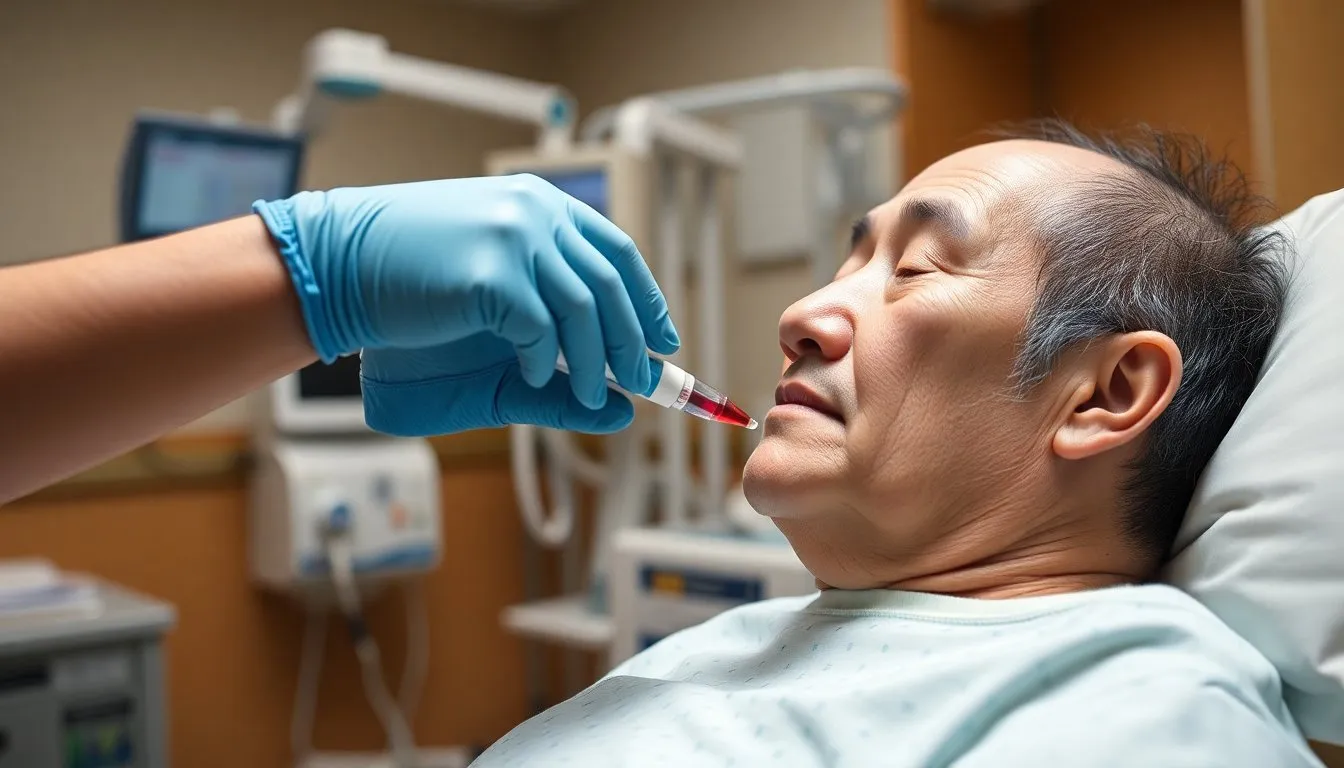
(Mycosis Fungoides) Efficacy of Keytruda?
Medical Supporter — Information Notice
This article is a summary of international medical information and is not medical advice; it cannot replace the diagnosis or treatment plan of your attending physician. The medical technologies, drug information and clinical data presented here are compiled from public literature and official statements of major Japanese medical institutions; the applicability and outcome of any therapy vary with each patient and must be assessed individually by a qualified physician.
On September 18, 2019, Michael S. Khodadoust published in the medical journal Journal of Clinical Oncology the efficacy and safety results of pembrolizumab (Keytruda) monotherapy in patients with relapsed or refractory mycosis fungoides (MF)/Sézary syndrome (SS) with multiple prior therapies, from the CITN-10 Phase II clinical trial.
The CITN-10 trial was a multicenter, single-arm Phase II trial. Patients with relapsed or refractory mycosis fungoides/Sézary syndrome with multiple prior therapies (N=24) received Keytruda 2 mg/kg monotherapy on a 3-week cycle, with a maximum treatment duration of 24 months. The primary endpoint was objective response rate (ORR).
The rationale for this trial was that Sézary syndrome — the most common form of cutaneous T-cell lymphoma — is predominantly mycosis fungoides, and most patients have a poor prognosis. The ORR for systemic therapies has generally been below 50%, highlighting a need for new treatment approaches. Given demonstrated activity of Keytruda in other tumor types, and confirmed PD-L1 expression in cutaneous T-cell lymphoma (CTCL), this trial was initiated to assess its utility.
Patient Characteristics:
| Parameter | Value |
|---|---|
| Median age | 66.9 years (44–85) |
| Male | 75% |
| Female | 25% |
| Mycosis fungoides | 38% |
| Sézary syndrome | 62% |
Disease Stage:
- Stage Ib: 4%; IIb: 8%; IIIa: 8%; IIIb: 12%; IVa: 67%
PD-L1 Expression:
- ≤30%: 54%; 31–60%: 29%; ≥61%: 17%
Results:
The primary endpoint ORR was 38%, comprising 2 complete responses (CR) and 7 partial responses (PR). Among the 9 responders, 6 had approximately 90% improvement in skin lesions. Median duration of response was not reached.
In terms of safety, no Grade 4 or 5 immune-related adverse events (irAEs) were observed. However, 11 irAEs were reported in 9 patients: Grade 1–2 skin events (6), arthritis (2), pneumonitis (1), AST elevation (1); Grade 3 skin events (4), arthritis (1), pneumonitis (1), colitis (1), AST elevation (1), and corneal ulcer (1).
Based on the CITN-10 results, Michael S. Khodadoust concluded: In patients with relapsed or refractory mycosis fungoides/Sézary syndrome with multiple prior therapies, Keytruda monotherapy demonstrated not only high objective response rates but also durable, sustained responses.
Source: Pembrolizumab in Relapsed and Refractory Mycosis Fungoides and Sézary Syndrome: A Multicenter Phase II Study. (J Clin Oncol. 2019 Sep 18. JCO1901056. doi: 10.1200/JCO.19.01056.)
Medical Supporter was formerly certified as an international medical visa guarantor by Japan's Ministry of Foreign Affairs and the Ministry of Economy, Trade and Industry (B-066).
Considering medical care in Japan? Need information and support?
We help you organize the information needed for medical travel to Japan, liaise with Japanese medical institutions, and arrange a second-opinion consultation.The first consultation is free; an advisor will help you clarify the next steps.
 Figure 1
 Figure 2
 Figure 3
 Figure 4