![[Lung Cancer Advanced Treatment] Challenging Difficult-to-Treat Mutations: Clinical Research Analysis of Poziotinib i...](/images/blog/lungcancerusepoziotinib-0.webp)
[Lung Cancer Advanced Treatment] Challenging Difficult-to-Treat Mutations: Clinical Research Analysis of Poziotinib in HER2 Exon 20 Insertion Mutation Lung Cancer
[Lung Cancer Advanced Treatment] Poziotinib: Seeking a Breakthrough for HER2 Exon 20 Insertion Mutation Patients
Medical Supporter — Information Notice
This article is a summary of international medical information and is not medical advice; it cannot replace the diagnosis or treatment plan of your attending physician. The medical technologies, drug information and clinical data presented here are compiled from public literature and official statements of major Japanese medical institutions; the applicability and outcome of any therapy vary with each patient and must be assessed individually by a qualified physician.
Among the rare mutations in non-small cell lung cancer (NSCLC), "HER2 exon 20 insertion mutations" (HER2 Exon 20 insertion) have long been known as difficult to treat. Traditional first- or second-generation targeted drugs have limited efficacy against these mutations. Research published in the Journal of Clinical Oncology (JCO) shows that the small-molecule targeted drug Poziotinib provides a new treatment direction for this group of heavily pretreated patients.
I. Clinical Trial: Response Data Targeting Difficult-to-Treat Mutations
This Phase 2 trial, led by MD Anderson Cancer Center, evaluated 30 advanced patients with HER2 exon 20 mutations.
Core Clinical Indicators:
- Objective Response Rate (ORR): Achieved 27%, demonstrating clear antitumor effects for this highly treatment-resistant mutation type.
- Progression-Free Survival (PFS): Median of 5.5 months.
- Overall Survival (OS): Median reached 15 months. These data demonstrate that Poziotinib has the potential to shrink tumors and stabilize disease.
II. Safety Challenge: Meticulous Management of Adverse Events
Poziotinib's potent mechanism is also accompanied by relatively significant adverse events that require close monitoring by a professional team:
- Skin toxicity: Approximately 47% of patients experienced Grade 3 or higher skin lesions (such as severe rash).
- Gastrointestinal reactions: Approximately 20% of patients experienced Grade 3 diarrhea. Japanese medical teams have extensive experience managing such adverse events, typically employing preventive skin care and dose-titration strategies to ensure treatment continuity.
III. Medical Team's Comprehensive Guidance
Precision medicine is rapidly evolving for HER2 exon 20 insertion mutations. In addition to Poziotinib, new ADC drugs are also being developed simultaneously. Japanese authoritative hospitals can precisely screen among multiple advanced drugs based on the patient's specific mutation site and performance status.
Medical Supporter: Connecting You to Global Rare Mutation Experts Treating rare mutations requires the most cutting-edge global information. If you are seeking a more effective regimen due to HER2 exon 20 mutations, Medical Supporter's team can help translate medical records and consult with Japanese experts with rich clinical research credentials, securing the most optimized treatment and medication access for you.
Medical Supporter was formerly certified as an international medical visa guarantor by Japan's Ministry of Foreign Affairs and the Ministry of Economy, Trade and Industry (B-066).
Considering medical care in Japan? Need information and support?
We help you organize the information needed for medical travel to Japan, liaise with Japanese medical institutions, and arrange a second-opinion consultation.The first consultation is free; an advisor will help you clarify the next steps.
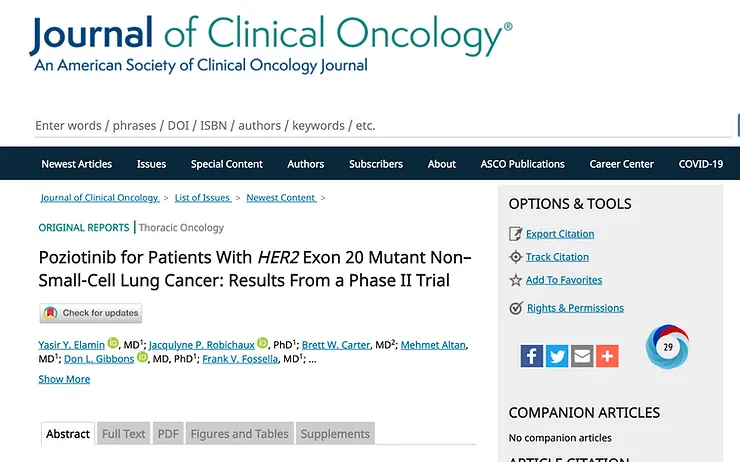 Figure 1
 Figure 2
 Figure 3
 Figure 4