
(Prostate Cancer) Is Cabazitaxel + Carboplatin Effective?
Medical Supporter — Information Notice
This article is a summary of international medical information and is not medical advice; it cannot replace the diagnosis or treatment plan of your attending physician. The medical technologies, drug information and clinical data presented here are compiled from public literature and official statements of major Japanese medical institutions; the applicability and outcome of any therapy vary with each patient and must be assessed individually by a qualified physician.
- October 15, 2019
- Read time: 2 minutes
On September 9, 2019, Paul G Corn published results in the medical journal Lancet Oncology titled "Efficacy and safety assessment of cabazitaxel plus carboplatin in previously treated, metastatic, castration-resistant prostate cancer patients: Phase 1/2 clinical trial results."
This trial was a randomized, open-label Phase 1/2 clinical trial that randomized previously treated, metastatic, castration-resistant prostate cancer patients (N=160) in a 1:1 ratio to receive either cabazitaxel plus carboplatin (20–25 mg/m² cabazitaxel plus 3–4 mg/mL carboplatin every 21 days) or cabazitaxel monotherapy (25 mg/m² cabazitaxel every 21 days). The primary endpoint for Phase 1 was maximum tolerated dose, and for Phase 2 was progression-free survival.
This trial was initiated because the efficacy of concurrent taxane chemotherapy in metastatic castration-resistant prostate cancer patients had only been confirmed in single-arm trials, not yet in randomized trials.
Trial results were as follows. In Phase 1, no dose-limiting toxicity was observed, determining the optimal dose as 25 mg/m² cabazitaxel plus 3–4 mg/mL carboplatin. Grade 3 adverse events included anemia (2), fatigue (1), thrombocytopenia (1), hypomagnesemia (1), diarrhea (1), hypokalemia (1), anorexia (1), and dehydration (1). No Grade 4 adverse events occurred.
In Phase 2, the median progression-free survival was: cabazitaxel plus carboplatin group 7.3 months versus cabazitaxel monotherapy group 4.5 months. The cabazitaxel plus carboplatin group showed a 31% reduction in disease progression risk with a hazard ratio of 0.69, demonstrating significant improvement.
Regarding safety, the most frequent Grade 3–5 adverse events in Phase 2 included: fatigue — cabazitaxel plus carboplatin 20% (N=16) versus cabazitaxel monotherapy 9% (N=7); anemia — 23% (N=19) versus 9% (N=3); neutropenia — 16% (N=13) versus 4% (N=3); thrombocytopenia — 14% (N=11) versus 1% (N=1). No patients died from adverse events.
Based on Phase 1/2 clinical trial results, Paul G Corn concluded that previously treated, metastatic, castration-resistant prostate cancer patients receiving cabazitaxel plus carboplatin demonstrated significant improvement in progression-free survival. Although the incidence of adverse events was higher than with monotherapy, patients tolerated the adverse effects.
[Important Note] Medical Supporter's translations of overseas clinical trial data and pharmaceutical information are not intended to encourage participation in clinical trials or use of new drugs. The translated information is for reference only and not intended as medication guidelines. Please discuss with healthcare professionals and refer to the original text below the article for accurate information.
Source: Cabazitaxel plus carboplatin for the treatment of men with metastatic castration-resistant prostate cancers: a randomised, open-label, phase 1–2 trial (Lancet Oncol. 2019 Sep 9. pii: S1470-2045(19)30408-5. doi: 10.1016/S1470-2045(19)30408-5.)
Medical Supporter was formerly certified as an international medical visa guarantor by Japan's Ministry of Foreign Affairs and the Ministry of Economy, Trade and Industry (B-066).
Considering medical care in Japan? Need information and support?
We help you organize the information needed for medical travel to Japan, liaise with Japanese medical institutions, and arrange a second-opinion consultation.The first consultation is free; an advisor will help you clarify the next steps.
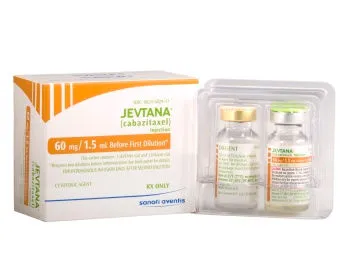 Figure 1
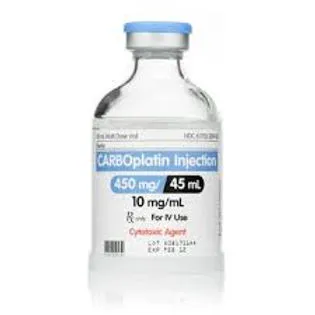 Figure 2
 Figure 3
 Figure 4
 Figure 5