
(Lung Cancer) Is Iressa + Cisplatin + Pemetrexed Effective?
Medical Supporter — Information Notice
This article is a summary of international medical information and is not medical advice; it cannot replace the diagnosis or treatment plan of your attending physician. The medical technologies, drug information and clinical data presented here are compiled from public literature and official statements of major Japanese medical institutions; the applicability and outcome of any therapy vary with each patient and must be assessed individually by a qualified physician.
On November 4, 2019, Yukio Hosomi published in the medical journal "Journal of Clinical Oncology" the effectiveness and safety results of the NEJ009 Phase 3 clinical trial evaluating the combination of EGFR tyrosine kinase inhibitor Iressa (gefitinib) + Cisplatin + Pemetrexed in treatment-naive, EGFR-positive non-small cell lung cancer patients.
The NEJ009 Phase 3 clinical trial randomized treatment-naive, EGFR-positive non-small cell lung cancer patients (N=345) into two groups. Primary endpoints were progression-free survival (PFS), second progression-free survival (PFS2), and overall survival (OS). Secondary endpoints included objective response rate and safety.
Combination therapy group (3-week cycle: Iressa 250mg once daily + Cisplatin AUC5 + Pemetrexed 500mg/m², N=172)
Iressa monotherapy group (3-week cycle: Iressa 250mg once daily, N=173)
Patient Characteristics:
| Combination Group | Iressa Monotherapy | |
|---|---|---|
| Median age | 64.8 years | 64.0 years |
| Male / Female | 32.9% / 67.1% | 37.2% / 62.8% |
| Ever smoker / Never smoker | 42.9% / 56.5% | 43.6% / 56.4% |
| CNS metastasis | 29.4% | 22.1% |
| Exon19del / L858R / Other | 54.7% / 40.6% / 4.7% | 55.2% / 39.0% / 5.8% |
Results:
Primary endpoint — median PFS: combination group 20.9 months / Iressa monotherapy 11.2 months. The combination group showed a 51% reduction in PFS risk (HR 0.49), a significant improvement. Median OS: combination group 50.9 months / Iressa monotherapy 38.8 months. The combination group showed a 27.8% reduction in OS risk (HR 0.722), a significant improvement.
For the primary endpoint of PFS2, the median was 20.9 months in the combination group versus 18.0 months in the monotherapy group. Although there was an 18.2% reduction in risk (HR 0.81), this was not a statistically significant improvement. Secondary endpoint objective response rate: combination group 84% / Iressa monotherapy 67% — a significant improvement in the combination group.
Safety: The overall incidence of adverse events was 95.9% for the combination group and 98.2% for the Iressa monotherapy group. Grade 3 or higher adverse events were 65.3% for the combination group and 31.0% for the monotherapy group. The most common Grade 3+ events more frequent in the combination group included neutropenia (31.2% vs. 0.6%), anemia (21.2% vs. 2.3%), and thrombocytopenia (17.1% vs. 0%).
Based on the NEJ009 trial results, Yukio Hosomi concluded that in treatment-naive, EGFR-positive non-small cell lung cancer patients, the combination of EGFR tyrosine kinase inhibitor Iressa + Cisplatin + Pemetrexed improved both progression-free survival and overall survival compared to Iressa monotherapy.
Source: Gefitinib Alone Versus Gefitinib Plus Chemotherapy for Non–Small-Cell Lung Cancer With Mutated Epidermal Growth Factor Receptor: NEJ009 Study (J Clin Oncol. 2019 Oct 25:JCO1901740. doi: 10.1200/JCO.19.01740.)
Medical Supporter was formerly certified as an international medical visa guarantor by Japan's Ministry of Foreign Affairs and the Ministry of Economy, Trade and Industry (B-066).
Considering medical care in Japan? Need information and support?
We help you organize the information needed for medical travel to Japan, liaise with Japanese medical institutions, and arrange a second-opinion consultation.The first consultation is free; an advisor will help you clarify the next steps.
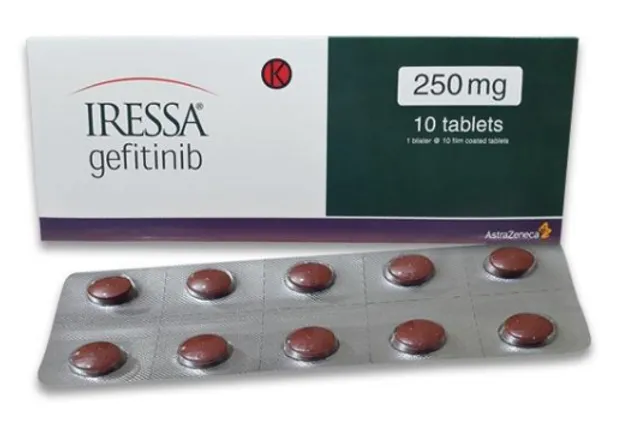 Figure 1
 Figure 2
 Figure 3
 Figure 4