(iPS Cells) World's First Successful Creation of Placental Cells
Medical Supporter — Information Notice
This article is a summary of international medical information and is not medical advice; it cannot replace the diagnosis or treatment plan of your attending physician. The medical technologies, drug information and clinical data presented here are compiled from public literature and official statements of major Japanese medical institutions; the applicability and outcome of any therapy vary with each patient and must be assessed individually by a qualified physician.
Kyoto University's iPS Cell Research Institute and other research institutions announced the world's first successful creation of cells that form the placenta from iPS cells (induced pluripotent stem cells). These cells play an important role in maintaining pregnancy. Research into pregnancy complications related to the placenta and infertility will continue in the future. The paper was published in the electronic version of the American scientific journal "Cell Stem Cell" on April 8, 2021.
The research group led by Lecturer Yasuhiro Takashima (Regenerative Medicine) at the Institute added four types of factors to a new type of iPS cell that is close to a fertilized egg and has broad differentiation capacity. They successfully created trophectoderm, which becomes the placenta, and cultured trophoblast cells, which can form part of the villi in the placenta. After studying genes and proteins, their function was confirmed.
The placenta is produced as part of the fetus during pregnancy, connecting the fetus with the mother and playing the role of exchanging oxygen and nutrients. If abnormalities occur in the formation of the placenta, it can lead to miscarriage or fetal developmental insufficiency. Since the cells that form the placenta differentiate from the fertilized egg at an early stage, it is technically and ethically difficult to examine them inside the human body.
Lecturer Takashima hopes to build a model that can be examined outside the body to understand the causes of pregnancy complications caused by the placenta and the origin of life, and to continue research on early fertilized eggs.
Source: https://news.yahoo.co.jp/articles/f07e75c45c094b1cb189162e60f97f2cda9f4715
Medical Supporter was formerly certified as an international medical visa guarantor by Japan's Ministry of Foreign Affairs and the Ministry of Economy, Trade and Industry (B-066).
Considering medical care in Japan? Need information and support?
We help you organize the information needed for medical travel to Japan, liaise with Japanese medical institutions, and arrange a second-opinion consultation.The first consultation is free; an advisor will help you clarify the next steps.
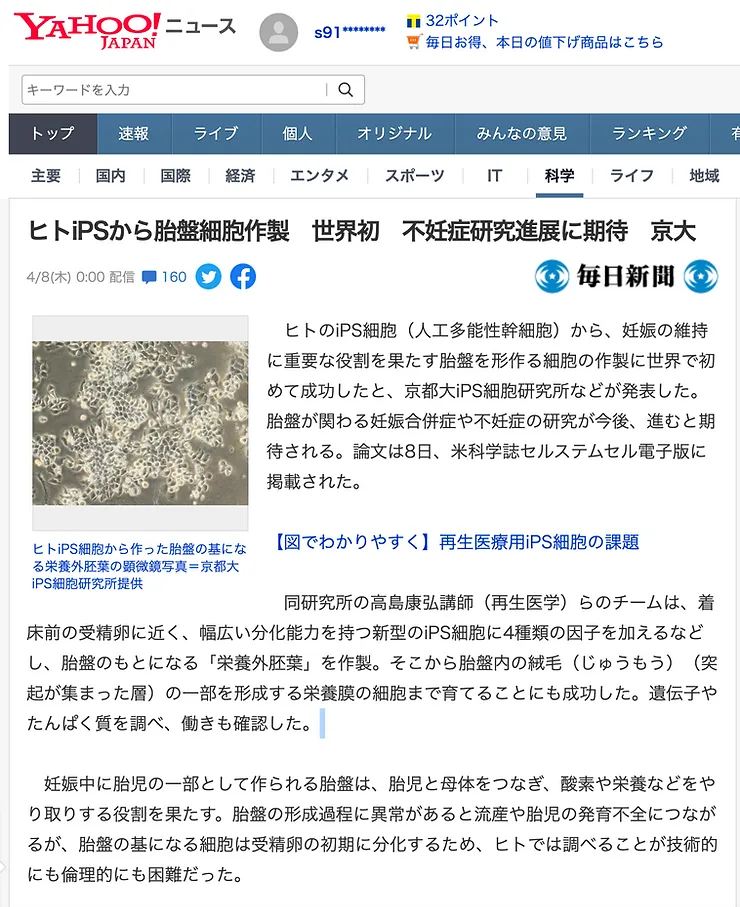 Figure 1
 Figure 2
 Figure 3
 Figure 4