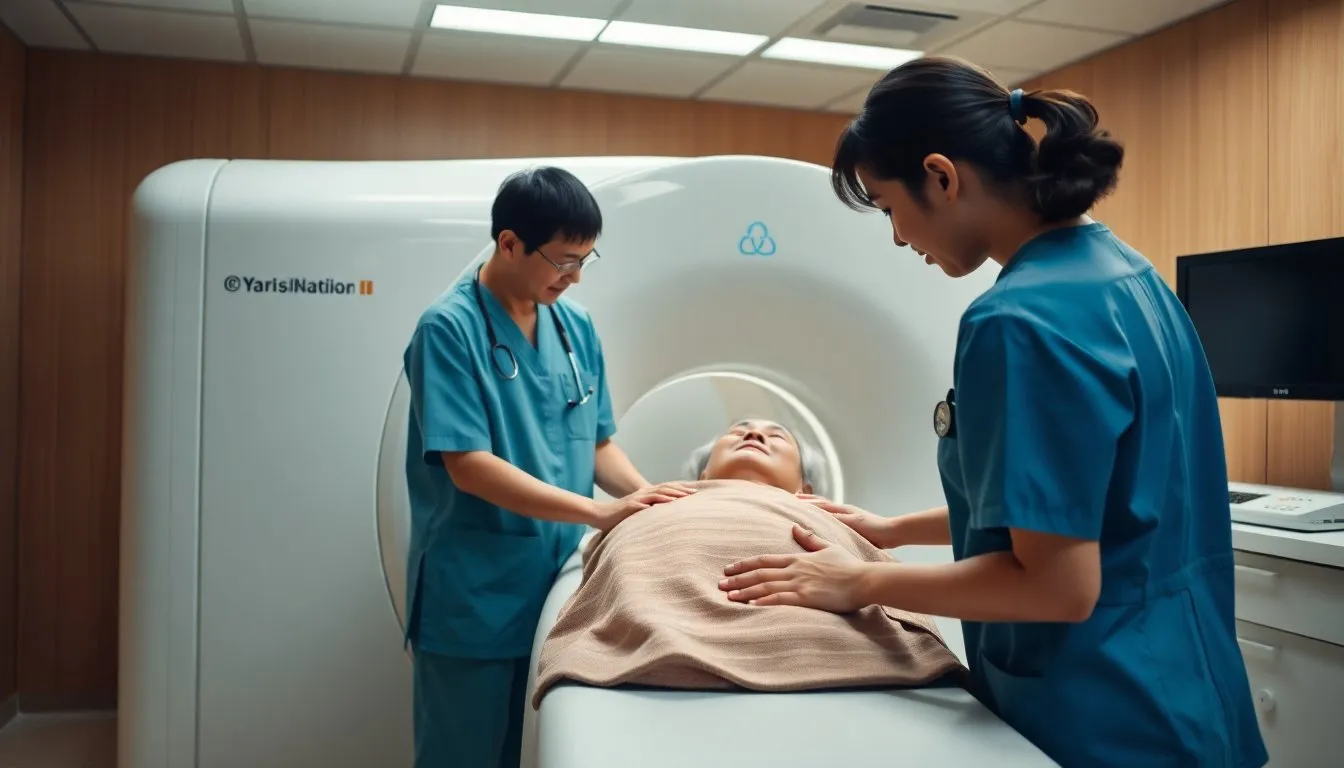
Introduction to Heavy Ion Beam Radiotherapy
Medical Supporter — Information Notice
This article is a summary of international medical information and is not medical advice; it cannot replace the diagnosis or treatment plan of your attending physician. The medical technologies, drug information and clinical data presented here are compiled from public literature and official statements of major Japanese medical institutions; the applicability and outcome of any therapy vary with each patient and must be assessed individually by a qualified physician.
Heavy ion beam radiotherapy is a form of radiation therapy that has been practiced in Japan for many years. This treatment uses charged particles of carbon or neon elements, accelerated to approximately 70% or more of the speed of light by a medical accelerator, and directed at tumors. It is classified as an advanced medical technology.
Heavy ion beams can selectively concentrate irradiation on tumor cells, precisely eliminating them while minimizing the impact on surrounding normal cells — including nerves, blood vessels, and the heart. Compared to conventional radiation therapy, heavy ion beams can deliver a higher biological dose to the tumor while sparing healthy tissue, thanks to the characteristic "Bragg peak" effect where most of the energy is released at the end of the beam's path, right at the tumor site.
This makes heavy ion therapy particularly valuable for tumors that are difficult to surgically resect, or for patients who cannot tolerate surgery. Treatment is available at specialized facilities in Japan, including the National Institute of Radiological Sciences (NIRS/QST) and several other designated centers.
Medical Supporter was formerly certified as an international medical visa guarantor by Japan's Ministry of Foreign Affairs and the Ministry of Economy, Trade and Industry (B-066).
Considering medical care in Japan? Need information and support?
We help you organize the information needed for medical travel to Japan, liaise with Japanese medical institutions, and arrange a second-opinion consultation.The first consultation is free; an advisor will help you clarify the next steps.
 Figure 1
 Figure 2
 Figure 3
 Figure 4