
(Lymphoma) FDA Approves Brukinsa for Waldenström's Macroglobulinemia
Medical Supporter — Information Notice
This article is a summary of international medical information and is not medical advice; it cannot replace the diagnosis or treatment plan of your attending physician. The medical technologies, drug information and clinical data presented here are compiled from public literature and official statements of major Japanese medical institutions; the applicability and outcome of any therapy vary with each patient and must be assessed individually by a qualified physician.
- September 7, 2021
- 1 min read
On August 31, 2021, the U.S. Food and Drug Administration (FDA) approved Brukinsa (zanubrutinib) for the treatment of Waldenström's macroglobulinemia (WM).
This approval was based on the ASPEN clinical trial (NCT03053440), a randomized, active-controlled, open-label study in patients with WM harboring MYD88 L265P mutation, divided into two cohorts. Cohort 1 patients (n=201) were randomized 1:1 to Brukinsa (160 mg twice daily) or ibrutinib (420 mg once daily) until disease progression or intolerable adverse effects. Cohort 2 enrolled patients with wild-type MYD88, or unknown MYD88 mutation status (n=26 and n=2, respectively), and received Brukinsa (160 mg twice daily).
The efficacy data supporting this approval were based on criteria established at the 6th International Workshop on Waldenström's Macroglobulinemia, which incorporated response assessments above IRC thresholds and included duration of response as an additional efficacy endpoint.
Results:
In Cohort 1, the Brukinsa arm achieved an objective response rate (ORR) of 77.5% and a 12-month duration of response rate of 94.4%. In Cohort 2, the ORR was 50%.
Safety:
The most common adverse reactions (including laboratory abnormalities, ≥20%) in the Brukinsa arm included neutropenia, upper respiratory tract infection, thrombocytopenia, rash, hemorrhage, musculoskeletal pain, decreased hemoglobin, bruising, diarrhea, pneumonia, and cough.
Recommended dosing: Brukinsa 160 mg orally twice daily or 320 mg once daily.
Source: https://www.cancerit.jp/70053.html
-
Clinical Trial Medications
- (Lung Cancer) Phase II results for Topotecan and Topotecan + Berzosertib combination.
- (Lung Cancer) Efficacy of Enhertu in HER2-mutant non-small cell lung cancer (NSCLC).
- (Lung Cancer) Clinical outcomes of anti-B7-H3 antibody-drug conjugate DS-7300.
Medical Supporter was formerly certified as an international medical visa guarantor by Japan's Ministry of Foreign Affairs and the Ministry of Economy, Trade and Industry (B-066).
Considering medical care in Japan? Need information and support?
We help you organize the information needed for medical travel to Japan, liaise with Japanese medical institutions, and arrange a second-opinion consultation.The first consultation is free; an advisor will help you clarify the next steps.
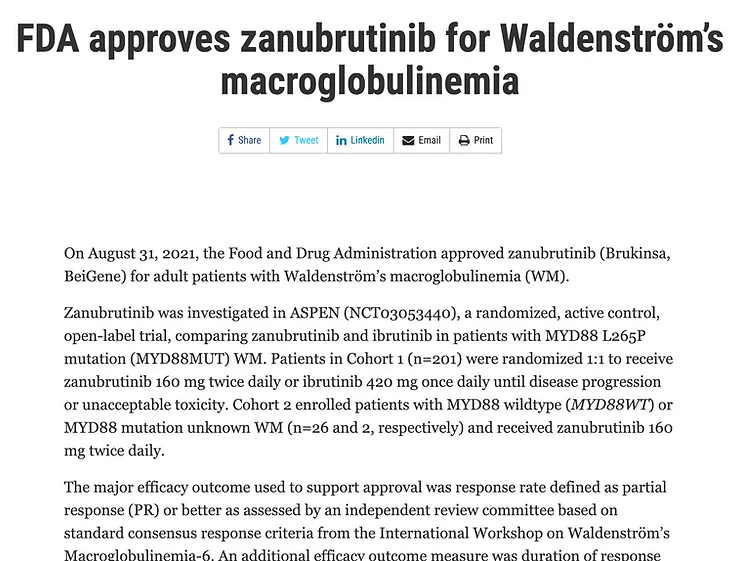 Figure 1
 Figure 2
 Figure 3
 Figure 4