
Understanding Bone Necrosis
Understanding Bone Necrosis
Medical Supporter — Information Notice
This article is a summary of international medical information and is not medical advice; it cannot replace the diagnosis or treatment plan of your attending physician. The medical technologies, drug information and clinical data presented here are compiled from public literature and official statements of major Japanese medical institutions; the applicability and outcome of any therapy vary with each patient and must be assessed individually by a qualified physician.
- May 27, 2019
- Reading time: 1 minute
#Stem Cells #Joints #Knee Joint #Patellofemoral Joint #Cartilage #Regenerative Medicine
Bone necrosis commonly occurs in areas near the knee and hip joints. When necrosis affects weight-bearing joints, movement can cause severe pain, and in severe cases, pain may persist even at rest.
Most pain management approaches rely on medication or injections, but treating the necrotic area itself is extremely difficult. In such cases, surgery may be the only option.
RISO Clinic treats the tissues surrounding necrotic areas by injecting cytokines derived from stem cells via intravenous infusion.
The image below shows the patient's condition after treatment. MRI imaging reveals signs of shrinkage in the previously irreversible necrotic area.
Iwata Clinic Blog: https://riso-clinic.com/blog/osteonecrosis.html
Breakthrough in Pancreatic Cancer Aggressiveness Identified! New Immune Enhancement Agent Supports Cancer Immunotherapy Kyoto University Launches iPS Cell Cancer Treatment!
Medical Supporter was formerly certified as an international medical visa guarantor by Japan's Ministry of Foreign Affairs and the Ministry of Economy, Trade and Industry (B-066).
Considering medical care in Japan? Need information and support?
We help you organize the information needed for medical travel to Japan, liaise with Japanese medical institutions, and arrange a second-opinion consultation.The first consultation is free; an advisor will help you clarify the next steps.
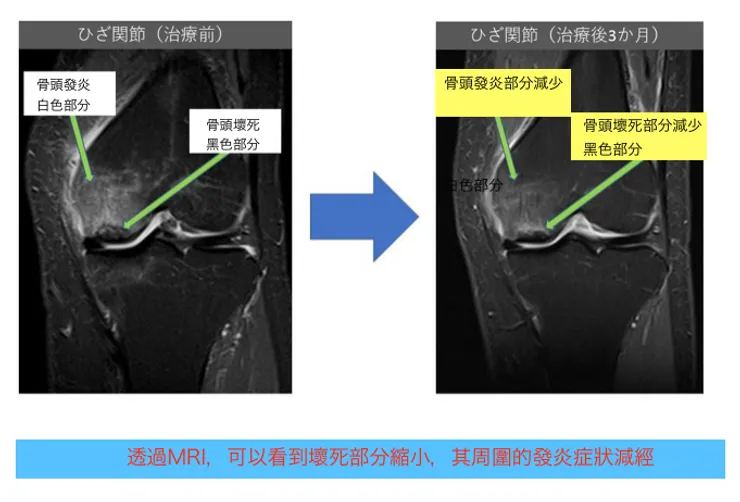 Figure 1
 Figure 2
 Figure 3
 Figure 4