
Avelumab (Bavencio): Mechanism and Clinical Trial Information
Medical Supporter — Information Notice
This article is a summary of international medical information and is not medical advice; it cannot replace the diagnosis or treatment plan of your attending physician. The medical technologies, drug information and clinical data presented here are compiled from public literature and official statements of major Japanese medical institutions; the applicability and outcome of any therapy vary with each patient and must be assessed individually by a qualified physician.
Medical Supporter — Information Notice
This article is a summary of international medical information and is not medical advice; it cannot replace the diagnosis or treatment plan of your attending physician. The medical technologies, drug information and clinical data presented here are compiled from public literature and official statements of major Japanese medical institutions; the applicability and outcome of any therapy vary with each patient and must be assessed individually by a qualified physician.
Avelumab (Bavencio) is a human anti-PD-L1 monoclonal antibody developed jointly by Merck KGaA and Pfizer. This immunotherapy is currently being evaluated in multiple clinical trials for various cancers, including gastric cancer and renal cell carcinoma (RCC).
Mechanism of Action
Avelumab works by binding to the PD-L1 (Programmed Death-Ligand 1) protein expressed on the surface of cancer cells. By blocking the interaction between PD-L1 and the PD-1 receptor on T-cells, Avelumab:
- Reactivates T-cells: Prevents cancer cells from "turning off" the immune system.
- Induces ADCC: Uniquely, Avelumab can trigger Antibody-Dependent Cellular Cytotoxicity (ADCC), leading to the direct destruction of cancer cells by natural killer (NK) cells.
Clinical Trial Spotlight: RCC (NCT02493751)
An early-phase clinical trial evaluated the combination of Avelumab and Inlyta (Axitinib) in patients with untreated advanced renal cell carcinoma.
Key Eligibility Criteria:
- Age 20 or older.
- Confirmed diagnosis of renal cell carcinoma.
- Prior nephrectomy (surgical removal of the primary tumor).
- ECOG Performance Status of 0 or 1.
- No prior systemic therapy for metastatic RCC.
Study Objectives:
The trial aimed to determine the Maximum Tolerated Dose (MTD) and the Recommended Phase 2 Dose (RP2D) for the combination, while also assessing the safety and pharmacokinetics of the drugs.
Summary
As a potent anti-PD-L1 therapy, Avelumab represents a significant addition to the immunotherapy landscape. Its dual action of immune checkpoint inhibition and ADCC makes it a versatile candidate for combination therapies across multiple solid tumors.
Source: ClinicalTrials.gov - NCT02493751
#Avelumab #Bavencio #Immunotherapy #PDL1 #RenalCellCarcinoma #CancerResearch
Considering medical care in Japan? Need information and support?
We help you organize the information needed for medical travel to Japan, liaise with Japanese medical institutions, and arrange a second-opinion consultation.The first consultation is free; an advisor will help you clarify the next steps.
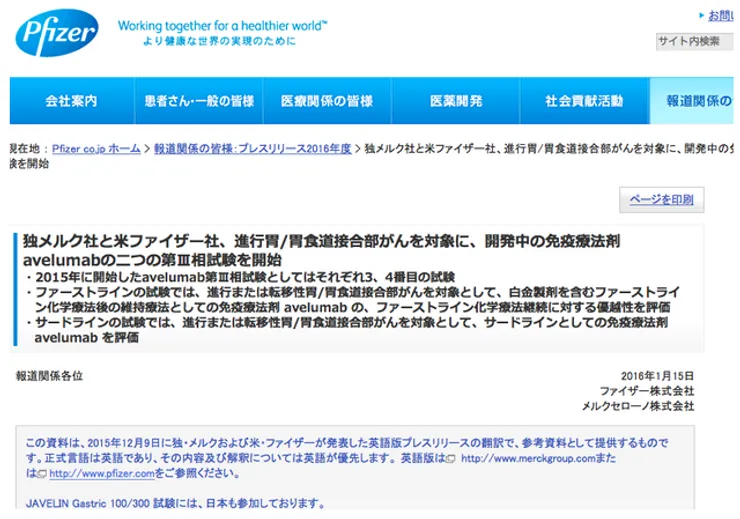 Figure 1
 Figure 2
 Figure 3
 Figure 4