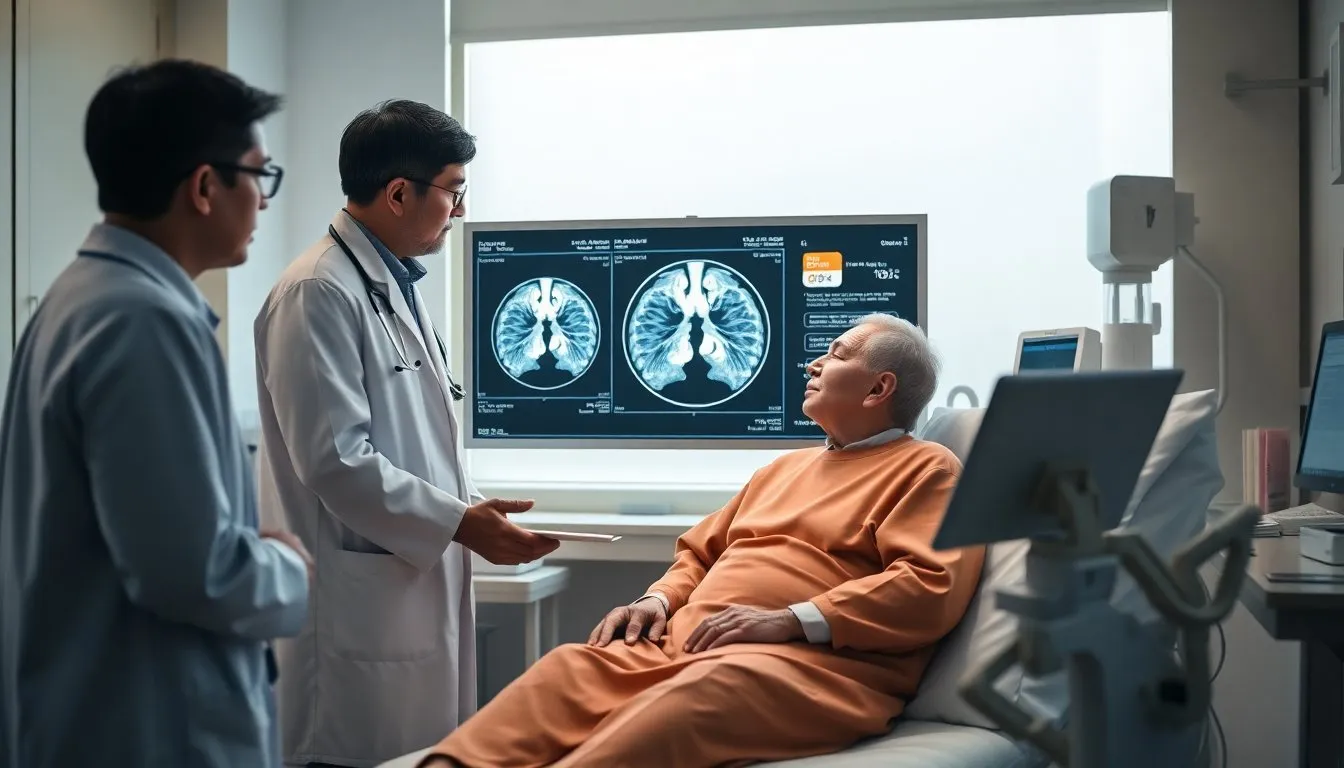
EGFR Exon 20 Insertion NSCLC: Amivantamab Bispecific Antibody
Medical Supporter — Information Notice
This article is a summary of international medical information and is not medical advice; it cannot replace the diagnosis or treatment plan of your attending physician. The medical technologies, drug information and clinical data presented here are compiled from public literature and official statements of major Japanese medical institutions; the applicability and outcome of any therapy vary with each patient and must be assessed individually by a qualified physician.
CHRYSALIS Phase I Trial Results
EGFR exon 20 insertion mutations represent a challenging therapeutic target in NSCLC, with limited efficacy from first and third-generation EGFR inhibitors. Amivantamab, a bispecific antibody targeting both EGFR and MET, provides a novel therapeutic approach.
Key Efficacy Results
Objective Response Rate: 40% in platinum-pretreated patients
- Includes complete response in selected patients
- Median response duration: 11.1 months
- Median PFS: 8.3 months
Safety Profile
Infusion Reactions: ~66% of patients, primarily manageable with premedication
Dermatologic Toxicities: Paronychia, rash; manageable with skin care protocols
No dose-limiting toxicities identified.
Clinical Mechanism
Amivantamab's bispecific targeting of EGFR and MET receptors overcomes resistance mechanisms from prior EGFR-directed therapies. Approved in multiple countries as standard therapy for exon 20 insertion NSCLC.
Data Source
CHRYSALIS Phase I Trial, Journal of Clinical Oncology
Medical Supporter was formerly certified as an international medical visa guarantor by Japan's Ministry of Foreign Affairs and the Ministry of Economy, Trade and Industry (B-066).
Considering medical care in Japan? Need information and support?
We help you organize the information needed for medical travel to Japan, liaise with Japanese medical institutions, and arrange a second-opinion consultation.The first consultation is free; an advisor will help you clarify the next steps.
 Figure 1
 Figure 2
 Figure 3
 Figure 4