
Clinical Trial of Pembrolizumab (KEYTRUDA) Monotherapy for Gastric Cancer
Medical Supporter — Information Notice
This article is a summary of international medical information and is not medical advice; it cannot replace the diagnosis or treatment plan of your attending physician. The medical technologies, drug information and clinical data presented here are compiled from public literature and official statements of major Japanese medical institutions; the applicability and outcome of any therapy vary with each patient and must be assessed individually by a qualified physician.
- October 12, 2017
- Reading time: 2 minutes
Recent literature presented at the American Society of Clinical Oncology (ASCO) highlights the significant efficacy of immune checkpoint inhibitors (PD-1) in colorectal cancer. While clinical data for PD-1 blockade is rapidly expanding, information regarding other novel agents sometimes appears overshadowed by the prominence of PD-1 inhibitors. With increasing evidence supporting the combination of PD-1 inhibitors and chemotherapy across various malignancies, it is crucial to investigate whether such regimens offer superior outcomes for specific patient populations.
This update focuses on the KEYNOTE-059 cohort study 3, a follow-up study evaluating Pembrolizumab (Keytruda) as a first-line monotherapy in patients with HER2-negative, PD-L1-positive gastric or gastroesophageal junction (GEJ) adenocarcinoma. These findings were presented by Dr. Daniel V. Catenacci of the University of Chicago Medicine at the ESMO 19th World Congress on Gastrointestinal Cancer (WCGC 2017) in Barcelona.
Study Design and Eligibility: Eligible participants were treatment-naive patients with HER2-negative and PD-L1-positive gastric or GEJ adenocarcinoma. Patients received 200mg of Pembrolizumab intravenously every three weeks. The treatment continued for up to 35 cycles (approximately two years) or until disease progression or unacceptable toxicity occurred. The primary endpoints were tumor control rate and safety, along with duration of response (DOR), progression-free survival (PFS), and overall survival (OS), based on RECIST v1.1 criteria.
Patient Demographics: The study enrolled 31 patients, including 19 males (61%). The median age was 62 years (range: 32–75). The cohort consisted of 15 Asian patients (48%) and 16 Caucasian patients (52%). Geographic distribution included the United States (39%), East Asia (42%), and other regions (19%).
By stage and primary site:
- M0: 5 patients (16%)
- M1: 26 patients (84%)
- Gastric Cancer: 19 patients (61%)
- GEJ Adenocarcinoma: 12 patients (39%)
- Prior Surgery: 12 patients (39%)
Clinical Outcomes: With a median follow-up of 14.5 months (range: 1.7–17.9), the objective response rate (ORR) was 26% (95% CI: 12–45%). Complete response (CR) was achieved in 3% of patients, while partial response (PR) was seen in 23%. Stable disease (SD) was reported in 29% of cases. The disease control rate (DCR)—comprising CR, PR, and SD lasting 6 months or more—was 36%. Overall, 86% of patients (28 individuals) experienced some degree of tumor reduction.
The median PFS was 3 months (95% CI: 2–6). The 6-month OS rate was 72.8%, and the 12-month OS rate was 61.7%.
Safety Profile: Grade 3 to 5 adverse events occurred in 7 patients (23%). There were no treatment discontinuations due to side effects, although 8 patients (26%) required temporary treatment interruption followed by resumption. One Grade 5 treatment-related adverse event (pneumonia) was reported.
Source: Nikkei Medical - Oncology News (WCGC 2017 Report)
Colorectal Cancer #GEJ #Gastric Cancer
- Clinical Trial Medications
- (Lung Cancer) Phase II results for Topotecan and Topotecan + Berzosertib combination.
- (Lung Cancer) Efficacy of Enhertu in HER2-mutant non-small cell lung cancer (NSCLC).
- (Lung Cancer) Clinical outcomes of anti-B7-H3 antibody-drug conjugate DS-7300.
Medical Supporter was formerly certified as an international medical visa guarantor by Japan's Ministry of Foreign Affairs and the Ministry of Economy, Trade and Industry (B-066).
Considering medical care in Japan? Need information and support?
We help you organize the information needed for medical travel to Japan, liaise with Japanese medical institutions, and arrange a second-opinion consultation.The first consultation is free; an advisor will help you clarify the next steps.
 Figure 1
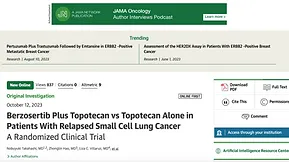 Figure 2
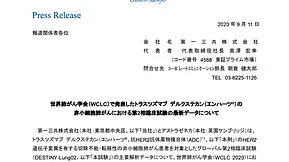 Figure 3
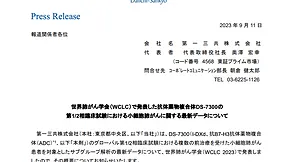 Figure 4