
(Prostate Cancer) Efficacy of Xtandi + Androgen Deprivation Therapy?
Medical Supporter — Information Notice
This article is a summary of international medical information and is not medical advice; it cannot replace the diagnosis or treatment plan of your attending physician. The medical technologies, drug information and clinical data presented here are compiled from public literature and official statements of major Japanese medical institutions; the applicability and outcome of any therapy vary with each patient and must be assessed individually by a qualified physician.
On July 22, 2019, Andrew J. Armstrong published in the medical journal Journal of Clinical Oncology the validation results of oral Xtandi (enzalutamide, androgen receptor signaling inhibitor) plus androgen deprivation therapy (ADT) in patients with metastatic hormone-sensitive prostate cancer from the ARCHES Phase III clinical trial.
The ARCHES trial was an international multicenter, double-blind, randomized controlled Phase III trial enrolling patients with metastatic hormone-sensitive prostate cancer (N=1,150). Primary endpoint: radiographic progression-free survival (rPFS); secondary endpoint: PSA progression-free survival.
- Xtandi + ADT group (Xtandi 160 mg once daily; N=574)
- Placebo + ADT group (N=576)
The trial background: Prostate cancer is one of the most common cancers in men, with high metastatic rates characterizing high mortality. Xtandi (oral androgen receptor signaling inhibitor) showed the potential to reduce PSA levels in patients without prior hormone therapy in a Phase II trial. Based on these factors, this trial aimed to verify whether oral Xtandi + ADT is effective in metastatic hormone-sensitive prostate cancer.
Patient Characteristics:
Median age — Xtandi group: 70.0 years (46–92); Placebo group: 70.0 years
Race — Xtandi group: White 81.2%, Asian 13.1%, Black 1.4%; Placebo: White 79.9%, Asian 13.9%, Black 1.4%
ECOG status — Xtandi group: ECOG=0 78.0%, ECOG=1 21.8%; Placebo: ECOG=0 76.9%, ECOG=1 23.1%
Gleason score at diagnosis — Xtandi group: <8: 29.8%, ≥8: 67.2%; Placebo: <8: 32.5%, ≥8: 64.8%
Metastasis at diagnosis — Xtandi group: 93.4% had metastasis; Placebo: 92.2% had metastasis
PSA median — Xtandi group: 5.4 ng/mL; Placebo: 5.1 ng/mL
Results at week 24: Discontinuation rate: Xtandi group 15.9% vs. placebo group 34.9%. Primary endpoint radiographic PFS: Xtandi group not reached vs. placebo group 19.0 months — the Xtandi group showed a 61% reduction in disease progression risk, a significant improvement (HR 0.39).
Most important secondary endpoint median PSA progression-free survival: Xtandi group not reached vs. placebo group not reached — the Xtandi group showed an 81% reduction in disease progression risk, a significant improvement (HR 0.19).
ORR among evaluable patients: Xtandi group 83.1% (N=147) vs. placebo group 63.7% (N=116). In the Xtandi group: complete response 36.7%, partial response 46.3%, stable disease 9.6%, progressive disease 4.0%. In the placebo group: complete response 23.1%, partial response 40.7%, stable disease 23.6%, progressive disease 4.9%.
Regarding safety: adverse event rates — Xtandi group 85.1% (N=487) vs. placebo 85.9% (N=493). Grade 3 or higher adverse events: Xtandi group 24.3% (N=139) vs. placebo 25.6% (N=147). Most common adverse events in the Xtandi group: hot flashes 27.1%, fatigue 19.6%, joint pain 12.2%. Most common in the placebo group: hot flashes 22.3%, fatigue 15.3%, back pain 10.8%, joint pain 10.6%.
Discontinuation due to treatment-related adverse events: Xtandi group 7.2% (N=41) vs. placebo 5.2% (N=30). Deaths from treatment-related adverse events: Xtandi group 2.4% (N=14) vs. placebo 1.7% (N=10).
Based on ARCHES results, Andrew J. Armstrong concluded: In patients with metastatic hormone-sensitive prostate cancer, oral Xtandi + ADT showed significant improvement in both radiographic PFS and PSA progression-free survival compared to placebo.
Source: ARCHES: A Randomized, Phase III Study of Androgen Deprivation Therapy With Enzalutamide or Placebo in Men With Metastatic Hormone-Sensitive Prostate Cancer (J Clin Oncol. 2019 Jul 22:JCO1900799. doi: 10.1200/JCO.19.00799.)
Medical Supporter was formerly certified as an international medical visa guarantor by Japan's Ministry of Foreign Affairs and the Ministry of Economy, Trade and Industry (B-066).
Considering medical care in Japan? Need information and support?
We help you organize the information needed for medical travel to Japan, liaise with Japanese medical institutions, and arrange a second-opinion consultation.The first consultation is free; an advisor will help you clarify the next steps.
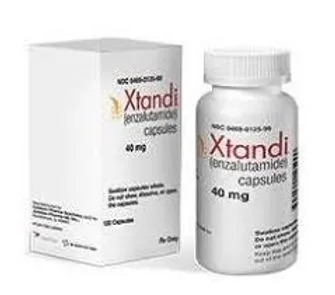 Figure 1
 Figure 2
 Figure 3
 Figure 4