
Prostate Cancer Information
Medical Supporter — Information Notice
This article is a summary of international medical information and is not medical advice; it cannot replace the diagnosis or treatment plan of your attending physician. The medical technologies, drug information and clinical data presented here are compiled from public literature and official statements of major Japanese medical institutions; the applicability and outcome of any therapy vary with each patient and must be assessed individually by a qualified physician.
- January 22, 2016
- Read time: 1 minute
At ASCO GU 2016, using lower-dose radiation therapy for low-risk prostate cancer did not produce significantly different outcomes. The key points of this article are as follows:
-
This is a clinical trial result comparing two types of radiation therapy for low-risk prostate cancer.
-
Using doses of 73.8 Gy vs. 70 Gy, the no-recurrence rates were 85% vs. 86%.
-
Regarding adverse events, the 73.8 Gy dose was associated with more adverse events, therefore 70 Gy is recommended.
For related clinical trial information, please refer to the following link:
http://meetinglibrary.asco.org/content/156780-172
Medical Supporter was formerly certified as an international medical visa guarantor by Japan's Ministry of Foreign Affairs and the Ministry of Economy, Trade and Industry (B-066).
Considering medical care in Japan? Need information and support?
We help you organize the information needed for medical travel to Japan, liaise with Japanese medical institutions, and arrange a second-opinion consultation.The first consultation is free; an advisor will help you clarify the next steps.
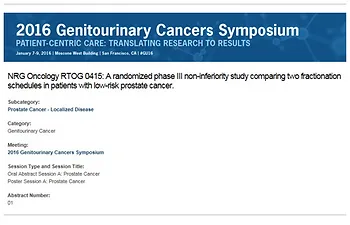 Figure 1
 Figure 2
 Figure 3
 Figure 4