
(Breast Cancer) Palbociclib Data Analysis: SABCS 2016
Medical Supporter — Information Notice
This article is a summary of international medical information and is not medical advice; it cannot replace the diagnosis or treatment plan of your attending physician. The medical technologies, drug information and clinical data presented here are compiled from public literature and official statements of major Japanese medical institutions; the applicability and outcome of any therapy vary with each patient and must be assessed individually by a qualified physician.
A breast cancer patient recently inquired about new drugs and related adverse event information. In the course of reviewing the literature, we found this publication from SABCS 2016. This data analysis investigates the relationship between palbociclib use and neutrophils.
Palbociclib (manufactured by Pfizer Inc., brand name Ibrance) is a CDK4/6 inhibitor indicated for postmenopausal ER-positive HER2-negative metastatic breast cancer. It received approval in the United States in February 2015 in combination with letrozole. Data from patients using this drug over the past year were analyzed. The results were presented by Dr. J.K. Kish from Cardinal Health Specialty Solutions, USA, at the San Antonio Breast Cancer Symposium held from December 6-10 in San Antonio, USA. The analysis period was February 1, 2015 to January 31, 2016. Patients were analyzed based on age, sex, diagnosis date, performance status, treatment drugs, and blood test values. Patients enrolled before FDA approval were not included in the analysis.
In the results, 612 patients (65.7%) were taking concomitant letrozole. The mean age at treatment initiation was 64 years; 49.7% of patients were under 64, 29.7% were 65-74 years, and 20.6% were 75 years or older. Postmenopausal women accounted for 28%, with 72% unknown. Patients with ECOG PS 0/1 accounted for 57%, PS 2 accounted for 13%, PS 3 or higher accounted for 3%, and unknown accounted for 28%. ER-positive HER2-negative patients accounted for 69.9%.
The average follow-up period was 6.4 months (as of March 31, 2016). Among these patients, 351 provided blood count data (57.4%). Of these, neutropenia was found in 74.6%, grade 3 in 35.3%, and grade 4 in 6.0%.
Data on initial treatment was provided by 417 patients (68.1%). The starting dose of palbociclib was 125mg in 88%, 100mg in 11.0%, and 75mg in 1.0%. Dose reduction occurred in 20.1% (84 patients). Of those who underwent dose reduction, 69% had it after the second cycle (56 days), and 98.8% after the fourth cycle (112 days). The average day of dose reduction was 48 days.
Among patients who received six or more cycles (269 patients), dose adjustments were required in 31.2%. PALOMA-1 trial patients accounted for 39.8% and PALOMA-2 accounted for 36%.
Medical Supporter was formerly certified as an international medical visa guarantor by Japan's Ministry of Foreign Affairs and the Ministry of Economy, Trade and Industry (B-066).
Considering medical care in Japan? Need information and support?
We help you organize the information needed for medical travel to Japan, liaise with Japanese medical institutions, and arrange a second-opinion consultation.The first consultation is free; an advisor will help you clarify the next steps.
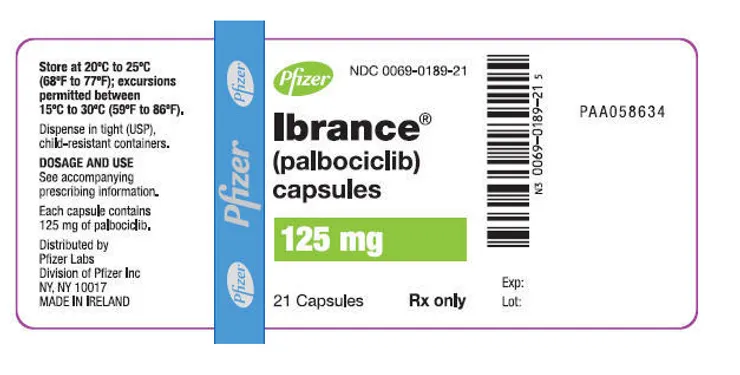 Figure 1
 Figure 2
 Figure 3
 Figure 4