
(Ovarian Cancer) The Link Between Personalized Vaccines and Anti-Tumor T Cells
Medical Supporter — Information Notice
This article is a summary of international medical information and is not medical advice; it cannot replace the diagnosis or treatment plan of your attending physician. The medical technologies, drug information and clinical data presented here are compiled from public literature and official statements of major Japanese medical institutions; the applicability and outcome of any therapy vary with each patient and must be assessed individually by a qualified physician.
This article is sourced from Science magazine. The original article is titled:
Personalized Cancer Vaccine Shows Promise in Patients with Advanced Ovarian Cancer
Published by a research team from the University of Pennsylvania, this clinical trial focused on ovarian cancer patients. Using a well-established approach, peripheral blood mononuclear cells are isolated from the patient's blood and induced with GM-CSF + IL-4 to generate dendritic cells. Separately, tumor cells are surgically removed, lysed with HOCl Lysate, and combined with the dendritic cells to create a dendritic cell vaccine.
This new finding was published on April 11 in Science Translational Medicine, in an article titled "Personalized Ovarian Cancer Vaccine Effectively Mobilizes Anti-Tumor T Cell Immunity." According to the article, approximately half of vaccinated patients showed anti-tumor T cell responses, and those "responders" tended to live longer without tumor progression compared to non-responders. One patient remained disease-free for five years without further treatment, two years after vaccination. The article also noted that vaccination "expanded T cell responses to mutated neoepitopes derived from non-synonymous somatic tumor mutations, including T cells against previously unrecognized neoantigens and new T cells with significantly higher affinity for previously recognized neoepitopes."
"This is the first time a personalized vaccine made from the entire content of cancer cells has been shown to generate immune responses against neoantigens," said Dr. Lana E. Kandalaft, co-author of the study and part-time researcher at the Ludwig Institute for Cancer Research's Lausanne branch. "We also showed that these immune responses are not just responses, but ways to kill tumor cells, and they correlate with better progression-free survival and better overall patient survival."
This research by Dr. Kandalaft and her colleagues addressed a longstanding challenge in ovarian cancer treatment. Ovarian tumor cells are known to present neoantigens — randomly mutated proteins presented by cancer cells that can be detected by the immune system as signs of disease. However, malignant tumors have proven highly resistant to immunotherapy, including conventional cancer vaccines that stimulate killer T cell attacks.
Source: http://stm.sciencemag.org/content/10/436/eaao5931.full
Medical Supporter was formerly certified as an international medical visa guarantor by Japan's Ministry of Foreign Affairs and the Ministry of Economy, Trade and Industry (B-066).
Considering medical care in Japan? Need information and support?
We help you organize the information needed for medical travel to Japan, liaise with Japanese medical institutions, and arrange a second-opinion consultation.The first consultation is free; an advisor will help you clarify the next steps.
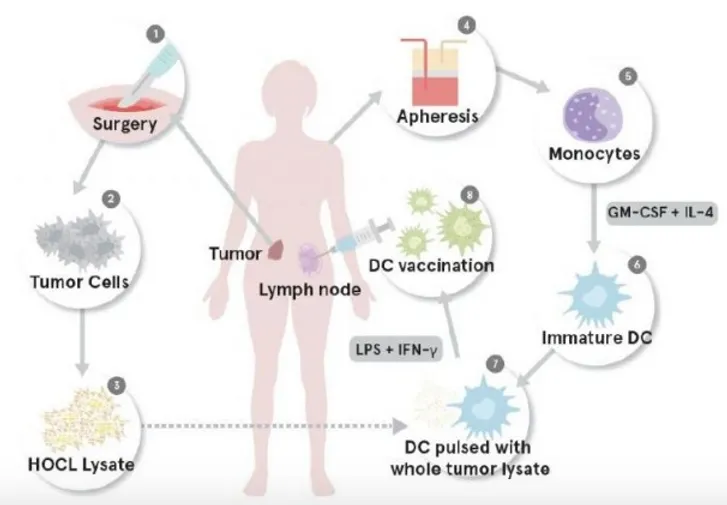 Figure 1
 Figure 2
 Figure 3
 Figure 4