
REIC Gene Therapy: Okayama University ICONT Trial Program
Medical Supporter — Information Notice
This article is a summary of international medical information and is not medical advice; it cannot replace the diagnosis or treatment plan of your attending physician. The medical technologies, drug information and clinical data presented here are compiled from public literature and official statements of major Japanese medical institutions; the applicability and outcome of any therapy vary with each patient and must be assessed individually by a qualified physician.
Innovative Gene Therapy Approach for Cancer Treatment
- December 17, 2015
- Reading time: 1 minute
The Okayama University ICONT (Immuno-oncology Clinical Trial Network) research program is developing a novel cancer immunotherapy approach utilizing REIC (reduced expression in immune cells) gene therapy. Cancer treatment options have expanded dramatically with development of multiple therapeutic modalities, and REIC-based therapy represents a distinctive approach within this expanding treatment landscape.
REIC Gene Therapy Mechanism
REIC gene therapy demonstrates dual therapeutic functions:
- Tumor Suppression: REIC gene encodes proteins that directly suppress malignant cell proliferation through intrinsic tumor suppressive mechanisms
- Immune Recognition: REIC gene therapy forces cancer cells to express immunogenic markers that facilitate recognition and destruction by the patient's endogenous immune system
Second-Generation Formulation Development
The REIC therapeutic approach has progressed to second-generation development (Ad-SGE-REIC), which represents a substantial clinical advancement compared to first-generation formulations. The improved second-generation vehicle is engineered to achieve equivalent or superior therapeutic efficacy while requiring only one-tenth the dosage of the original formulation, thereby reducing treatment burden and potential adverse events.
Current Clinical Application
Current clinical evaluation of REIC gene therapy is being conducted in patients with renal cell carcinoma (RCC), a malignancy representing a significant clinical challenge due to resistance to conventional therapies.
Future Directions
The ICONT program remains actively engaged in ongoing development and clinical investigation. Updates regarding trial outcomes, patient eligibility, and therapeutic advancement will be provided as they become available through ongoing communication with collaborating medical institutions.
Clinical Trial Resources
For current information regarding REIC gene therapy clinical trials, enrollment criteria, and institutional participation in the ICONT program, Medical Supporter's clinical consultation team can provide comprehensive information and facilitate coordination with Japanese research centers.
Medical Supporter was formerly certified as an international medical visa guarantor by Japan's Ministry of Foreign Affairs and the Ministry of Economy, Trade and Industry (B-066).
Considering medical care in Japan? Need information and support?
We help you organize the information needed for medical travel to Japan, liaise with Japanese medical institutions, and arrange a second-opinion consultation.The first consultation is free; an advisor will help you clarify the next steps.
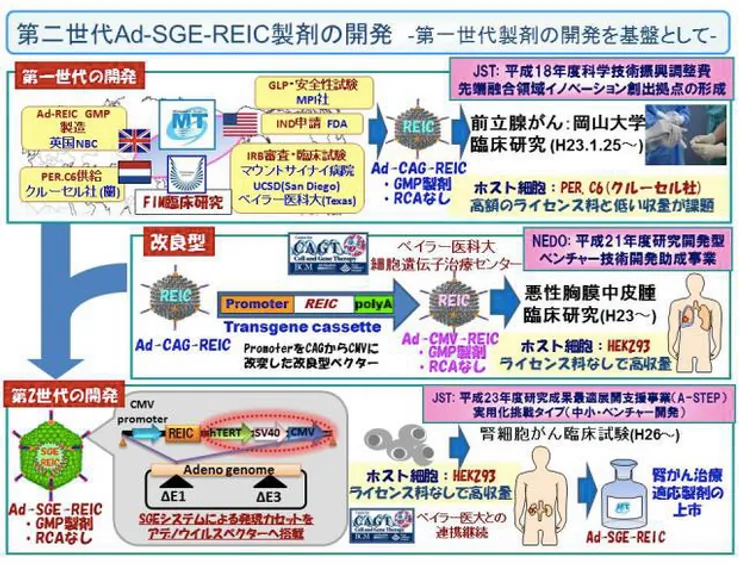 Figure 1
 Figure 2
 Figure 3
 Figure 4