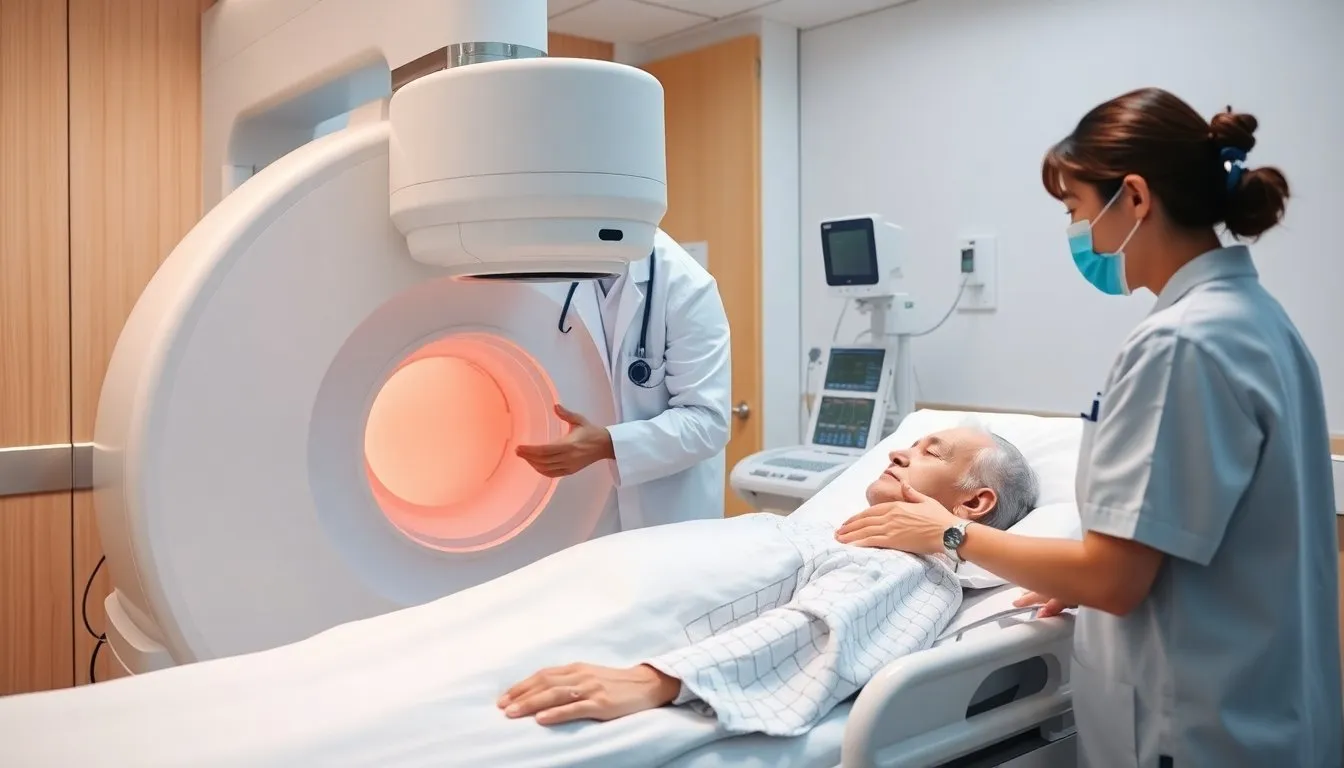
Is Tislelizumab + Chemotherapy Effective for Esophageal Squamous Cell Carcinoma?
Medical Supporter — Information Notice
This article is a summary of international medical information and is not medical advice; it cannot replace the diagnosis or treatment plan of your attending physician. The medical technologies, drug information and clinical data presented here are compiled from public literature and official statements of major Japanese medical institutions; the applicability and outcome of any therapy vary with each patient and must be assessed individually by a qualified physician.
On April 17, 2023, Jianming Xu and colleagues from the Chinese PLA General Hospital published the results of the Phase 3 RATIONALE-306 trial in "The Lancet Oncology." The study evaluated the efficacy and safety of first-line Tislelizumab + chemotherapy in patients with advanced or metastatic esophageal squamous cell carcinoma (ESCC).
RATIONALE-306 is an international, multi-center, randomized, double-blind Phase 3 trial. A total of 649 patients with advanced or metastatic ESCC were randomized 1:1 to receive either Tislelizumab (200 mg every 3 weeks) + chemotherapy (N=326) or placebo + chemotherapy (N=323). Treatment continued until disease progression or unacceptable toxicity. The primary endpoint was overall survival (OS), and secondary endpoints included progression-free survival (PFS), duration of response (DOR), objective response rate (ORR), and safety.
The median age of the participants was 64 years; 87% (N=563) were male and 13% (N=86) were female. Geographically, 75% (N=486) were Asian and 24% (N=155) were White. With a median follow-up of 16.3 months, the results were as follows:
The primary endpoint of median OS was 17.2 months in the Tislelizumab + chemotherapy group compared to 10.6 months in the placebo group. Regarding safety, the most common Grade 3-4 adverse events were neutropenia (Tislelizumab + chemotherapy: 31% [N=99], placebo: 33% [N=105]), leukopenia (Tislelizumab + chemotherapy: 11% [N=35], placebo: 16% [N=50]), and anemia (Tislelizumab + chemotherapy: 15% [N=47], placebo: 13% [N=41]). Six deaths occurred in the Tislelizumab + chemotherapy group: gastrointestinal hemorrhage (2), myocarditis (1), tuberculosis (1), electrolyte abnormality (1), and respiratory failure (1).
Based on the RATIONALE-306 results, Jianming Xu stated that first-line Tislelizumab + chemotherapy significantly improved OS compared to chemotherapy alone in patients with advanced or metastatic ESCC, with a manageable safety profile.
Source: https://www.thelancet.com/journals/laonc/article/PIIS1470-2045(23)00108-0/fulltext#%20
Medical Supporter was formerly certified as an international medical visa guarantor by Japan's Ministry of Foreign Affairs and the Ministry of Economy, Trade and Industry (B-066).
Considering medical care in Japan? Need information and support?
We help you organize the information needed for medical travel to Japan, liaise with Japanese medical institutions, and arrange a second-opinion consultation.The first consultation is free; an advisor will help you clarify the next steps.
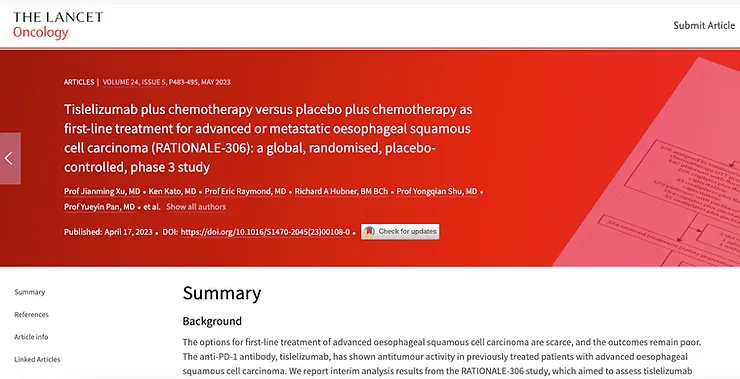 Figure 1
 Figure 2
 Figure 3
 Figure 4