
(Gastric Cancer) Keytruda and Ramucirumab Combination Trial
Medical Supporter — Information Notice
This article is a summary of international medical information and is not medical advice; it cannot replace the diagnosis or treatment plan of your attending physician. The medical technologies, drug information and clinical data presented here are compiled from public literature and official statements of major Japanese medical institutions; the applicability and outcome of any therapy vary with each patient and must be assessed individually by a qualified physician.
- February 6, 2017
- Read time: 2 minutes
A Phase 1 clinical trial combining ramucirumab (Cyramza) and pembrolizumab (Keytruda) in gastric cancer patients was presented at ASCO-GI 2017. Dr. Ian Chau of Royal Marsden Hospital, London, presented results for gastric/gastroesophageal junction (GEJ) cancer patients treated with Keytruda and Ramucirumab.
A total of 41 patients were enrolled in this clinical trial, divided into two cohorts: ramucirumab 8 mg/kg and 10 mg/kg groups, both receiving pembrolizumab 200 mg every 3 weeks. Ramucirumab was administered via intravenous infusion on Day 1 of each 3-week cycle.
In the 8 mg/kg ramucirumab group, all patients were receiving first-line treatment, with administration on Days 1 and 8 of a 3-week cycle. In the 10 mg/kg group, patients were receiving second or third-line treatment, with administration on Day 1 of a 3-week cycle.
Results showed 3 partial responses (PR) among 24 patients in the 8 mg/kg group and 1 PR among 17 patients in the 10 mg/kg group. The disease control rate including stable disease (SD) was 42% for the 8 mg/kg combination group and 53% for the 10 mg/kg combination group, with a combined total of 46% (19/41). Median progression-free survival was 2.10 months for the 8 mg/kg group and 2.6 months for the 10 mg/kg group. All 4 PR patients had gastroesophageal junction cancer and had received prior systemic therapy. Of the PD-L1 evaluable patients, 2 were positive, 1 was negative, and 1 was unknown.
Grade 3 or higher adverse events were uncommon, with the most notable being rash (17%), infusion-related reactions (15%), hypertension (12%), endocrine abnormalities (12%), pruritus (10%), colitis (7%), diarrhea (5%), pulmonary embolism (5%), epistaxis (5%), and elevated liver enzymes (5%).
Given the limited data on concurrent antiangiogenic and immune checkpoint inhibitor combination therapy, this clinical trial is of significant importance. Currently, four gastric and GEJ cancer patients showed improvement with ramucirumab and pembrolizumab. Dr. Chau stated that further research in this area will be conducted.
Source: Interim safety and clinical activity in patients (pts) with advanced gastric or gastroesophageal junction (G/GEJ) adenocarcinoma from a multicohort phase 1 study of ramucirumab (R) plus pembrolizumab (P). ASCO-GI 2017, Abstract Number: 102
Medical Supporter was formerly certified as an international medical visa guarantor by Japan's Ministry of Foreign Affairs and the Ministry of Economy, Trade and Industry (B-066).
Considering medical care in Japan? Need information and support?
We help you organize the information needed for medical travel to Japan, liaise with Japanese medical institutions, and arrange a second-opinion consultation.The first consultation is free; an advisor will help you clarify the next steps.
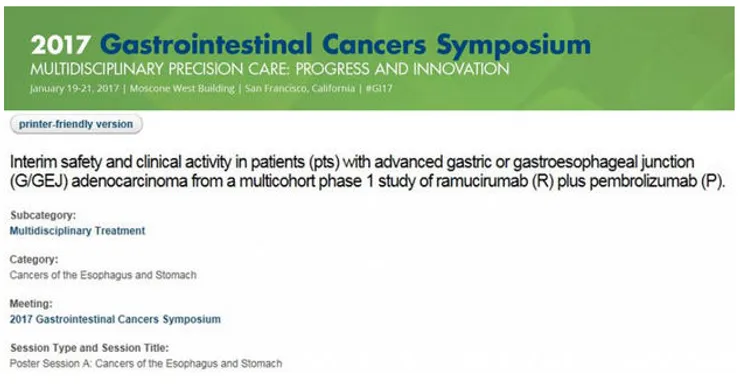 Figure 1
 Figure 2
 Figure 3
 Figure 4