
(Colorectal Cancer) Efficacy of Continuing FOLFOXIRI + Avastin in Second-Line Treatment?
Medical Supporter — Information Notice
This article is a summary of international medical information and is not medical advice; it cannot replace the diagnosis or treatment plan of your attending physician. The medical technologies, drug information and clinical data presented here are compiled from public literature and official statements of major Japanese medical institutions; the applicability and outcome of any therapy vary with each patient and must be assessed individually by a qualified physician.
- July 2, 2019
- Read time: 2 minutes
From May 31 to June 4, 2019, at the American Society of Clinical Oncology (ASCO 2019) held in Chicago, USA, results were presented from the "Efficacy and Safety Validation of FOLFOXIRI + Avastin Combination Therapy as First- and Second-Line Treatment in Unresectable Relapsed Colorectal Cancer Patients in the TRIBE2 Phase III Clinical Trial."
The TRIBE2 Phase III clinical trial divided patients into Groups A and B. Group A received FOLFOX + Avastin combination therapy as first-line treatment, then switched to FOLFIRI + Avastin combination therapy as second-line treatment. Group B received FOLFOXIRI + Avastin combination therapy as first-line treatment, then continued with the same combination therapy in second-line treatment. The primary endpoint was progression-free survival 2 (PFS2: the period from randomization until disease progression during second-line treatment). Secondary endpoints included objective response rate, progression-free survival 1 (PFS1: the period from randomization until disease progression during first-line treatment), and overall survival.
Patient Classification:
-
Tumor location:
- Group A: Right-sided colon 38%
- Group B: Right-sided colon 38%
-
Metastasis status:
- Group A: Synchronous metastasis 89%
- Group B: Synchronous metastasis 89%
-
Gene mutation expression:
- Group A: RAS mutation 65%, BRAF mutation 10%
- Group B: RAS mutation 63%, BRAF mutation 10%
Follow-up results showed: The primary endpoint PFS2 was 17.5 months for Group A vs. 19.1 months for Group B, with Group B showing significant improvement.
Secondary endpoint PFS1 was 9.8 months for Group A vs. 12.0 months for Group B, with Group B showing significant improvement. First-line objective response rate was 50% for Group A vs. 62% for Group B, with Group B showing favorable results.
Regarding overall survival, the number of events was insufficient for complete results. In this trial, overall survival was 22.6 months for Group A vs. 27.6 months for Group B, with Group B showing significant improvement.
In the safety evaluation, the incidence of diarrhea was 5% (Group A) vs. 17% (Group B), neutropenia was 21% (Group A) vs. 50% (Group B), and febrile neutropenia was 3% (Group A) vs. 7% (Group B). These results indicate a higher incidence of adverse events in Group B.
Based on TRIBE2 trial results, Chiara Cremolini stated: For unresectable relapsed colorectal cancer patients receiving first- and second-line treatment with FOLFOXIRI + Avastin combination therapy, continuing the same regimen is clinically meaningful as long as patients can tolerate the adverse events caused by the drugs.
Source: Updated results of TRIBE2, a phase III, randomized strategy study by GONO in the first- and second-line treatment of unresectable mCRC. (2019 ASCO Annual Meeting, Abstract No: 3508)
#ColorectalCancer
- Clinical Trial Medications
Medical Supporter was formerly certified as an international medical visa guarantor by Japan's Ministry of Foreign Affairs and the Ministry of Economy, Trade and Industry (B-066).
Considering medical care in Japan? Need information and support?
We help you organize the information needed for medical travel to Japan, liaise with Japanese medical institutions, and arrange a second-opinion consultation.The first consultation is free; an advisor will help you clarify the next steps.
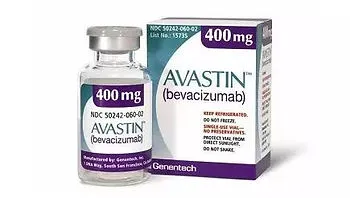 Figure 1
 Figure 2
 Figure 3
 Figure 4