
(Prostate Cancer) What Is the Recommended Dose of Darolutamide?
Medical Supporter — Information Notice
This article is a summary of international medical information and is not medical advice; it cannot replace the diagnosis or treatment plan of your attending physician. The medical technologies, drug information and clinical data presented here are compiled from public literature and official statements of major Japanese medical institutions; the applicability and outcome of any therapy vary with each patient and must be assessed individually by a qualified physician.
- August 27, 2019
- Read time: 2 minutes
On July 30, 2019, the U.S. Food and Drug Administration (FDA) approved darolutamide for the treatment of non-metastatic castration-resistant prostate cancer patients.
This approval was based on the ARAMIS trial, a multicenter, double-blind, 2:1 randomized controlled trial enrolling 1,509 non-metastatic castration-resistant prostate cancer patients. Patients received either oral darolutamide 600 mg twice daily (N=955) or placebo (N=554). All patients, except those who had undergone bilateral orchiectomy, also received a gonadotropin-releasing hormone agonist. Patients with a history of seizures (N=12) were enrolled in the darolutamide group.
The primary endpoint was metastasis-free survival, defined as time to first distant metastasis, death, or any cause of death (within 33 weeks of the last imaging), whichever occurred first. The median metastasis-free survival was: darolutamide group 40.4 months / placebo group 18.4 months. However, this trial did not have confirmed overall survival data.
Adverse events occurring in 2% or more of the darolutamide group included fatigue, pain in extremities, and rash. Compared to the placebo group, the darolutamide group had higher rates of ischemic heart disease (4.3%) and heart failure (2.1%), while the incidence of seizures was the same between groups.
The recommended dose of darolutamide is 600 mg (two 300 mg tablets) taken orally twice daily with food. Patients who have not undergone bilateral orchiectomy should also receive a gonadotropin-releasing hormone agonist.
[Important Note] Medical Supporter's translations of overseas clinical trial data and pharmaceutical information are not intended to encourage participation in clinical trials or use of new drugs. The translated information is for reference only and not intended as medication guidelines. Please discuss with healthcare professionals and refer to the original text below the article for accurate information.
For the recommended dose of darolutamide, please refer to the data published by the U.S. FDA.
Medical Supporter was formerly certified as an international medical visa guarantor by Japan's Ministry of Foreign Affairs and the Ministry of Economy, Trade and Industry (B-066).
Considering medical care in Japan? Need information and support?
We help you organize the information needed for medical travel to Japan, liaise with Japanese medical institutions, and arrange a second-opinion consultation.The first consultation is free; an advisor will help you clarify the next steps.
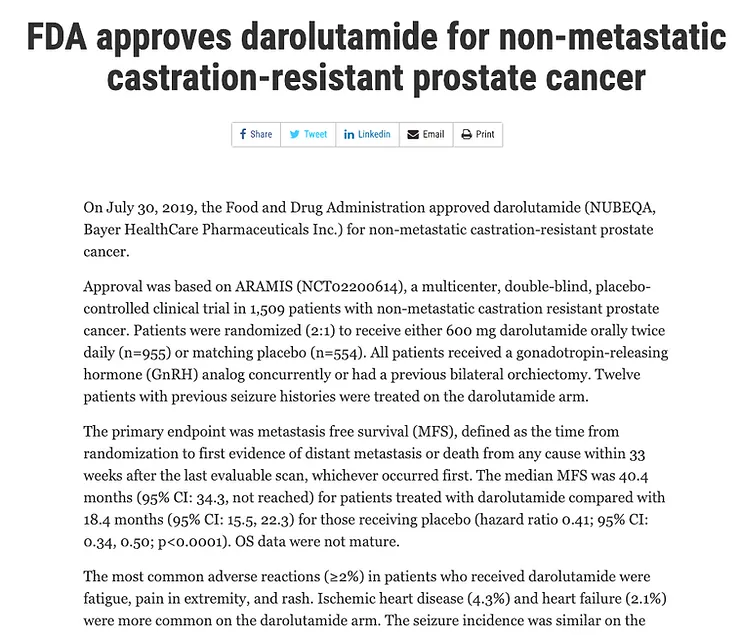 Figure 1
 Figure 2
 Figure 3
 Figure 4