
(Breast Cancer) DS-8201a at ESMO 2016
Medical Supporter — Information Notice
This article is a summary of international medical information and is not medical advice; it cannot replace the diagnosis or treatment plan of your attending physician. The medical technologies, drug information and clinical data presented here are compiled from public literature and official statements of major Japanese medical institutions; the applicability and outcome of any therapy vary with each patient and must be assessed individually by a qualified physician.
- October 28, 2016
- Reading time: 1 minute
At ESMO 2016, Dr. Kenji Tamura of the National Cancer Center Hospital Japan presented results demonstrating that DS-8201a — an anti-HER2 antibody-drug conjugate — showed efficacy in breast cancer and gastric cancer. DS-8201a is a compound that links an anti-HER2 antibody with DXd, a topoisomerase inhibitor. In animal models, it demonstrated activity even in tumors resistant to T-DM1 (ado-trastuzumab emtansine).
The drug has progressed to human clinical trials targeting breast cancer, gastric cancer, and gastroesophageal junction adenocarcinoma patients in a Phase 1 study administered every three weeks. Phase 1 consisted of toxicity testing with gradual dose escalation, enrolling Japanese and American patients, with subgroups including low-HER2 patients and solid tumor patients other than breast or gastric cancer. At the time of this presentation, Phase 1 data from 22 of 23 enrolled patients (median age 66 years) was reported: 16 breast cancer patients (73%), 5 gastric cancer patients (23%), and 1 GEJ adenocarcinoma patient (5%).
Dose levels tested: 0.8, 1.6, 3.2, 6.4, and 8.0 mg/kg. Three patients received 8.0 mg/kg, of whom two subsequently had their dose reduced.
Safety results: No Grade 4 adverse events or life-threatening events were observed. Seven Grade 3 adverse events occurred: hypocalcemia, anemia, lymphopenia, and cholangitis. All participants completed subsequent treatment cycles without discontinuation due to adverse events.
Efficacy results: Among 20 evaluable patients (12 previously treated with T-DM1, 5 with low HER2 expression), 7 achieved partial response (PR), with a disease control rate (DCR) of 90%. Among prior T-DM1 recipients, the response rate was 18% and DCR was 64%. With continued DS-8201a treatment, the response rate was 42% and DCR was 92%. All PR patients received doses of 5.4 mg/kg or higher.
An expansion cohort at 6.4 mg/kg every three weeks is currently ongoing.
Tags: #BreastCancer #GastricCancer
- Clinical trial drug
Medical Supporter was formerly certified as an international medical visa guarantor by Japan's Ministry of Foreign Affairs and the Ministry of Economy, Trade and Industry (B-066).
Considering medical care in Japan? Need information and support?
We help you organize the information needed for medical travel to Japan, liaise with Japanese medical institutions, and arrange a second-opinion consultation.The first consultation is free; an advisor will help you clarify the next steps.
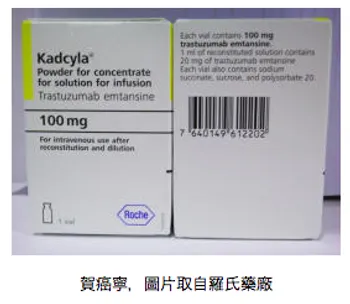 Figure 1
 Figure 2
 Figure 3
 Figure 4