
Keytruda News and the Evolution of Immunotherapy
Medical Supporter — Information Notice
This article is a summary of international medical information and is not medical advice; it cannot replace the diagnosis or treatment plan of your attending physician. The medical technologies, drug information and clinical data presented here are compiled from public literature and official statements of major Japanese medical institutions; the applicability and outcome of any therapy vary with each patient and must be assessed individually by a qualified physician.
- December 15, 2015
- Reading time: 1 minute
Recent international news featuring former U.S. President Jimmy Carter's successful cancer treatment has brought significant attention to immunotherapy. President Carter received Pembrolizumab (Keytruda), an immune checkpoint inhibitor developed by Merck & Co. (MSD), which has received FDA approval. In various regions, including Taiwan, patients may consult their physicians regarding special access programs for self-funded treatment or participation in ongoing clinical trials. It is important to note that the cost of self-funded therapy is significant, as dosage is typically determined based on body weight.
Keytruda has demonstrated remarkable efficacy in the treatment of malignant melanoma. However, it is essential to distinguish between immune checkpoint inhibitors like Keytruda and other forms of cell-based immunotherapy. Cell-based therapies, such as Dendritic Cell (DC) therapy, Multi-peptide vaccines, and Activated Lymphocyte therapy, involve harvesting and expanding a patient's own immune cells. Due to regulatory frameworks, these therapies are often only available through clinical trials in certain regions. Many patients travel overseas to access these advanced treatments, and we look forward to broader regulatory approvals to benefit more patients locally.
According to Dr. Ernestow, Director of the Melanoma Program at the Cleveland Clinic, approximately 30% of patients receiving Keytruda experience significant tumor shrinkage. While a complete response (where the tumor disappears entirely) is seen in about 5% of patients, the majority of responders experience significantly prolonged survival, often exceeding 1.5 years. Patients who achieve a complete response may achieve even longer long-term survival.
Source: Adapted from Apple Daily and Cleveland Clinic Reports.
Immunotherapy Efficacy #Malignant Melanoma #Ureteral Cancer
- Immunotherapy
- (Solid Tumors) Clinical efficacy of Pembrolizumab (Keytruda)
- (Solid Tumors) Rakuten Medical initiates Phase I clinical trial for RM-1995 photo-immunotherapy
- (Lung Cancer) Therapeutic outcomes of Pembrolizumab (Keytruda)
Medical Supporter was formerly certified as an international medical visa guarantor by Japan's Ministry of Foreign Affairs and the Ministry of Economy, Trade and Industry (B-066).
Considering medical care in Japan? Need information and support?
We help you organize the information needed for medical travel to Japan, liaise with Japanese medical institutions, and arrange a second-opinion consultation.The first consultation is free; an advisor will help you clarify the next steps.
 Figure 1
 Figure 2
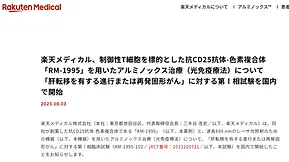 Figure 3
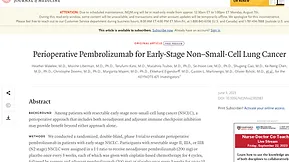 Figure 4