Full detail content for this treatment is being translated. For a localized consultation in English, please contact our coordinators — we respond within 24 hours.
NK / BAK Immune-Cell Therapy
NK / BAK Immune-Cell Therapy
If you are considering NK or BAK therapy, start with your condition and treatment history. We help organize records, test results and questions so the receiving clinic can explain eligibility, cell processing, possible risks and costs.
Understanding the cell-therapy options
NK natural killer cell therapy
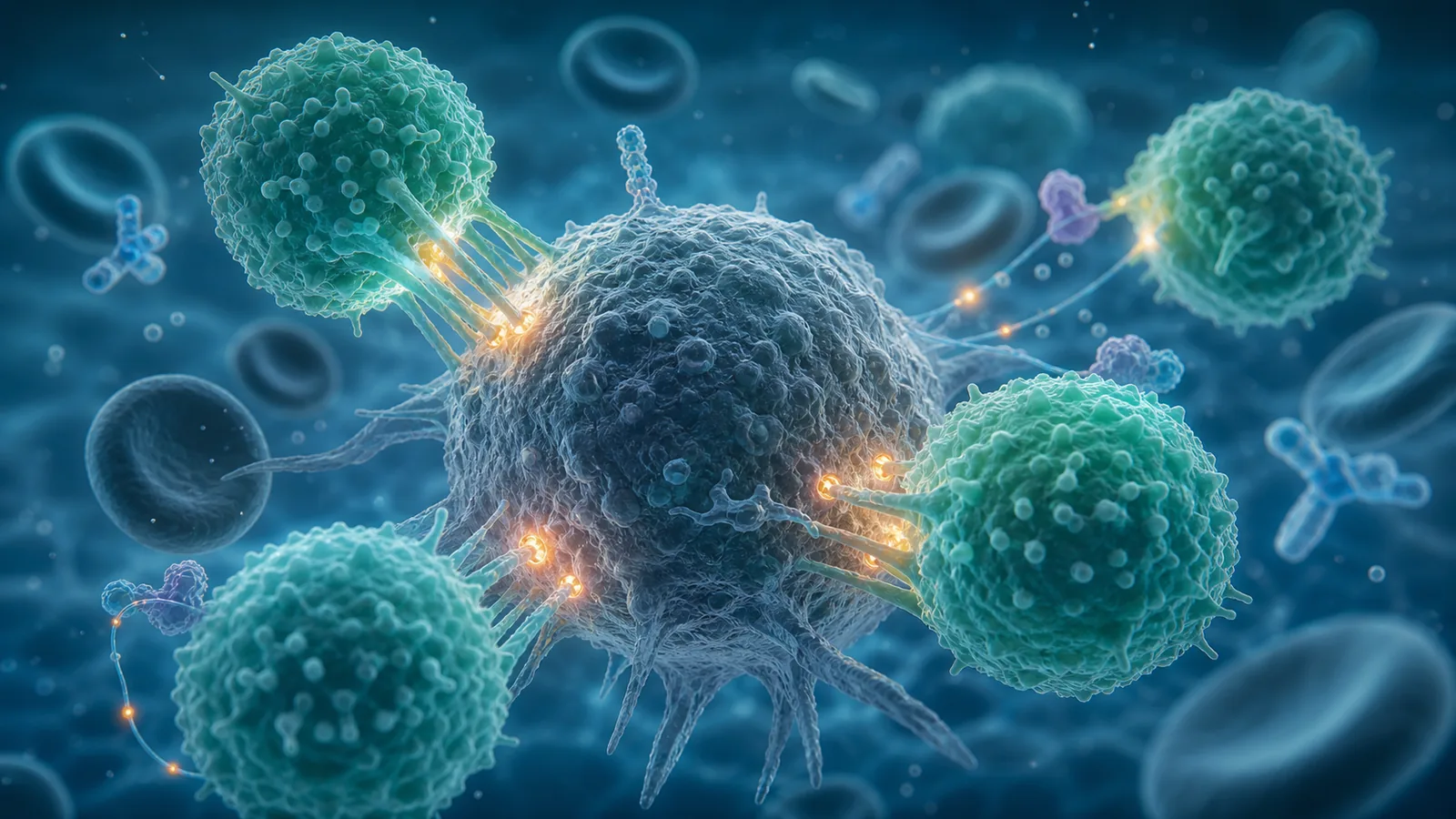
NK cells are natural killer cells involved in immune responses. Autologous NK-cell therapy described by clinics generally involves blood collection, cell separation, culture and reinfusion. Laboratory activity does not establish clinical benefit for an individual patient; suitability depends on the condition and available evidence.
BAK immune-cell therapy
BAK is a name used by clinics for an immune-cell therapy; the name alone does not make it equivalent to a general NK protocol. Ask which cells are used, how they are cultured, whether the service is currently available, and about its goals, risks and self-pay charges.
What to discuss during assessment
Condition and treatment goals
The doctor reviews cancer type, stage, prior treatment, blood tests and overall condition to discuss possible eligibility and the limits of current evidence.
Standard care and follow-up
Bring your current medicines and treating doctor’s plan. Discuss compatibility with ongoing care, adverse-reaction monitoring and follow-up after returning home. Do not stop medicines or standard treatment on your own.
From consultation to treatment arrangements
Prepare records for medical review
The doctor reviews cancer type, stage, prior treatment, blood tests and overall condition to discuss possible eligibility and the limits of current evidence.
Discuss the protocol, costs and blood collection
The clinic explains cell types, collection and culture methods, possible adverse reactions and self-pay charges before arranging care with your informed agreement.
Cell processing, reinfusion and follow-up
After culture and quality checks, the clinic decides whether to proceed with reinfusion based on test results and your condition. Timing, session count and follow-up intervals depend on the protocol and are discussed before travel.
Clinics and consultation topics
The following clinics provide information on NK-cell therapy. Eligibility, current services, fees and appointment arrangements are confirmed with the receiving clinic.
Ikebukuro Clinic
Toshima Ward, Tokyo
Autologous NK-cell therapy, with culture, reinfusion and follow-up discussed according to the individual condition.
Ginza PHOENIX Clinic
Chiyoda Ward, Tokyo (Akihabara)
Highly activated NK-cell therapy, including cell culture, quality checks and pretreatment assessment.
Questions about NK / BAK
Are NK and BAK the same therapy?
BAK is a name used by clinics for an immune-cell therapy; the name alone does not make it equivalent to a general NK protocol. Ask which cells are used, how they are cultured, whether the service is currently available, and about its goals, risks and self-pay charges.
Can this replace my current standard treatment?
Bring your current medicines and treating doctor’s plan. Discuss compatibility with ongoing care, adverse-reaction monitoring and follow-up after returning home. Do not stop medicines or standard treatment on your own.
How long does it take, and how many visits are needed?
After culture and quality checks, the clinic decides whether to proceed with reinfusion based on test results and your condition. Timing, session count and follow-up intervals depend on the protocol and are discussed before travel.
Four common concerns — and honest answers
Specific answers depend on your medical record and your attending physician. We ensure language is not a barrier to your understanding.
Q1Will it hurt?
Pain depends on the person and the procedure. Japanese hospitals follow a complete pain-management workflow: pre-procedure assessment, intra-procedural anaesthesia, and post-procedural pain control. You can ask your attending physician about expected pain at the pre-procedure briefing — our interpreter will translate question and answer accurately.
Q2How serious are the side effects?
Side effects differ by therapy. Before you sign consent, Japanese hospitals will walk you through the possible side effects, their probability, and how they are managed. If anything is unclear, we will ask the physician to re-explain until you fully understand before signing.
Q3How long is the hospital stay?
It depends on the therapy. Day treatments require no admission; some therapies need 1–3 days of observation; surgery or particle therapy may need 1–3 weeks. Your physician will note the duration in the treatment plan, and we translate the plan for you and your family.
Q4How soon after treatment can I fly home?
Day treatments and outpatient therapies usually allow same-day or next-day flights. For therapies with hospitalisation, you typically observe for 2–3 days post-discharge, and your physician issues a fitness-to-fly note. We help you book a flexible return ticket.
This section is general guidance. Specific expectations, suitability, and timing must be determined by your attending physician in Japan based on your complete medical record.
Medical information disclaimer
The information on this page is for educational reference only and does not constitute medical advice. The suitability, side effects, and expected outcomes of any therapy must be determined by your attending physician in Japan based on your complete medical record. Medical Supporter does not replace any professional medical judgement.
Prepare your questions about NK / BAK
We help prepare records, contact clinics and arrange interpretation. Doctors and medical institutions provide diagnosis, treatment decisions and prescriptions.