
Kadcyla Plus Capecitabine in HER2-Positive Metastatic Breast Cancer: Phase 1/2 Trial
Medical Supporter — Avis d’information
Cet article est une synthèse d’informations médicales internationales et ne constitue pas un avis médical ; il ne remplace pas le diagnostic ni le plan de traitement de votre médecin traitant. Les informations présentées sont compilées à partir de publications publiques et de déclarations officielles d’établissements médicaux japonais ; l’adéquation et les résultats de toute thérapie varient selon chaque patient et doivent être évalués individuellement par un médecin qualifié.
On June 25, 2020, Javier Cortés and colleagues published the results of a Phase 1 and Randomized Phase 2 clinical trial in JAMA Oncology. The study investigated whether combining Kadcyla (Trastuzumab emtansine, T-DM1) with Capecitabine (Xeloda) would enhance efficacy in patients with previously treated HER2-positive metastatic breast cancer.
Study Design
The trial randomized 161 patients into two groups:
- Kadcyla Monotherapy Group (N=80): 3.6 mg/kg every three weeks.
- Combination Group (N=81): Kadcyla (3.6 mg/kg) + Capecitabine (administered at varying doses, e.g., 700 mg/m² twice daily on days 1–14 of a 21-day cycle).
The primary endpoint for the Phase 2 portion was the objective response rate (ORR).
Key Efficacy Results
The trial results showed a modest but not statistically significant difference in response:
- Objective Response Rate (ORR): 44% for the combination group vs. 36% for the monotherapy group.
- Progression-Free Survival (PFS): There was no significant improvement in the time patients lived without their disease worsening between the two groups.
Safety Profile
The incidence of Grade 3 or 4 adverse events was slightly higher in the combination group (44%) compared to the monotherapy group (41%). Common side effects included gastrointestinal symptoms and hand-foot syndrome typical of capecitabine. No Grade 5 (fatal) toxicities were reported.
Conclusion
Dr. Javier Cortés and the research team concluded that adding Capecitabine to Kadcyla did not result in a statistically significant improvement in objective response rates for patients with pretreated HER2-positive metastatic breast cancer. Based on these findings, T-DM1 monotherapy remains the standard of care in this setting.
Source: JAMA Oncology - T-DM1 Plus Capecitabine Trial Results
#BreastCancer #HER2Positive #Kadcyla #TDM1 #Capecitabine #Xeloda #CancerResearch
Vous envisagez des soins au Japon ? Besoin d’informations et d’aide ?
Nous vous aidons à rassembler les informations nécessaires pour un déplacement médical au Japon, à contacter les établissements japonais et à organiser une consultation de second avis.La première consultation est gratuite ; un conseiller vous aide à clarifier les prochaines étapes.
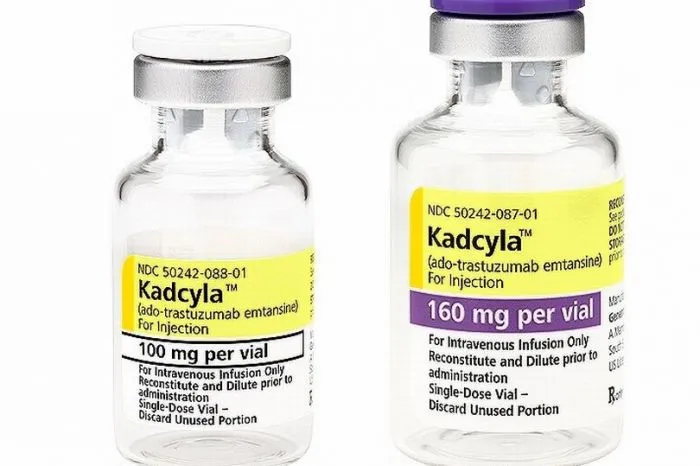 Figure 1
 Figure 2
 Figure 3
 Figure 4