Full detail content for this treatment is being translated. For a localized consultation in English, please contact our coordinators — we respond within 24 hours.
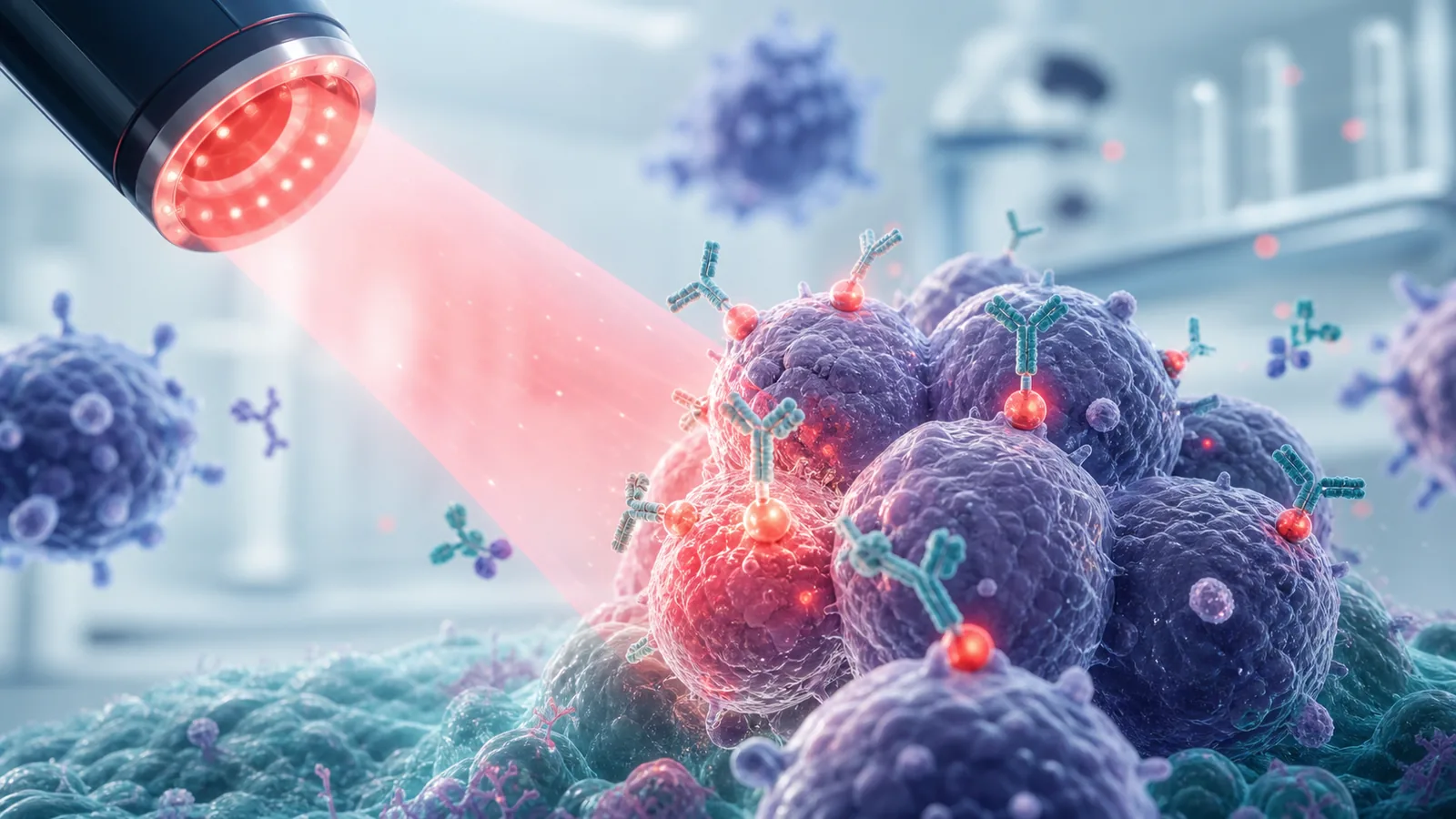
Near-Infrared Photoimmunotherapy / ICG Liposome
Near-Infrared Photo Immuno Therapy (PIT)
Summarizes near-infrared photoimmunotherapy, ICG Liposome, and MLDS consultation topics. Irradiation method, depth, availability, risks, and fees should be confirmed case by case with the clinic.
How Light-Based Immune-Related Consultation Is Evaluated
1. Antibody Targeting
A photosensitizer coupled to a targeting antibody is infused and selectively binds specific molecules on the cancer-cell surface.
2. Near-Infrared Irradiation
Official materials describe the mechanism using a photosensitizer and near-infrared irradiation. Patients should confirm the irradiation method, eligibility, contraindications, and possible risks with the clinic.
3. Immune Activation
Official materials may describe antigen release and immune response as part of the mechanism; the actual clinical response must be judged from the patient’s condition and follow-up tests.
Two Irradiation Modes
External Irradiation
Near-infrared light is applied directly to the target area, reaching up to 20-25 mm in depth. Well suited to superficial tumors of the skin, head and neck, and breast.
- Non-invasive, no hospital stay required
- Session duration approximately 1-1.5 hours
- Virtually painless, no burning sensation
Intravascular Irradiation (MLDS)
Official materials have described intravenous insertion of a specialized fiber-optic probe and use of MLDS equipment. Patient-facing copy should frame this as irradiation-method and device information requiring clinic confirmation, not as a promise to stimulate stem cells or affect deep tumors.
- Applicable to deep-seated tumors
- MLDS suitable for multiple anatomical sites
- Explored in research as an adjunct to chemotherapy and immunotherapies
4 Partner Photoimmunotherapy Centers in Japan
TGC Tokyo Cancer Clinic
Chuo-ku, Tokyo (Nihombashi-Hakozakicho)
Medical Supporter exclusive partner · dedicated photoimmunotherapy center
Tokyo Cancer Clinic
Chiyoda-ku, Tokyo (Iidabashi)
5th-generation ABeVax combined with PIT photoimmunotherapy
Chairman Dr. Hiroyuki Abe
Saisei Mirai Group
Tokyo · Osaka · Kobe
Photodynamic and sonodynamic therapy
Four common concerns — and honest answers
Specific answers depend on your medical record and your attending physician. We ensure language is not a barrier to your understanding.
Q1Will it hurt?
Pain depends on the person and the procedure. Japanese hospitals follow a complete pain-management workflow: pre-procedure assessment, intra-procedural anaesthesia, and post-procedural pain control. You can ask your attending physician about expected pain at the pre-procedure briefing — our interpreter will translate question and answer accurately.
Q2How serious are the side effects?
Side effects differ by therapy. Before you sign consent, Japanese hospitals will walk you through the possible side effects, their probability, and how they are managed. If anything is unclear, we will ask the physician to re-explain until you fully understand before signing.
Q3How long is the hospital stay?
It depends on the therapy. Day treatments require no admission; some therapies need 1–3 days of observation; surgery or particle therapy may need 1–3 weeks. Your physician will note the duration in the treatment plan, and we translate the plan for you and your family.
Q4How soon after treatment can I fly home?
Day treatments and outpatient therapies usually allow same-day or next-day flights. For therapies with hospitalisation, you typically observe for 2–3 days post-discharge, and your physician issues a fitness-to-fly note. We help you book a flexible return ticket.
This section is general guidance. Specific expectations, suitability, and timing must be determined by your attending physician in Japan based on your complete medical record.
Medical information disclaimer
The information on this page is for educational reference only and does not constitute medical advice. The suitability, side effects, and expected outcomes of any therapy must be determined by your attending physician in Japan based on your complete medical record. Medical Supporter does not replace any professional medical judgement.
Request a Photoimmunotherapy Consultation
Our Medical Supporter advisors will help you assess the photoimmunotherapy plan best suited to your case.