Full detail content for this treatment is being translated. For a localized consultation in English, please contact our coordinators — we respond within 24 hours.
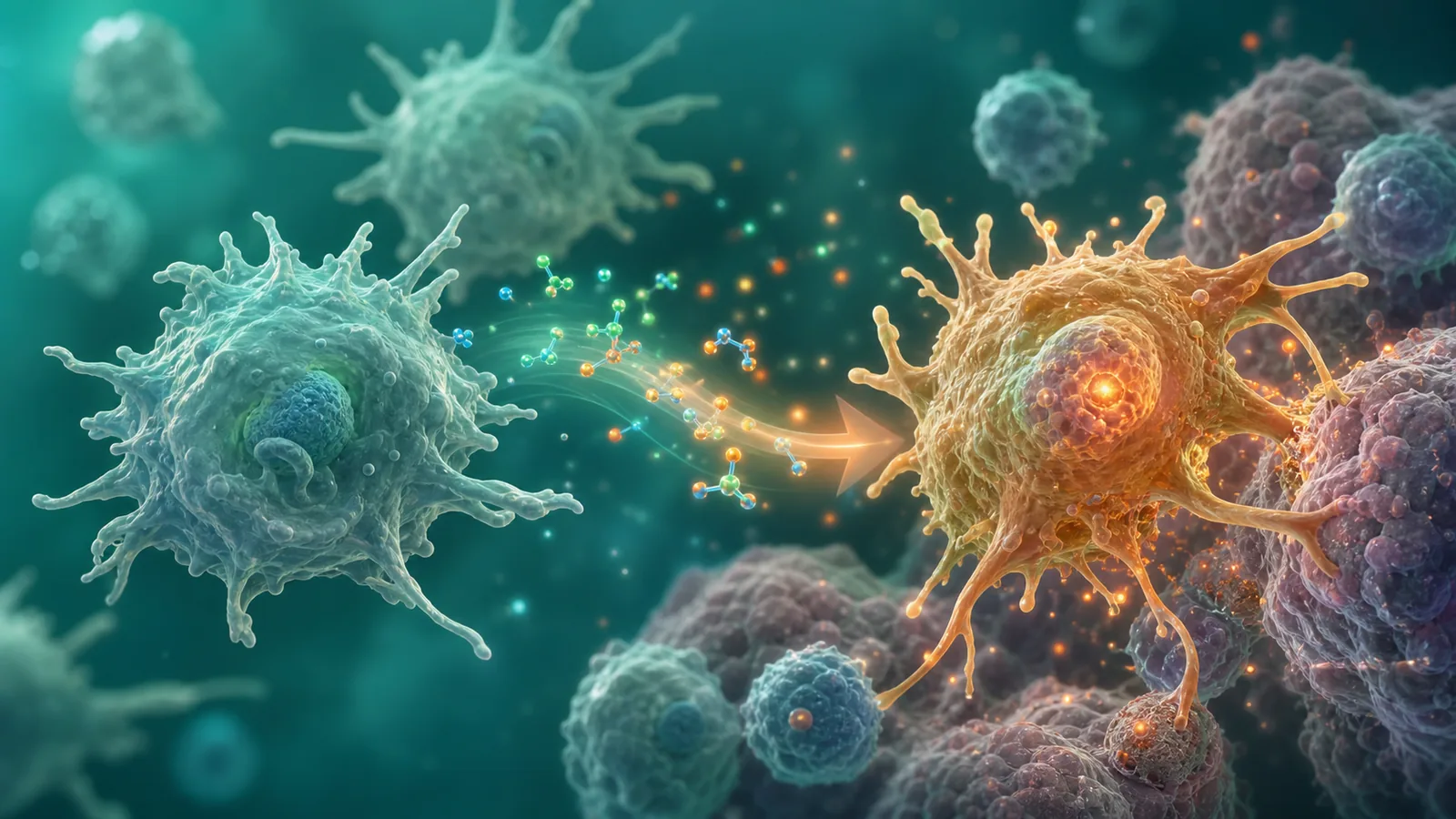
GcMAF / Hybrid MAT Macrophage Activation
Macrophage Activation Therapy
Bypass the Nagalase enzyme's immune blockade — awaken the body's most powerful scavenger cells, shift macrophages from the suppressive M2 to the aggressive M1 type, and let them actively engulf cancer cells.
Macrophages: The Body's Most Powerful Scavengers
M1 Activated Type: Immune Attack
M1 macrophages engulf and digest cancer cells, viruses and bacteria. They also act as antigen-presenting cells (similar to dendritic cells), presenting antigens to T cells to trigger an even stronger immune response.
M2 Suppressive Type: Hijacked by Cancer
In the tumor microenvironment, M2 macrophages release TNF and activate NF-κB, which in fact promotes cancer-cell proliferation and inflammation. That is why shifting macrophages from M2 back to M1 is so critical.
The Cunning of Cancer Cells: the Nagalase Enzyme Block
Normally, Gc protein is converted into macrophage-activating factor (MAF), which awakens macrophages to attack foreign invaders. However, cancer cells secrete the Nagalase enzyme that cleaves Gc protein, keeping macrophages dormant and allowing cancer cells to escape immune attack. The core of macrophage activation therapy is therefore to bypass the Nagalase blockade by supplying the active factors directly, restarting the immune system.
M1 vs M2 Macrophage Polarization
GcMAF promotes the anti-tumor M1 state and suppresses the tumor-induced pro-tumor M2 shift
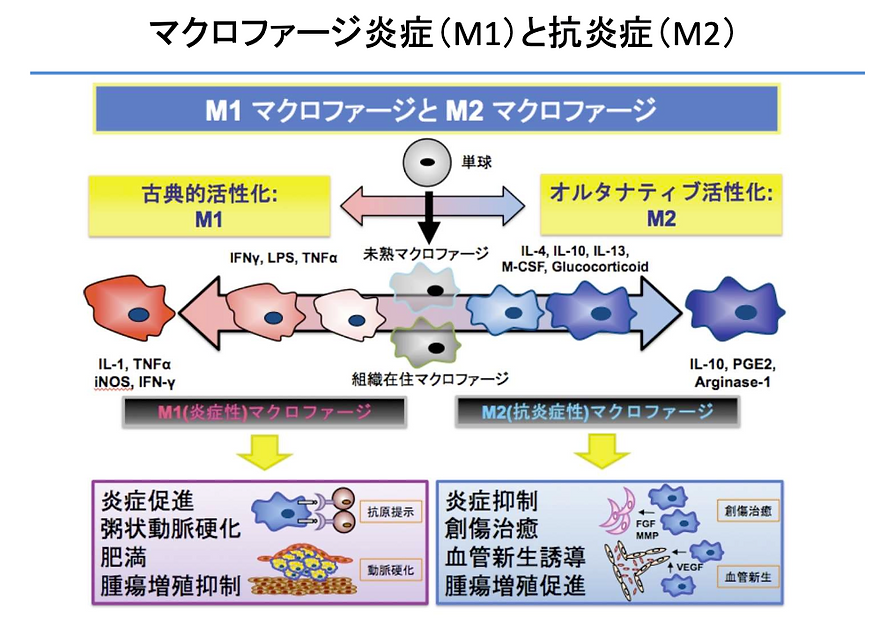
M1 (anti-tumor) vs M2 (pro-tumor) macrophage polarization (Ginza Ichome Clinic)
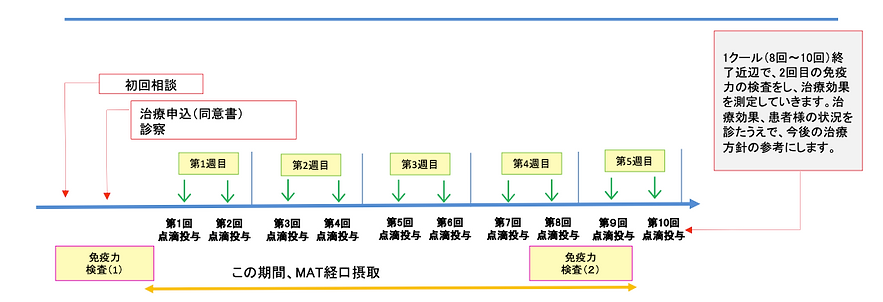
Standard Hybrid MAT timeline: 1 cycle = 8 sessions (~15 days); immune status is assessed from session 2 onward
Comparing the Two Therapies
Japan offers two complementary approaches to macrophage activation, each with its own strengths, selected according to the patient's condition.
Hybrid MAT
Plant-derived (Ginza Ichome Clinic)
- IAF (immune-regulating factor) is extracted from plants, with no risk of unknown infections
- Intravenous drip 1–2 times a week + daily oral ARL active factor
- Stably balances M1 and M2, avoiding excessive M2 dominance
- About 8–10 sessions per treatment course
- Suppresses the anaerobic-glycolysis energy supply of cancer cells
GcMAF
Blood-derived (Saisei Mirai Group)
- Prepared by extracting Gc protein from 240–360 ml of the patient's own blood
- Enzymatic processing at a CPC facility completes the drug within about 1 week
- Intramuscular injection (similar to an insulin shot)
- 3–7 intramuscular injections per week
- Can be combined with vitamin D supplementation for enhanced effect
Two Partner Medical Institutions
Ginza Ichome Clinic
Chuo Ward, Tokyo (Ginza 1-chome)
Hybrid MAT with plant-derived IAF + daily oral ARL
✓ Plant-extracted, no risk of unknown infections
Saisei Mirai Group
Tokyo · Osaka · Kobe
GcMAF from the patient's own blood + specimen analysis + ~1-week preparation + intramuscular injection
✓ Prepared from 240–360 ml of blood at a CPC facility
Chairman Dr. Toshio Inui
Four common concerns — and honest answers
Specific answers depend on your medical record and your attending physician. We ensure language is not a barrier to your understanding.
Q1Will it hurt?
Pain depends on the person and the procedure. Japanese hospitals follow a complete pain-management workflow: pre-procedure assessment, intra-procedural anaesthesia, and post-procedural pain control. You can ask your attending physician about expected pain at the pre-procedure briefing — our interpreter will translate question and answer accurately.
Q2How serious are the side effects?
Side effects differ by therapy. Before you sign consent, Japanese hospitals will walk you through the possible side effects, their probability, and how they are managed. If anything is unclear, we will ask the physician to re-explain until you fully understand before signing.
Q3How long is the hospital stay?
It depends on the therapy. Day treatments require no admission; some therapies need 1–3 days of observation; surgery or particle therapy may need 1–3 weeks. Your physician will note the duration in the treatment plan, and we translate the plan for you and your family.
Q4How soon after treatment can I fly home?
Day treatments and outpatient therapies usually allow same-day or next-day flights. For therapies with hospitalisation, you typically observe for 2–3 days post-discharge, and your physician issues a fitness-to-fly note. We help you book a flexible return ticket.
This section is general guidance. Specific expectations, suitability, and timing must be determined by your attending physician in Japan based on your complete medical record.
Medical information disclaimer
The information on this page is for educational reference only and does not constitute medical advice. The suitability, side effects, and expected outcomes of any therapy must be determined by your attending physician in Japan based on your complete medical record. Medical Supporter does not replace any professional medical judgement.
Request a Macrophage-Activation Consultation
Requires a relatively lower blood-draw burden and may be considered as an adjunct option; suitability for patients in fragile condition still requires physician review based on disease status and standard-care context.