Full detail content for this treatment is being translated. For a localized consultation in English, please contact our coordinators — we respond within 24 hours.

Cancer Gene Therapy ·
Advanced Cell Therapy Clinical Translation
An overview of evaluation pathways for cancer gene-related therapy and advanced cell therapy in Japan. Suitability, risks, and integration with standard treatment require specialist review of each patient’s records.
What is Cancer Gene Therapy?
Cancer is fundamentally a collapse of the balance between tumor-suppressor genes and oncogenes. In healthy cells, damaged DNA automatically halts proliferation or triggers apoptosis — but cancer cells have lost this braking system.
Gene therapy reactivates the cell's "self-check" by introducing functional tumor-suppressor genes or blocking oncoprotein expression. This is not chemical poisoning — it is restoring cancer cells to normal function or natural death.
"Gene-related treatment consultations may be available at selected self-pay medical institutions in Japan. Eligibility, expected benefit, risks, alternatives, and whether the approach is appropriate must be confirmed by the receiving physician after reviewing the patient’s medical records."
Individual Side-Effect Review
Risks depend on vector type, delivery route, prior treatment, and overall condition
Overcomes Drug Resistance
Explored in research as an adjunct to improve chemotherapy sensitivity
Physician Review Required
The receiving physician must confirm whether a gene-related approach is relevant to the tumor type, prior treatment, and overall condition.
Advanced Delivery Vectors
Lentivirus and liposome precision delivery technology
How Cancer Gene Therapy Works
Tumor-suppressor injection vs. oncogene inhibition — twin paths to restoring normal cellular programming
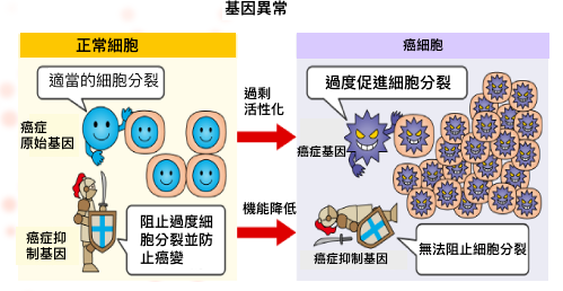
Before vs after: tumor-suppressor genes are restored, cancer cells undergo apoptosis
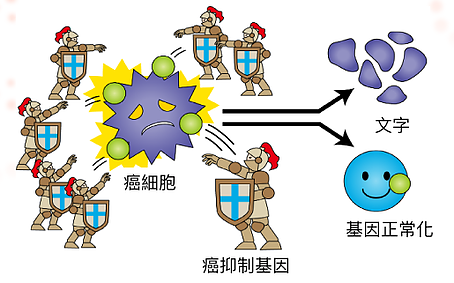
Tumor-suppressor genes (the "shield") counter cancer cells and restore gene normalisation
Core Technology Leaders
Medical Supporter helps patients request review from selected Japanese institutions that publicly describe gene-related or advanced cell-therapy consultation pathways.
Tumor-Suppressor Gene Injection Therapy
Package functional tumor-suppressor genes (e.g. p53) in a delivery vector and infuse them into the body, restoring the cell's natural apoptosis mechanism.
- Explored as an adjunct direction for drug-resistance-related cases
- Candidate targets reviewed through genomic testing
- Outpatient or inpatient need decided by physicians
TRAIL Apoptosis-Induction Therapy
Uses TRAIL (TNF-related apoptosis-inducing ligand) in a research-described pathway. Potential benefits, off-target risks, and suitability must be explained by the treating institution.
- Highly selective apoptosis induction
- Combined with NK-cell therapy
- Suppresses tumor growth and metastasis
JG-1 Novel Composite Gene Therapy
Delivers CDC6shRNA (blocks cancer-cell division) and p16 (triggers cell-cycle arrest) simultaneously via lentiviral vector for stable expression.
- Dual-pathway research context
- Lentivirus-related technology requires physician explanation
- Institution availability must be confirmed case by case
Personalised Cancer Vaccine Research & Advanced Cell-Therapy Clinical Translation
Personalised antigen screening and cell-engineering techniques are reviewed in a Japanese research-hospital setting. Suitability and expected benefits must be assessed by physicians based on the patient’s records.
- Precision antigen target screening
- Clinical translation at a research hospital
- Advanced cell-engineering techniques
Three Evaluation Points for Gene-Related Therapy
Confirming feasibility through test records, treatment history, and risk explanation
Identify the Anomaly (ID)
Physicians interpret potentially relevant genetic changes using genomic tests, imaging, pathology, and prior treatment records.
Repair / Block (Fix)
The physician explains the candidate technology’s rationale, availability, contraindications, alternatives, and clinical uncertainty.
Induce Apoptosis
Potential goals are usually discussed around tumour-related signalling pathways; actual response, follow-up, and stopping rules should be confirmed in advance.
28 ml Blood Ultra-Early Screening
Powered by Ginza PHOENIX Clinic
- Detects 127 common cancer driver-gene abnormalities
- Imaging and laboratory findings must be interpreted by physicians; screening claims vary by method and evidence level
- Risk assessment tools should be discussed with a physician and should not be treated as diagnosis or outcome prediction
From Diagnosis to Treatment
A One-Stop Precision Plan
Medical Supporter helps organize test records, translate documents, and contact partner medical institutions in Japan so patients can request second opinions and feasibility reviews with a clearer medical file.
Treatment Schedule & Cycle
A stable and continuous gene-correction process
Initial Consultation & Blood Draw
Conduct a 28 ml blood test to identify genetic-anomaly targets — just 30 outpatient minutes.
Personalised Treatment Plan
Based on test results, our specialist team selects the matching tumor-suppressor vector or RNAi sequence.
Enter Treatment Cycle (every 3 weeks)
A full course is 6 IV infusions — one every 3 weeks, totalling ~4.5 months.
Four common concerns — and honest answers
Specific answers depend on your medical record and your attending physician. We ensure language is not a barrier to your understanding.
Q1Will it hurt?
Pain depends on the person and the procedure. Japanese hospitals follow a complete pain-management workflow: pre-procedure assessment, intra-procedural anaesthesia, and post-procedural pain control. You can ask your attending physician about expected pain at the pre-procedure briefing — our interpreter will translate question and answer accurately.
Q2How serious are the side effects?
Side effects differ by therapy. Before you sign consent, Japanese hospitals will walk you through the possible side effects, their probability, and how they are managed. If anything is unclear, we will ask the physician to re-explain until you fully understand before signing.
Q3How long is the hospital stay?
It depends on the therapy. Day treatments require no admission; some therapies need 1–3 days of observation; surgery or particle therapy may need 1–3 weeks. Your physician will note the duration in the treatment plan, and we translate the plan for you and your family.
Q4How soon after treatment can I fly home?
Day treatments and outpatient therapies usually allow same-day or next-day flights. For therapies with hospitalisation, you typically observe for 2–3 days post-discharge, and your physician issues a fitness-to-fly note. We help you book a flexible return ticket.
This section is general guidance. Specific expectations, suitability, and timing must be determined by your attending physician in Japan based on your complete medical record.
Medical information disclaimer
The information on this page is for educational reference only and does not constitute medical advice. The suitability, side effects, and expected outcomes of any therapy must be determined by your attending physician in Japan based on your complete medical record. Medical Supporter does not replace any professional medical judgement.
Why Choose Japanese
Cancer Gene Therapy?
Several Japanese medical institutions and research teams provide evaluation pathways for gene-vector, RNA-interference, and immune-related approaches. Whether they can serve as adjunctive options depends on cancer type, stage, prior treatment, and physician judgment.
Multi-Gene Synergy
Beyond p53 alone — we co-deliver p16, PTEN, RB and more for a multi-layered braking system.
Vector and Delivery Review
Review vector type, quality controls, delivery route, infection risk, and follow-up plan.
General-Condition Assessment
Older or frail patients need review of liver and kidney function, infection risk, and treatment tolerance.
Synergises with Chemo & Radiation
Explored in research as an adjunct to chemotherapy; outcomes vary by patient and require individual assessment by the attending physician.
Frequently Asked Questions
Answering every question about gene therapy
What are tumor-suppressor genes and oncogenes?
In healthy cells, tumor-suppressor genes (the "brakes") and oncogenes (the "accelerator") are in balance. When the brakes are damaged or the accelerator is overactive, cells proliferate uncontrollably and form cancer. Gene therapy rebuilds the braking system.
Does gene therapy have side effects?
Side effects depend on vector type, delivery route, dose, prior treatment, and general condition. Possible reactions include fever, injection-site discomfort, or immune-related reactions; actual risks, contraindications, and follow-up must be confirmed during physician-led informed consent.
How long does a treatment course take?
A standard course is 6 infusions, one every 3 weeks — about 18 weeks total. Each infusion takes 1–2 hours.
Which cancers is gene therapy suitable for?
Considered for use in many solid tumors (lung, gastric, breast, liver, etc.) and some hematologic cancers. For relapsed, drug-resistant patients, it is being explored in research as an adjunct to address treatment resistance.
What is the 28 ml blood test at Ginza PHOENIX Clinic?
A high-precision early-detection screen developed by Ginza PHOENIX Clinic analysing 127 genetic anomalies — spotting blood-borne cancer signals long before the tumor is visible on PET-CT imaging.
What makes Gankyrin therapy special?
Gankyrin is the "janitor" in many cancers that clears away tumor-suppressor genes like p53. Tenjin Cancer Clinic blocks Gankyrin so your own suppressors come back to work.
How does advanced cell therapy differ from standard gene therapy?
Standard gene therapy delivers repair genes directly into the body. Advanced cell therapy combines cell engineering with antigen-recognition techniques — precise modification and culture happen in a research lab. These programmes are led by national research centers to tackle hard-to-treat cancers.
Can it be combined with chemotherapy or radiation?
Yes. In clinical research, gene therapy is being explored as an adjunct to enhance chemotherapy sensitivity; outcomes vary by patient and require individual assessment by the attending physician.
Reboot Your Line of Defence
Medical Supporter can organize genomic tests, imaging, pathology, and prior treatment records, then contact Japanese medical institutions for second opinions and feasibility review.