Full detail content for this treatment is being translated. For a localized consultation in English, please contact our coordinators — we respond within 24 hours.
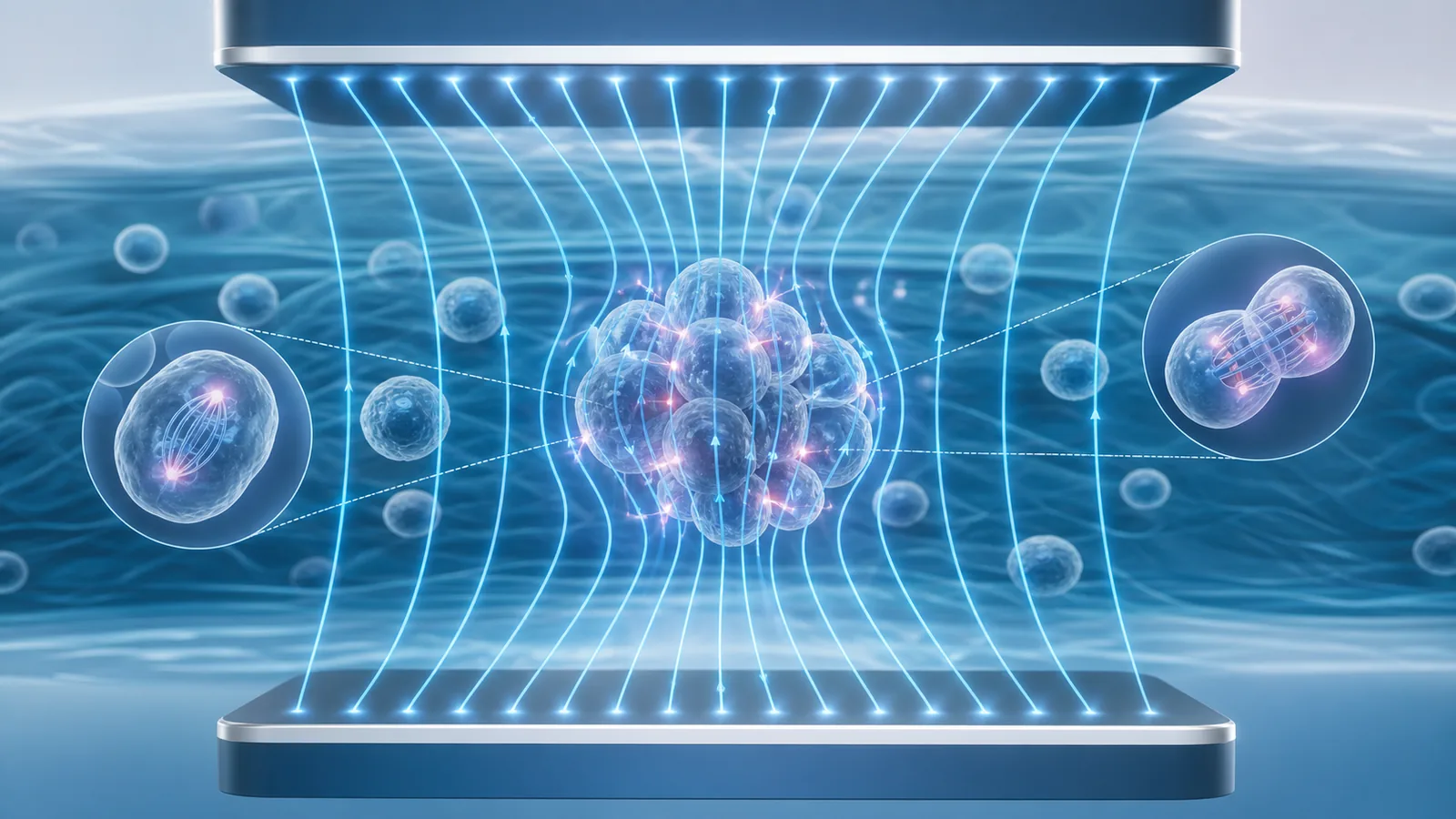
ECCT Electric Field Therapy
Electro-Capacitive Cancer Therapy
A wearable low-frequency electric field device used at home as an adjunct option; whether it fits standard therapies, and what risks or burden apply, should be reviewed case by case.
A Low-Frequency Field that Disrupts Cancer-Cell Division
The defining feature of cancer cells is uncontrolled rapid division. Cell division requires precise assembly of spindle-fiber microtubules. ECCT uses a low-frequency electric field at a specific frequency to disrupt spindle formation, preventing cancer cells from completing mitosis. Normal cells, which divide more slowly, are largely unaffected, making this a physically selective therapy.
Japan's Saisei Mirai Group integrates ECCT into a comprehensive care plan, combining it with GcMAF macrophage activation, JG-1 gene therapy and photo-/sonodynamic therapy to offer patients a low-burden, highly synergistic adjunctive option.
Four Key Advantages
Non-Invasive Physical Therapy
The low-frequency field disrupts only cancer-cell division, leaves normal cells almost untouched, and carries no surgical risk.
Wearable, At-Home Therapy
The wearable device can be taken home; patients typically wear it 18+ hours a day while continuing normal daily life and work.
Synergistic with Chemotherapy
Explored in research as an adjunct to chemotherapy; any dosing adjustments require individual assessment by the attending physician, and outcomes vary by patient.
Non-invasive adjunct option
Discussed as a non-invasive adjunct option; daily burden, possible discomfort, and combination conditions should be explained by physicians case by case.
Providing Institution
Saisei Mirai Group
Tokyo · Osaka · Kobe (6 clinics)
Led by Chairman Dr. Toshio Inui (Kyoto Prefectural University of Medicine, 1978) and Director Dr. Shinichiro Akiyama (Sapporo Medical University), Saisei Mirai operates 6 clinics across 4 sites — among Japan's largest regenerative-medicine networks. Core integrative therapies include ECCT electric-field therapy, GcMAF macrophage activation, the JG-1 next-generation gene therapy, and photo-/sonodynamic therapy, developed in joint research with Tokushima University, Kobe University Hospital, Kyoto Prefectural University of Medicine, and Konan University.
Four common concerns — and honest answers
Specific answers depend on your medical record and your attending physician. We ensure language is not a barrier to your understanding.
Q1Will it hurt?
Pain depends on the person and the procedure. Japanese hospitals follow a complete pain-management workflow: pre-procedure assessment, intra-procedural anaesthesia, and post-procedural pain control. You can ask your attending physician about expected pain at the pre-procedure briefing — our interpreter will translate question and answer accurately.
Q2How serious are the side effects?
Side effects differ by therapy. Before you sign consent, Japanese hospitals will walk you through the possible side effects, their probability, and how they are managed. If anything is unclear, we will ask the physician to re-explain until you fully understand before signing.
Q3How long is the hospital stay?
It depends on the therapy. Day treatments require no admission; some therapies need 1–3 days of observation; surgery or particle therapy may need 1–3 weeks. Your physician will note the duration in the treatment plan, and we translate the plan for you and your family.
Q4How soon after treatment can I fly home?
Day treatments and outpatient therapies usually allow same-day or next-day flights. For therapies with hospitalisation, you typically observe for 2–3 days post-discharge, and your physician issues a fitness-to-fly note. We help you book a flexible return ticket.
This section is general guidance. Specific expectations, suitability, and timing must be determined by your attending physician in Japan based on your complete medical record.
Medical information disclaimer
The information on this page is for educational reference only and does not constitute medical advice. The suitability, side effects, and expected outcomes of any therapy must be determined by your attending physician in Japan based on your complete medical record. Medical Supporter does not replace any professional medical judgement.
Request an ECCT Consultation
An evaluation direction for patients who want to understand non-invasive adjunct options, daily-life burden, and possible combination with standard treatment.