Heavy Ion Radiotherapy: QST Hospital and Advanced Cancer Eradication Technology
Medical Supporter — Information Notice
This article is a summary of international medical information and is not medical advice; it cannot replace the diagnosis or treatment plan of your attending physician. The medical technologies, drug information and clinical data presented here are compiled from public literature and official statements of major Japanese medical institutions; the applicability and outcome of any therapy vary with each patient and must be assessed individually by a qualified physician.
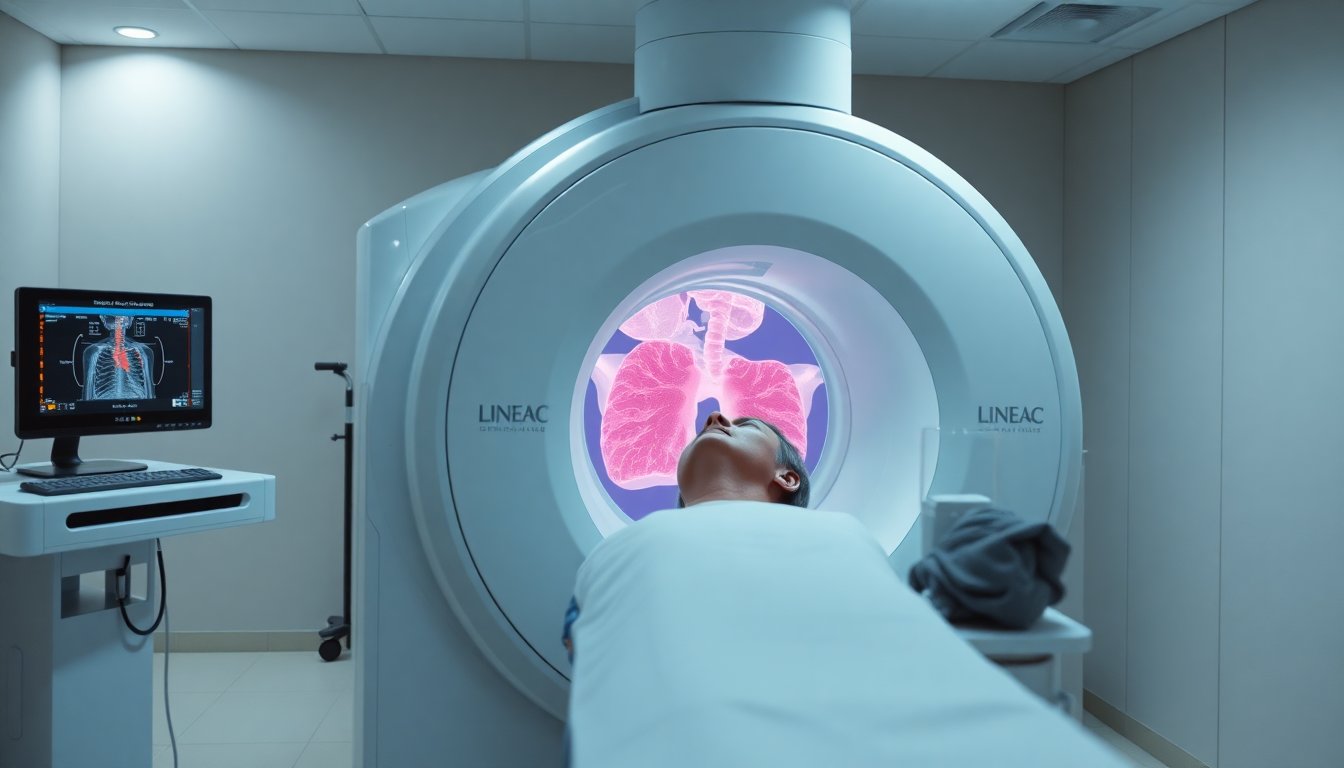
Heavy ion (Heavy Particle) beam therapy represents an evolutionary leap in radiation oncology. This therapy utilizes charged particles, such as carbon or neon ions, accelerated to over 70% of the speed of light using a medical synchrotron to deliver a precision strike against tumor lesions.
Two Core Advantages of Heavy Ion Beams
-
Physical Precision (Bragg Peak): Traditional X-rays are strongest upon entering the body's surface and gradually weaken as they penetrate. In contrast, heavy ion beams possess the "Bragg Peak" characteristic, allowing them to release a massive burst of energy exactly at the tumor's depth. This enables concentrated irradiation of the lesion while significantly minimizing damage to surrounding healthy tissue, as well as nerves and blood vessels behind the tumor.
-
Potent Biological Lethality: Standard radiation typically only damages a single strand of cancer cell DNA, often allowing the cell to repair itself. Due to their high energy levels, heavy ion beams cause complete double-strand breaks in cancer cell DNA, rendering them incapable of regeneration. Their biological effectiveness is 2 to 3 times greater than that of proton beams or X-rays.
QST Hospital: A Global Leader in Heavy Ion Therapy
QST Hospital (National Institutes for Quantum Science and Technology) houses the world's first dedicated heavy ion medical facility, "HIMAC."
- Extensive Experience: As of 2019, the hospital has completed over 15,000 actual treatments, the highest volume worldwide.
- Advanced Irradiation Technology: The facility features "Respiratory Gated Irradiation," "3D Beam Scanning," and "Rotating Gantry Irradiation" technologies, allowing patients to receive precise treatment in the most comfortable positions.
- Comprehensive Facilities: With 100 beds and a professional radiological medical team, the hospital ensures the safety and quality of care for international patients.
Applicable Conditions
Heavy ion therapy is particularly suitable for localized solid tumors:
- Head and neck tumors, including skull base tumors
- Lung cancer (specifically non-small cell lung cancer)
- Liver, pancreatic, and renal cancers
- Osteosarcoma and chondrosarcoma
- Prostate cancer
- Post-surgical recurrence of colorectal cancer
The Treatment Process
Each heavy ion treatment session lasts approximately 2 to 5 minutes and is performed once daily. Compared to traditional chemotherapy, it is minimally invasive with low physical strain. Some early-stage lesions may even be completed in just a few sessions.
[Medical Supporter Compliance Statement] Medical Supporter was formerly certified as a medical visa guarantor by Japan's Ministry of Foreign Affairs and the Ministry of Economy, Trade and Industry (B-066).
Considering medical care in Japan? Need information and support?
We help you organize the information needed for medical travel to Japan, liaise with Japanese medical institutions, and arrange a second-opinion consultation.The first consultation is free; an advisor will help you clarify the next steps.