
(Head and Neck Cancer) BNCT Boron Neutron Capture Therapy
Medical Supporter — Avis d’information
Cet article est une synthèse d’informations médicales internationales et ne constitue pas un avis médical ; il ne remplace pas le diagnostic ni le plan de traitement de votre médecin traitant. Les informations présentées sont compilées à partir de publications publiques et de déclarations officielles d’établissements médicaux japonais ; l’adéquation et les résultats de toute thérapie varient selon chaque patient et doivent être évalués individuellement par un médecin qualifié.
(Head and Neck Cancer) BNCT Boron Neutron Capture Therapy
- November 13, 2020
- Reading time: 1 minute
BNCT (Boron Neutron Capture Therapy) is a treatment method that utilizes the nuclear reaction between neutrons and boron to selectively destroy cancer cells while causing minimal damage to normal tissues. It is anticipated to be effective for primary cancers, solitary tumors, and cancers that have spread to various organs, as well as metastatic and refractory cancers. Furthermore, BNCT can be performed even after conventional radiation therapy. When used in combination with other therapeutic approaches, BNCT has the potential to further enhance treatment efficacy and is expected to be effective for recurrent cancers. Unlike surgery, BNCT does not involve extensive incisions, which is expected to significantly improve the patient's quality of life.
Irradiation Range (Treatment Range): In conventional radiotherapy, the irradiation range is determined based on the extent of tumor infiltration and surrounding normal tissues. In contrast, BNCT allows for a relatively broad irradiation range because normal cells within the range do not absorb boron and thus do not undergo nuclear fission reactions upon neutron irradiation, resulting in almost no damage to normal tissues.
Key Features of BNCT (Boron Neutron Capture Therapy)
- Reduced Damage to Normal Cells: Causes significantly less damage compared to standard radiotherapy.
- Applicable for Recurrence: Can be performed on patients who have experienced recurrence after conventional radiotherapy.
- Broad Efficacy: Anticipated to be effective for invasive, multiple, and radioresistant cancers.
- Short Treatment Course: Typically involves only 1 to 2 irradiation sessions, with each session lasting approximately 30 to 60 minutes.
- Predictable Efficacy: Treatment outcomes can be predicted through PET imaging.
Source: https://www.osaka-med.ac.jp/kbmc/bnct/about.html
- Found the Key to Pancreatic Cancer's High Aggressiveness!
- New Immune Enhancers Aid Cancer Immunotherapy
- Kyoto University Launches iPS Cell Cancer Treatment!
Medical Supporter Formerly certified by Japan's Ministry of Foreign Affairs and METI as an international medical visa guarantor (B-066).
Vous envisagez des soins au Japon ? Besoin d’informations et d’aide ?
Nous vous aidons à rassembler les informations nécessaires pour un déplacement médical au Japon, à contacter les établissements japonais et à organiser une consultation de second avis.La première consultation est gratuite ; un conseiller vous aide à clarifier les prochaines étapes.
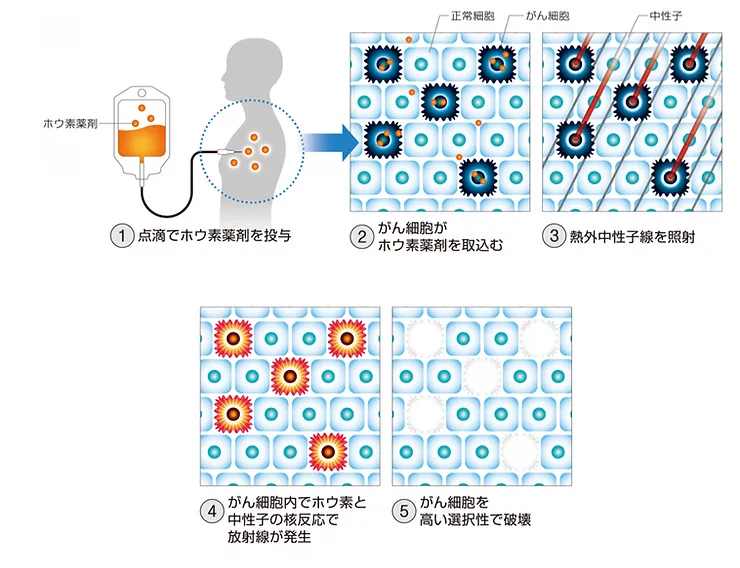 Figure 1
 Figure 2
 Figure 3
 Figure 4