
Efficacy of Adagrasib in KRAS G12C-Mutant Solid Tumors
Medical Supporter — Avis d’information
Cet article est une synthèse d’informations médicales internationales et ne constitue pas un avis médical ; il ne remplace pas le diagnostic ni le plan de traitement de votre médecin traitant. Les informations présentées sont compilées à partir de publications publiques et de déclarations officielles d’établissements médicaux japonais ; l’adéquation et les résultats de toute thérapie varient selon chaque patient et doivent être évalués individuellement par un médecin qualifié.
On January 19, 2022, Dr. Tanios S. Bekaii-Saab and colleagues from the Mayo Clinic published findings in the Journal of Clinical Oncology regarding the efficacy and safety of the KRAS inhibitor Adagrasib in patients with advanced solid tumors harboring the KRAS G12C mutation, as evaluated in the KRYSTAL-1 Phase 1/2 clinical trial.
The KRYSTAL-1 trial was a multi-center study evaluating Adagrasib (600 mg twice daily) in patients with KRAS G12C-mutant advanced solid tumors (N = 42). The cohort focused on gastrointestinal and other non-lung/colorectal malignancies. The primary endpoints were objective response rate (ORR), safety, and pharmacokinetics.
Patient Demographics: The median age of participants was 63.5 years (range: 21–89). The cohort was 52% female and 71% Caucasian. Most patients (71%) had an ECOG performance status of 1. The median number of prior systemic therapies was two (range: 1–7). Among the 30 patients with gastrointestinal cancers, the primary sites were:
- Pancreatic Cancer: 12 patients
- Biliary Tract Cancer: 8 patients
- Appendiceal Cancer: 5 patients
- Gastroesophageal Junction Adenocarcinoma: 2 patients
- Small Bowel Cancer: 2 patients
- Esophageal Cancer: 1 patient
Clinical Outcomes: In the evaluable population (N = 27):
- Objective Response Rate (ORR): 41% (11/27 patients achieving partial response).
- Disease Control Rate (DCR): 100% (27/27 patients).
Specifically for Pancreatic Cancer (N = 12, evaluable N = 10):
- ORR: 50% (5/10 patients).
- DCR: 100% (10/10 patients).
- Median Progression-Free Survival (PFS): 6.6 months. At the time of reporting, 50% of pancreatic cancer patients remained on treatment.
For other gastrointestinal cancers (N = 17 evaluable):
- ORR: 35% (6/17 patients).
- DCR: 100% (17/17 patients). Eleven patients remained on treatment.
Safety and Tolerability: Treatment-related adverse events (TRAEs) occurred in 91% of patients (38/42). The most common side effects included:
- Nausea: 48%
- Diarrhea: 43%
- Vomiting: 43%
- Fatigue: 29% Grade 3–4 TRAEs were reported in 21% of patients, with zero Grade 5 events.
Conclusion: According to the KRYSTAL-1 results, Dr. Bekaii-Saab concluded that Adagrasib demonstrated promising anti-tumor activity and a manageable safety profile in patients with KRAS G12C-mutant pancreatic and other gastrointestinal cancers. Clinical evaluation of Adagrasib in this patient population is ongoing.
Source: Journal of Clinical Oncology (ASCO Publications)
Medical Supporter was formerly certified as a medical visa guarantor by Japan's Ministry of Foreign Affairs and the Ministry of Economy, Trade and Industry (B-066).
Vous envisagez des soins au Japon ? Besoin d’informations et d’aide ?
Nous vous aidons à rassembler les informations nécessaires pour un déplacement médical au Japon, à contacter les établissements japonais et à organiser une consultation de second avis.La première consultation est gratuite ; un conseiller vous aide à clarifier les prochaines étapes.
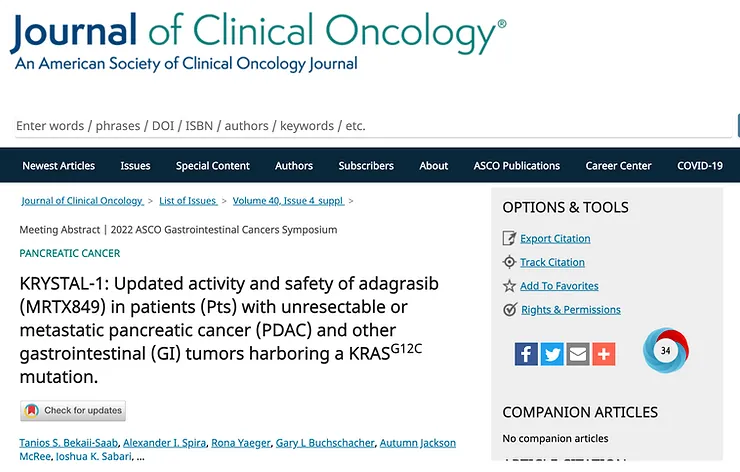 Figure 1
 Figure 2
 Figure 3
 Figure 4