
Cannabidiol in Palliative Cancer Care
Medical Supporter — Avis d’information
Cet article est une synthèse d’informations médicales internationales et ne constitue pas un avis médical ; il ne remplace pas le diagnostic ni le plan de traitement de votre médecin traitant. Les informations présentées sont compilées à partir de publications publiques et de déclarations officielles d’établissements médicaux japonais ; l’adéquation et les résultats de toute thérapie varient selon chaque patient et doivent être évalués individuellement par un médecin qualifié.
Cannabidiol in Palliative Cancer Care
- January 16, 2023
- Reading time: 1 minute
On November 21, 2022, Dr. Janet Hardy and colleagues from Mater Health Services published the results of a Phase 2b clinical trial in the Journal of Clinical Oncology, evaluating the efficacy of Cannabidiol (CBD) for symptom management in patients with advanced cancer receiving palliative care.
Study Design: The trial enrolled 144 patients with advanced cancer who required palliative intervention according to the Edmonton Symptom Assessment System (ESAS). Participants were randomized into two groups:
- Cannabidiol Group: Oral CBD (100 mg/mL once daily) (N=58).
- Placebo Group: Standard placebo (N=63).
Both groups received their respective treatments for 28 days. The primary endpoint was the change in the total symptom distress score. Secondary endpoints included quality of life indices and safety.
Clinical Outcomes: At 14 days following the baseline assessment, the primary endpoint (symptom distress score) showed a change of -3 in the Cannabidiol group and -6.2 in the Placebo group. No statistically significant difference was observed between the two groups. The proportion of patients who responded to treatment was 44.8% (26/58) in the Cannabidiol group and 58.7% (37/63) in the Placebo group, which also showed no significant clinical difference.
Safety Profile: Aside from dyspnea (shortness of breath), which was uniquely observed in the Cannabidiol group, there were no significant differences in the incidence of adverse events between the two arms.
Conclusion: Based on the results of this clinical trial, Dr. Janet Hardy and the research team concluded that Cannabidiol did not demonstrate a statistically significant clinical benefit over placebo in alleviating symptoms for patients with advanced cancer receiving palliative care.
Source: https://ascopubs.org/doi/abs/10.1200/JCO.22.01632
- Clinical Trial Medications
- (Lung Cancer) Phase II results for Topotecan and Topotecan + Berzosertib combination.
- (Lung Cancer) Efficacy of Enhertu in HER2-mutant non-small cell lung cancer (NSCLC).
- (Lung Cancer) Clinical outcomes of anti-B7-H3 antibody-drug conjugate DS-7300.
Medical Supporter was formerly certified as a medical visa guarantor by Japan's Ministry of Foreign Affairs and the Ministry of Economy, Trade and Industry (B-066).
Vous envisagez des soins au Japon ? Besoin d’informations et d’aide ?
Nous vous aidons à rassembler les informations nécessaires pour un déplacement médical au Japon, à contacter les établissements japonais et à organiser une consultation de second avis.La première consultation est gratuite ; un conseiller vous aide à clarifier les prochaines étapes.
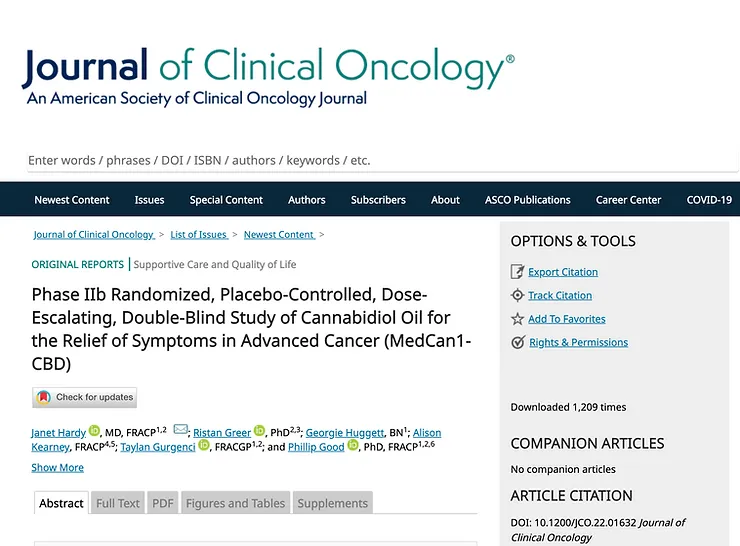 Figure 1
 Figure 2
 Figure 3
 Figure 4