
Atezolizumab ESMO 2016: OAK Trial Results in Non-Small Cell Lung Cancer
Medical Supporter — Informationshinweis
Dieser Artikel ist eine Zusammenfassung internationaler medizinischer Informationen und stellt keine medizinische Beratung dar; er ersetzt nicht die Diagnose oder den Behandlungsplan Ihres behandelnden Arztes. Die dargestellten Informationen stammen aus öffentlichen Veröffentlichungen und offiziellen Angaben führender japanischer medizinischer Einrichtungen; Eignung und Wirkung einer Therapie sind individuell und müssen von einem qualifizierten Arzt beurteilt werden.
At the European Society for Medical Oncology (ESMO) 2016 Congress, Dr. Fabrice Barlesi from Aix-Marseille University presented the groundbreaking results of the Phase 3 OAK trial. This study compared Atezolizumab (Tecentriq), an anti-PD-L1 antibody, with Docetaxel (standard chemotherapy) in patients with advanced or metastatic non-small cell lung cancer (NSCLC) who had previously received platinum-based chemotherapy.
Study Design: OAK Phase 3 Trial
The OAK trial enrolled 1,225 patients with metastatic NSCLC who had failed one or two prior lines of systemic therapy. Participants were randomized 1:1 to receive either:
- Atezolizumab: 1,200 mg intravenously every three weeks.
- Docetaxel: 75 mg/m² intravenously every three weeks.
The primary endpoint was overall survival (OS).
Key Survival Findings
With a median follow-up of 19 months, the trial achieved its primary goal:
- Median OS: 13.8 months for Atezolizumab vs. 9.6 months for Docetaxel—a survival benefit of approximately 4 months.
- 12-Month OS Rate: 55% (Atezolizumab) vs. 41% (Docetaxel).
- 18-Month OS Rate: 40% (Atezolizumab) vs. 27% (Docetaxel).
Impact of PD-L1 Expression
The benefit of Atezolizumab was observed regardless of PD-L1 expression levels:
- PD-L1 Negative (TC0/IC0): Median OS was 12.6 months for Atezolizumab vs. 8.9 months for Docetaxel.
- High PD-L1 Expression (TC3/IC3): Median OS significantly extended to 20.5 months with Atezolizumab vs. 8.9 months with Docetaxel.
Safety and Durability
Atezolizumab demonstrated a more favorable safety profile compared to Docetaxel. Adverse events reported in the Atezolizumab group included pneumonitis (1%), hepatitis (0.3%), and colitis (0.3%). Notably, 20.5% of patients in the Atezolizumab group remained on treatment for more than 12 months, indicating a durable response for many participants.
Conclusion
The OAK trial results established Atezolizumab as a potent second-line treatment option for NSCLC, offering superior survival and better tolerability than standard Docetaxel chemotherapy, independent of the patient's PD-L1 status.
#LungCancer #NSCLC #Atezolizumab #Tecentriq #ESMO2016 #OAKTrial #Immunotherapy
Behandlung in Japan im Blick? Brauchen Sie Informationen und Unterstützung?
Wir helfen Ihnen, die für eine medizinische Reise nach Japan nötigen Informationen zu ordnen, kontaktieren japanische Einrichtungen und organisieren eine Zweitmeinungsberatung.Die Erstberatung ist kostenlos; ein Berater hilft Ihnen, die nächsten Schritte zu klären.
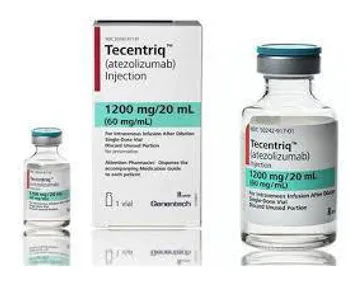 Figure 1
 Figure 2
 Figure 3
 Figure 4