medical-blog
Last updated: 2016-10-05

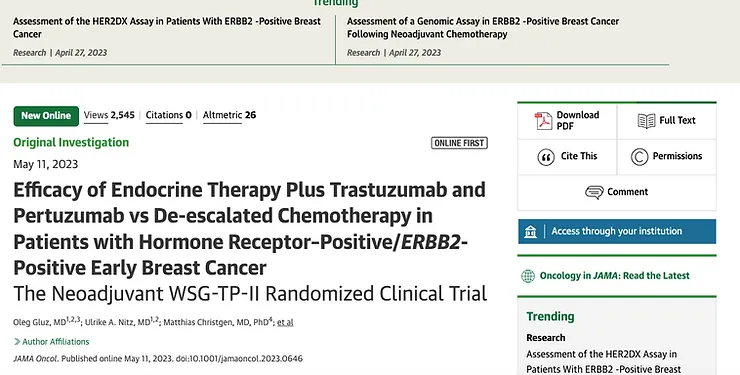
Preoperative Therapy in HR+/HER2+ Early Breast Cancer: WSG-TP-II Trial Results

S
Medical Supporter Team
Cross-border medical coordination and editorial review team
Preoperative Therapy in HR+/HER2+ Early Breast Cancer: WSG-TP-II Trial Results

Preoperative Therapy in HR+/HER2+ Early Breast Cancer: WSG-TP-II Trial Results

Medical Supporter — Information Notice

This article is a summary of international medical information and is not medical advice; it cannot replace the diagnosis or treatment plan of your attending physician. The medical technologies, drug information and clinical data presented here are compiled from public literature and official statements of major Japanese medical institutions; the applicability and outcome of any therapy vary with each patient and must be assessed individually by a qualified physician.

Any specific treatment plan must be assessed by a licensed physician in Japan

Medical Supporter — Information Notice

This article is a summary of international medical information and is not medical advice; it cannot replace the diagnosis or treatment plan of your attending physician. The medical technologies, drug information and clinical data presented here are compiled from public literature and official statements of major Japanese medical institutions; the applicability and outcome of any therapy vary with each patient and must be assessed individually by a qualified physician.

Any specific treatment plan must be assessed by a licensed physician in Japan

On May 11, 2023, Oleg Gluz and colleagues from the West German Study Group published the results of the WSG-TP-II clinical trial in JAMA Oncology. The study focused on patients with hormone receptor-positive (HR+) and HER2-positive early breast cancer, comparing two different neoadjuvant (pre-operative) treatment strategies.

Study Design: WSG-TP-II Trial

This prospective, randomized trial enrolled 207 patients who were randomized to receive:

  1. Chemotherapy Arm (N=107): Paclitaxel + Trastuzumab (Herceptin) + Pertuzumab (Perjeta).
  2. Endocrine Arm (N=100): Endocrine Therapy (ET) + Trastuzumab + Pertuzumab.

The primary endpoint was the pathological complete response (pCR) rate, defined as the disappearance of invasive cancer in the breast and lymph nodes at the time of surgery.

Key Efficacy Results

The chemotherapy-based regimen demonstrated significantly higher response rates:

  • pCR Rate (Chemotherapy Arm): 56.4%
  • pCR Rate (Endocrine Arm): 23.7%

The trial confirmed that the addition of chemotherapy (Paclitaxel) to dual HER2-targeted therapy resulted in a significantly higher likelihood of achieving pCR compared to an endocrine-based approach in this specific patient population.

Patient Characteristics

The median age of participants was 53 years. Approximately 58% of patients had tumors classified as cT2–cT4, and 28% had lymph node involvement (cN+).

Conclusion

The researchers concluded that for HR+/HER2+ early breast cancer patients, de-escalating neoadjuvant therapy to an endocrine-only approach (even with dual HER2 blockade) resulted in substantially lower pCR rates than the chemotherapy-containing regimen. These findings emphasize the continued importance of taxane-based chemotherapy in achieving optimal pathological responses in this setting.

Source: JAMA Oncology - WSG-TP-II Trial Results

#BreastCancer #HER2Positive #HRPositive #NeoadjuvantTherapy #Paclitaxel #Trastuzumab #Pertuzumab #CancerResearch

Considering medical care in Japan? Need information and support?

We help you organize the information needed for medical travel to Japan, liaise with Japanese medical institutions, and arrange a second-opinion consultation.The first consultation is free; an advisor will help you clarify the next steps.

Fukuoka HQ: +81-92-984-3200
Formerly officially certified, No. B-066

Figure 1Figure 1

Figure 2Figure 2

Figure 3Figure 3

Figure 4Figure 4

Related Cancer Information

Related Reading