
(Head and Neck Cancer) BNCT Boron Neutron Capture Therapy
Medical Supporter — Thông báo thông tin
Bài viết này là bản tổng hợp thông tin y tế quốc tế, không phải lời khuyên y tế và không thể thay thế chẩn đoán hay phác đồ điều trị của bác sĩ điều trị của bạn. Thông tin được biên soạn từ tài liệu công khai và công bố chính thức của các cơ sở y tế hàng đầu Nhật Bản; tính phù hợp và kết quả của mỗi liệu pháp khác nhau ở từng bệnh nhân và phải được bác sĩ có chuyên môn đánh giá riêng.
- November 13, 2020
- Reading time: 1 minute
BNCT (Boron Neutron Capture Therapy) is a treatment method that utilizes the nuclear reaction between neutrons and boron to selectively destroy cancer cells while causing minimal damage to normal tissues. It is anticipated to be effective for primary cancers, solitary tumors, and cancers that have spread to various organs, as well as metastatic and refractory cancers. Furthermore, BNCT can be performed even after conventional radiation therapy. When used in combination with other therapeutic approaches, BNCT has the potential to further enhance treatment efficacy and is expected to be effective for recurrent cancers. Unlike surgery, BNCT does not involve extensive incisions, which is expected to significantly improve the patient's quality of life.
Irradiation Range (Treatment Range): In conventional radiotherapy, the irradiation range is determined based on the extent of tumor infiltration and surrounding normal tissues. In contrast, BNCT allows for a relatively broad irradiation range because normal cells within the range do not absorb boron and thus do not undergo nuclear fission reactions upon neutron irradiation, resulting in almost no damage to normal tissues.
Key Features of BNCT (Boron Neutron Capture Therapy)
- Reduced Damage to Normal Cells: Causes significantly less damage compared to standard radiotherapy.
- Applicable for Recurrence: Can be performed on patients who have experienced recurrence after conventional radiotherapy.
- Broad Efficacy: Anticipated to be effective for invasive, multiple, and radioresistant cancers.
- Short Treatment Course: Typically involves only 1 to 2 irradiation sessions, with each session lasting approximately 30 to 60 minutes.
- Predictable Efficacy: Treatment outcomes can be predicted through PET imaging.
Source: https://www.osaka-med.ac.jp/kbmc/bnct/about.html
- Found the Key to Pancreatic Cancer's High Aggressiveness!
- New Immune Enhancers Aid Cancer Immunotherapy
- Kyoto University Launches iPS Cell Cancer Treatment!
Medical Supporter Formerly certified by Japan's Ministry of Foreign Affairs and METI as an international medical visa guarantor (B-066).
Đang cân nhắc sang Nhật Bản điều trị? Cần thông tin và hỗ trợ?
Chúng tôi giúp bạn sắp xếp thông tin cần thiết để sang Nhật điều trị, liên hệ các cơ sở y tế Nhật Bản và sắp xếp tư vấn ý kiến thứ hai.Buổi tư vấn đầu tiên miễn phí; chuyên viên sẽ giúp bạn làm rõ các bước tiếp theo.
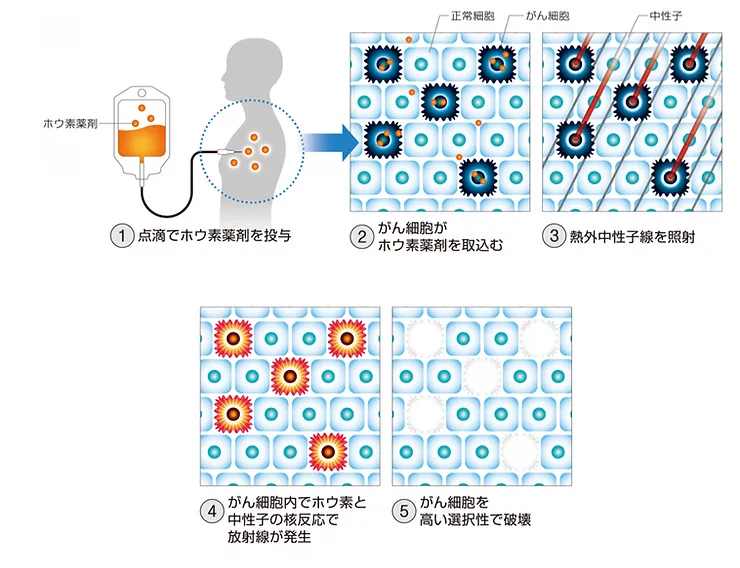 Figure 1
 Figure 2
 Figure 3
 Figure 4