
Understanding Clinical Trials: Phases, HLA Testing, and Immune Cell Therapy
Medical Supporter — Avis d’information
Cet article est une synthèse d’informations médicales internationales et ne constitue pas un avis médical ; il ne remplace pas le diagnostic ni le plan de traitement de votre médecin traitant. Les informations présentées sont compilées à partir de publications publiques et de déclarations officielles d’établissements médicaux japonais ; l’adéquation et les résultats de toute thérapie varient selon chaque patient et doivent être évalués individuellement par un médecin qualifié.
- January 5, 2016
- 4 min read
HLA Testing Before Immune Cell Therapy
Before initiating immune cell therapy, various physical measurements must be confirmed — particularly blood values. One key parameter is HLA (human leukocyte antigen), the human white blood cell antigen. HLA informs antigen-presenting cells or target cells so that T cell (specifically CTL) receptors can recognize HLA-peptide complexes. If HLA compatibility is insufficient, the patient's suitability for immune cell therapy is correspondingly lower, and the hospital will typically recommend alternative treatments.
Why Clinical Trials Are Conducted
Before a drug reaches the market, clinical trials are conducted to precisely characterize the drug's effects and potential harms in the human body. Drugs can be thought of as controlled poisons — used to kill abnormal cells, but it must be verified whether they also harm other organs or cells.
Development proceeds from theoretical proof of concept, to animal studies, and then to human clinical trials. In immune cell therapy products, key quality indicators include cell count, viability, endotoxin testing, sterility testing, characterization of processed cell properties, and physiological activity of cells and tissues.
Animal Studies and the 3Rs Principle
Animal studies currently follow the 3Rs principle: Reduce (minimize the number of animals), Refine (use pain management or imaging techniques to minimize suffering), and Replace (use computer simulations where possible). Laboratories conducting these studies must comply with GLP (Good Laboratory Practice) to maintain high-quality management processes.
Clinical Trial Phases
Phase 1
The focus is on safety and initial efficacy evaluation. Starting from low, safe doses and gradually escalating, researchers aim to identify the maximum tolerated dose in humans and the drug's maximum efficacy. Approximately 20–50 subjects are enrolled at this phase. Common evaluation methods include CRM (continual reassessment method) and ATD (accelerated titration design) statistical approaches. If the phase passes evaluation criteria, the trial proceeds to Phase 2.
Phase 2
Using tumor response as an indicator, Phase 2 trials often compare the investigational therapy against chemotherapy or radiotherapy, or use historical databases as comparators. Some Phase 2 trials — such as randomized Phase 2 trials conducted at institutions like Nagoya Medical Center — use an experimental group versus control group design, comparing outcomes between treated and untreated patients. Results are evaluated at a 5% significance level. Phase 2 also examines differences in drug behavior between healthy subjects and patients. The sample size is generally under 100.
Phase 3
By this stage, the drug's effects on the human body are somewhat understood. However, because the previous phases enrolled small numbers of subjects, Phase 3 involves large-scale evaluation of overall safety and efficacy. Eligibility criteria at this phase are considerably stricter, as the outcomes determine whether the drug will be approved for market — and a large number of volunteers is required.
In Phase 3, volunteers are randomized to experimental and control groups; control group participants receive a placebo without being informed. Key evaluation endpoints for unresectable tumors include overall survival (OS) and progression-free survival (PFS), as well as economic outcomes and patient convenience. Statistical methods commonly include Kaplan-Meier survival curves and Log-rank tests for between-group comparisons.
After Phase 3 Approval
Once Phase 3 is passed, the drug is approved for commercial use. However, since every patient's condition is different, significant adverse events or suboptimal efficacy may lead to post-market review.
Q: If a drug only benefits 1 in 10,000 patients, is it a good drug?
A: Once an effect is observed, researchers can compare responders and non-responders to narrow down predictive factors. In oncology, every trial volunteer is precious — each contributes to identifying effective cancer therapies. Medical Supporter always reminds inquiring patients that experimental therapies are by definition untested and the final verdict awaits outcome data. We provide information; the decision ultimately belongs to the patient after thorough research and consultation. One of the main benefits of clinical trial participation is reduced financial burden — what might otherwise cost 4–5 million yen becomes considerably more accessible. Finally, we remind everyone that in treating cancer, mindset adjustment is as important as the treatment itself. We wish all patients stable health and peace of mind.
Immunotherapy Related
-
Clinical Trial Medications
- (Lung Cancer) Phase II results for Topotecan and Topotecan + Berzosertib combination.
- (Lung Cancer) Efficacy of Enhertu in HER2-mutant non-small cell lung cancer (NSCLC).
- (Lung Cancer) Clinical outcomes of anti-B7-H3 antibody-drug conjugate DS-7300.
Medical Supporter was formerly certified as an international medical visa guarantor by Japan's Ministry of Foreign Affairs and the Ministry of Economy, Trade and Industry (B-066).
Vous envisagez des soins au Japon ? Besoin d’informations et d’aide ?
Nous vous aidons à rassembler les informations nécessaires pour un déplacement médical au Japon, à contacter les établissements japonais et à organiser une consultation de second avis.La première consultation est gratuite ; un conseiller vous aide à clarifier les prochaines étapes.
 Figure 1
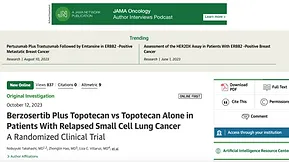 Figure 2
 Figure 3
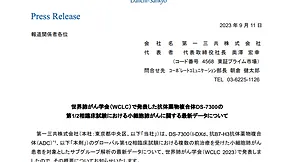 Figure 4