
(Head and Neck Cancer) Immune Cell Cancer Treatment Made from iPS Cells
Medical Supporter — Informationshinweis
Dieser Artikel ist eine Zusammenfassung internationaler medizinischer Informationen und stellt keine medizinische Beratung dar; er ersetzt nicht die Diagnose oder den Behandlungsplan Ihres behandelnden Arztes. Die dargestellten Informationen stammen aus öffentlichen Veröffentlichungen und offiziellen Angaben führender japanischer medizinischer Einrichtungen; Eignung und Wirkung einer Therapie sind individuell und müssen von einem qualifizierten Arzt beurteilt werden.
This is Japan's first cancer treatment using iPS cells. A research team from Chiba University and RIKEN began a clinical trial using artificial pluripotent stem cells (iPS cells) to produce immune cells and administer them to patients with head and neck cancer.
The immune cells in this case are "Natural Killer T cells (NKT)" made from iPS cells. In addition to attacking cancer, they also have the function of enhancing other immune cell activity. In the clinical trial, NKT cells are produced from healthy volunteer blood. This time, iPS cells are used to expand them in large quantities, then differentiated into NKT cells. The NKT cells are injected three times every two weeks into the artery near the tumor site.
According to Chiba University, on October 14, the first successful transplantation was performed on the first patient. After carefully monitoring the situation, the second and subsequent transplantations will be performed.
The 4 to 18 subjects in this clinical trial are patients who have received standard treatments such as surgery and anticancer drugs. The two-year clinical trial will confirm the safety and efficacy regarding side effects.
In clinical research conducted by Chiba University to date, increasing the number of a patient's own NKT cells and reinfusing them was effective in reducing head and neck cancer in some patients. However, NKT cells exist in only about 0.01% of human blood, and it is difficult for cancer patients to increase them to a sufficient amount — a single injection is the practical limit.
On the other hand, NKT cells made from iPS cells of healthy individuals are easier to increase in quantity, and it is said that large, stable quantities of NKT cells can be secured by using this approach.
However, there remain concerns about side effects caused by injecting cells derived from a third party, such as the risk of excessive inflammatory reactions. Therefore, Professor Motohashi, who leads the Chiba University research team, stated: "First and foremost, patient safety is our priority, and we intend to proceed carefully."
Head and neck cancer is a collective term for cancers occurring in areas such as the nose, mouth, throat, jaw, and ears, accounting for about 5% of all cancers. If safety and efficacy are confirmed in the clinical trial, the research team will also consider applying this to many other cancer patients, such as those with lung cancer.
Source: https://news.yahoo.co.jp/articles/b24f5364016541a291c955690cfc9e89765799c6
Medical Supporter was formerly certified as an international medical visa guarantor by Japan's Ministry of Foreign Affairs and the Ministry of Economy, Trade and Industry (B-066).
Behandlung in Japan im Blick? Brauchen Sie Informationen und Unterstützung?
Wir helfen Ihnen, die für eine medizinische Reise nach Japan nötigen Informationen zu ordnen, kontaktieren japanische Einrichtungen und organisieren eine Zweitmeinungsberatung.Die Erstberatung ist kostenlos; ein Berater hilft Ihnen, die nächsten Schritte zu klären.
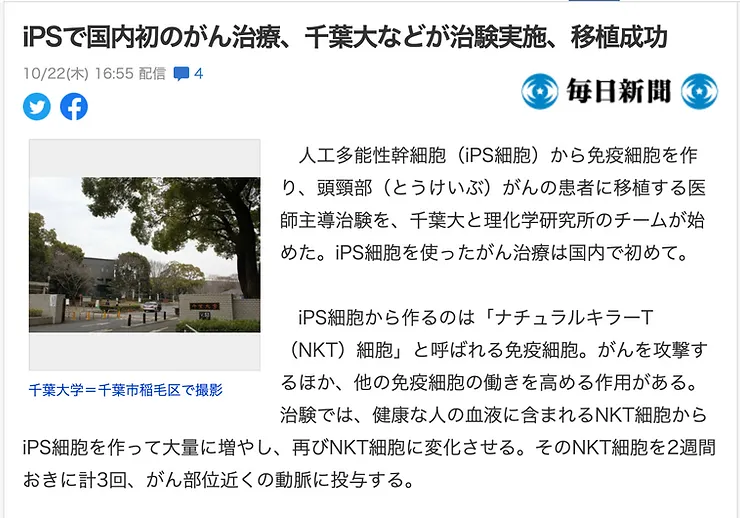 Figure 1
 Figure 2
 Figure 3
 Figure 4