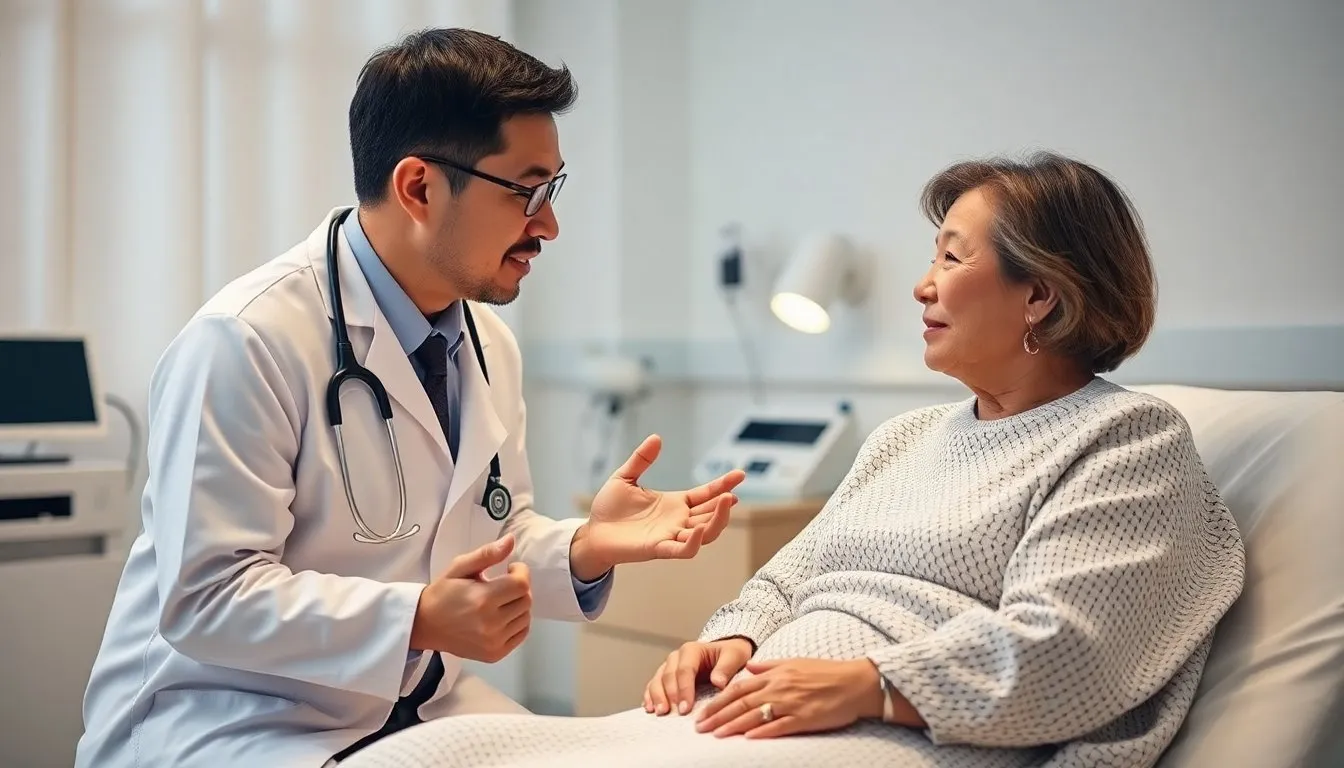
Experience Report from the 9/22 Seminar
Medical Supporter — Informationshinweis
Dieser Artikel ist eine Zusammenfassung internationaler medizinischer Informationen und stellt keine medizinische Beratung dar; er ersetzt nicht die Diagnose oder den Behandlungsplan Ihres behandelnden Arztes. Die dargestellten Informationen stammen aus öffentlichen Veröffentlichungen und offiziellen Angaben führender japanischer medizinischer Einrichtungen; Eignung und Wirkung einer Therapie sind individuell und müssen von einem qualifizierten Arzt beurteilt werden.
- September 29, 2016
- Read time: 2 minutes
This was the first seminar held in Taiwan. Before the start time, we were very worried about whether anyone would show up. After all, we had always been sharing information online. Meeting everyone face-to-face for the first time was quite nerve-wracking. We didn't know what questions would come up or whether we could answer them all. For the few days leading up to the seminar, we couldn't sleep, mainly because the slides we prepared aimed to convey everything we had learned and knew in an easy-to-understand way. Here is a brief introduction to what was covered in the slides.
The opening section began with a simple company introduction, the background and vision behind Medical Supporter — building a medical environment free of language barriers — followed by an update on the progress of the 891 project, our social responsibility activities including support for Taiwan tourism promotion and film festivals, and then moved into an introduction to immunotherapy: what kinds of cells attack cancer cells, starting from innate and adaptive immunity, the characteristics and functions of various immune cells, known common tumor antigens, challenges encountered in immune cell therapy, and proposed solutions. The main issue is that cancer cells adopt evasion mechanisms to avoid being attacked by CTLs.
Next we covered the history of immunotherapy in Japan. To make it easier to understand, we classified it by generation (not an official Japanese classification). We did not cover CAR-T and similar topics in this session, as Japan's CAR-T therapies are still in clinical trial stages and our understanding of this therapy is not deep enough to elaborate on.
We then discussed the treatment models and methods of immune cell therapy, divided into intravenous and subcutaneous injections, with a general protocol of two-week intervals between treatments. Of course, some use weekly injections; daily intensive treatments have not been heard of. We shared some insights from reading literature over the past year and a half about possible situations encountered during treatment and how to address them.
Finally, we entered the "stop, look, and listen" phase of Japanese immunotherapy. We wanted to convey the problems we've encountered and how we've resolved them over these days. We began with a brief overview of Japan's regenerative medicine landscape and the information we've gathered about this therapy. Currently in Japan, immune cell therapy falls under non-covered (self-pay) medical treatment. Some medical institutions charge higher fees for foreigners, others do not. We introduced how to find out what therapies are available and how to apply. To help ease the financial burden, we introduced free local resources available in Japan. After all, this is a long battle, and Medical Supporter hopes to help as many people as possible. Finally, we recommended what documents to prepare and what to carry if traveling to Japan for treatment.
Medical Supporter has gone through a lot of twists and challenges over the past year and a half. We have been supported by many kind and caring people, which is why we are still here serving you today. "Taking from society and giving back to society" is our consistent philosophy. We won't claim to do much, but doing it is what matters — and we welcome everyone to join us.
Slide download
#MedicalSupporter
- Medical Supporter Work Notes
Medical Supporter was formerly certified as an international medical visa guarantor by Japan's Ministry of Foreign Affairs and the Ministry of Economy, Trade and Industry (B-066).
Behandlung in Japan im Blick? Brauchen Sie Informationen und Unterstützung?
Wir helfen Ihnen, die für eine medizinische Reise nach Japan nötigen Informationen zu ordnen, kontaktieren japanische Einrichtungen und organisieren eine Zweitmeinungsberatung.Die Erstberatung ist kostenlos; ein Berater hilft Ihnen, die nächsten Schritte zu klären.
 Figure 1
 Figure 2
 Figure 3
 Figure 4