
(Electric Field Therapy) A Brand New Weapon to Stop Cancer Metastasis?
Medical Supporter — Informationshinweis
Dieser Artikel ist eine Zusammenfassung internationaler medizinischer Informationen und stellt keine medizinische Beratung dar; er ersetzt nicht die Diagnose oder den Behandlungsplan Ihres behandelnden Arztes. Die dargestellten Informationen stammen aus öffentlichen Veröffentlichungen und offiziellen Angaben führender japanischer medizinischer Einrichtungen; Eignung und Wirkung einer Therapie sind individuell und müssen von einem qualifizierten Arzt beurteilt werden.
- March 12, 2020
- Read time: 3 minutes
This research demonstrates that low-intensity electromagnetic fields can inhibit the formation of actin-rich filopodia and impede breast cancer cell proliferation by suppressing EGFR (epidermal growth factor receptor) activation. The study was published in Communications Biology, a sub-journal of the internationally renowned journal Nature.
Research found that metastatic triple-negative breast cancer cells, unresponsive to hormone therapy or targeted treatments for commonly expressed breast cancer genes, are most sensitive to electromagnetic fields. Cancer cells appear to sense the presence and source of electromagnetic fields.
Principles of Electric Field Therapy
Cancer cells are a group of rapidly dividing cells. During cell division, specialized tubulin proteins are required. These proteins form "ropes" during division, connecting to genetic material and pulling it from one cell into two. If problems arise in these protein rope-forming steps, cell division is disrupted, often leading to cell death. Interestingly, these proteins carry large amounts of electrical charge. Therefore, applying an appropriate electric field may disrupt the function of these proteins in rapidly dividing cancer cells, producing anti-cancer effects.
Based on this initial principle, scientists began continuously searching for appropriate electric fields capable of stimulating these cells. By adjusting the frequency and intensity of the electric field, they aimed to find fields effective only against cancer cells without affecting other cells — this is the key to the entire research.
Under sustained electric field exposure, the growth and spread rate of lung cancer cells significantly decreased, indicating that these malignant tumor cells were controlled. Conversely, endothelial cells in the same environment were unaffected. Without an electric field, tumor cells proliferated and spread within two days. These results demonstrate the effectiveness of electric fields in controlling tumor growth.
There are currently many scientists researching electric field therapy. Encouragingly, two electric field treatment devices based on electric field principles are already on the market internationally: one is TTF (brand name: Optune), approved by the FDA; the other is ECCT, developed in Japan. Both therapies are currently approved for clinical treatment.
The effectiveness of ECCT in treating breast cancer depends on the body's ability to absorb and eliminate dead cells. The body's capacity to absorb dead cells depends on the size of the mass or nodule rather than the extent of tumor metastasis.
When an appropriate-intensity electric field is applied to the tumor site, the electric field can destroy and break down cancer cells within a relatively short time. Depending on tumor size, this takes approximately a few days to a few weeks. ECCT can eliminate cancer masses of several centimeters within a few weeks.
Important Indicator: Bodily Excretions
ECCT treatment primarily works through the body's immune system function. After cancer cells undergo apoptosis, they are absorbed by the body and excreted through sweat, urine, feces, or other means. Bodily excretions serve as the simplest and fastest indicators to observe the treatment process and progress. A few days after treatment begins, the following bodily excretions should be noted:
- Sweat: Noticeably stronger odor
- Urine: Noticeably stronger odor and color change
- Feces: Black in color with noticeably stronger odor
- Frequent gas/bloating
*Note: Immune system problems may prevent a response from occurring.
How Can Cancer Patients Use Electric Field Therapy?
Treatment devices are customized for each patient based on their specific condition and tumor location. The intensity settings of the electric field also vary by patient. Patients do not need to visit a hospital for treatment — they can receive treatment at home. CT or MRI examinations are performed once every 1 to 3 months to monitor the condition while adjusting the electric field.
Electric field therapy technology was developed by Professor Warsito P. Taruno and the CTech Laboratory team at Edwards Technology Co. (IDN Patent No. REGP00201200092, 2012).
Those interested in learning more about electric field therapy, please contact us through the links below. A dedicated specialist will serve you to ensure you receive the latest information as quickly as possible.
- Electric Field Therapy (ECCT)
Medical Supporter was formerly certified as an international medical visa guarantor by Japan's Ministry of Foreign Affairs and the Ministry of Economy, Trade and Industry (B-066).
Behandlung in Japan im Blick? Brauchen Sie Informationen und Unterstützung?
Wir helfen Ihnen, die für eine medizinische Reise nach Japan nötigen Informationen zu ordnen, kontaktieren japanische Einrichtungen und organisieren eine Zweitmeinungsberatung.Die Erstberatung ist kostenlos; ein Berater hilft Ihnen, die nächsten Schritte zu klären.
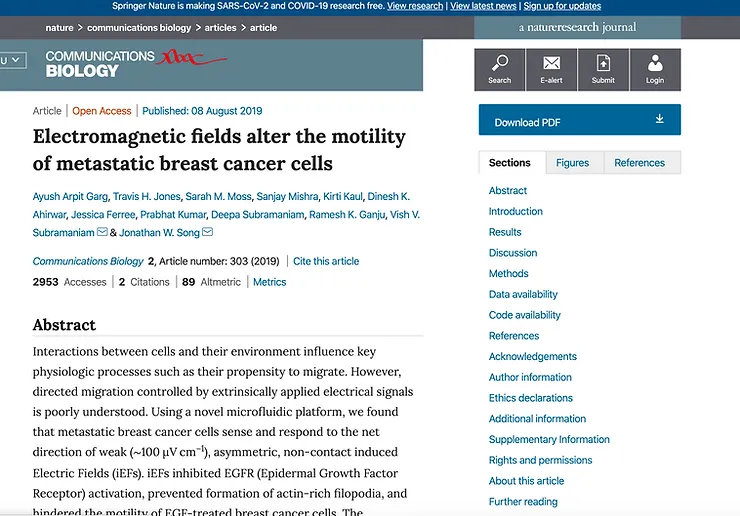 Figure 1
 Figure 2
 Figure 3
 Figure 4
 Figure 5
 Figure 6