(Lymphoma) Efficacy of Rituximab as Maintenance Therapy?
Medical Supporter — Information Notice
This article is a summary of international medical information and is not medical advice; it cannot replace the diagnosis or treatment plan of your attending physician. The medical technologies, drug information and clinical data presented here are compiled from public literature and official statements of major Japanese medical institutions; the applicability and outcome of any therapy vary with each patient and must be assessed individually by a qualified physician.
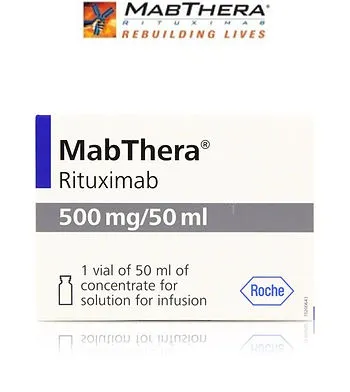
On July 24, 2019, Emmanuel Bachy published in the medical journal Journal of Clinical Oncology the nine-year long-term follow-up efficacy and safety results of the PRIMA Phase III trial evaluating rituximab maintenance therapy after induction treatment with anti-CD20 monoclonal antibody rituximab + chemotherapy in patients with previously untreated follicular lymphoma.
The PRIMA trial was an international multicenter Phase III clinical trial. After induction treatment with rituximab + chemotherapy in previously untreated follicular lymphoma patients, responding patients (N=1,018) were randomly assigned to: rituximab maintenance (N=505) or observation (follow-up; N=513). Primary endpoint: PFS; secondary endpoints: OS, objective response rate.
The trial background: Follicular lymphoma accounts for 25% of non-Hodgkin lymphoma and 70% of indolent lymphoma. Rituximab + chemotherapy during induction showed favorable PFS in prior clinical trials. This led to the initiation of a trial to verify the efficacy of continuing rituximab as maintenance therapy after induction in previously untreated follicular lymphoma.
Patient Characteristics:
Median age — Rituximab group: 55 years (22–84); Observation group: 57 years (26–79)
Gender — Rituximab group: 51.2% male; Observation: 53.5% male
B symptoms — Rituximab group: 30.4%; Observation: 31.7%
Follicular Lymphoma International Prognostic Index (FLIPI) — Rituximab group: low risk 21.4%, intermediate risk 36.5%, high risk 42.1%; Observation: low risk 21.0%, intermediate risk 36.2%, high risk 42.6%
Induction chemotherapy type — Rituximab group: CHOP 75.2%, CVP 22.0%, FCM 2.7%; Observation: CHOP 75.6%, CVP 21.6%, FCM 2.8%
Results after 9-year follow-up: Primary endpoint median PFS: Rituximab group 10.5 years vs. observation group 4.1 years — the rituximab group showed a 39% reduction in disease progression risk, a significant improvement (HR 0.61).
Secondary endpoint 10-year OS: both groups approximately 80%, with no significant difference in death risk between groups (HR 1.04).
Regarding safety: adverse event rates — Rituximab group 56.9% / Observation 38.2%. Grade 3 or higher adverse events: Rituximab group 24.4% / Observation 16.9%. Serious adverse events: Rituximab group 21.2% / Observation 13.4%.
Based on the PRIMA 9-year follow-up analysis, Emmanuel Bachy concluded: In previously untreated follicular lymphoma patients, rituximab maintenance therapy after induction with rituximab + chemotherapy significantly improved PFS. However, no improvement in OS was observed.
Source: Sustained Progression-Free Survival Benefit of Rituximab Maintenance in Patients With Follicular Lymphoma: Long-Term Results of the PRIMA Study (J Clin Oncol. 2019 Jul 24:JCO1901073. doi: 10.1200/JCO.19.01073.)
Medical Supporter was formerly certified as an international medical visa guarantor by Japan's Ministry of Foreign Affairs and the Ministry of Economy, Trade and Industry (B-066).
Considering medical care in Japan? Need information and support?
We help you organize the information needed for medical travel to Japan, liaise with Japanese medical institutions, and arrange a second-opinion consultation.The first consultation is free; an advisor will help you clarify the next steps.
Figure 1
Figure 2
Figure 3
Figure 4