
(乳癌)賀癌寧+截瘤達有效?
(乳癌)賀癌寧+截瘤達有效?
Medical Supporter 資訊聲明
本文為國際醫療資訊整理,非醫療建議,無法取代主治醫師之診斷與治療方針。本站所載之醫療技術、藥物資訊與臨床數據,均編譯自日本各大醫療機關之公開文獻與官方說明;各項療法之適用性與成效受患者個人體質、病期與醫師診斷而異,須由合格醫師個別評估。
日本前外務省醫療簽證保證機關B-66號 日本福岡縣旅行サービス手配業第35號 日本管理醫療機器販賣・租賃業
日本前外務省醫療簽證保證機關B-66號 日本福岡縣旅行サービス手配業第35號 日本管理醫療機器販賣・租賃業
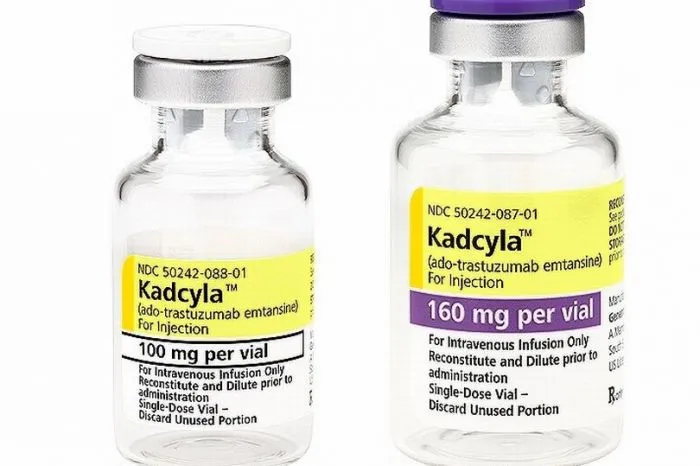
2020年6月25日、Javier Cortés在醫學雜誌『JAMA Oncology』上發表了『曾有治療經歷的HER2陽性、轉移性乳癌患者,使用賀癌寧+截瘤達,在第1/2期臨床試驗的有效性及安全性檢證結果。』
本次第1/2期臨床試驗將曾有治療經歷的HER2陽性、轉移性乳癌患者(N=161人)分成下列兩組,第1期臨床試驗的主要評價項目為藥物的最高耐受劑量,第2期臨床試驗的主要評價項目為客觀反應率。
1.賀癌寧單劑療法組(三週為一個療程,賀癌寧3.6mg/kg,N=81人)。
2.賀癌寧併用療法組(三週為一個療程,賀癌寧3.6mg/kg+第1~14天每日兩次截瘤達(650mg/m2,700mg/m2,750mg/m2,N=80人))
曾有治療經歷的HER2陽性、轉移性乳癌患者現階段的標準治療是使用賀癌寧進行治療,但是患者的預後不良因此有必要開發新的治療選擇,本次臨床試驗的目的在於驗證曾有治療經歷的HER2陽性、轉移性乳癌患者,使用賀癌寧+截瘤達的有效性。
第2期臨床試驗的主要評價項目客觀反應率分別為:賀癌寧併用療法組44%(N=36/81人)/賀癌寧單劑療法組36%(N=29/80人)。
在安全性方面,整體副作用的發生率分別為:賀癌寧併用療法組95%/賀癌寧單劑療法組88%,等級3~4的副作用發生率分別為:賀癌寧併用療法組44%/賀癌寧單劑療法組41%,兩組皆未確認到等級5的副作用。
根據第1/2期臨床試驗的結果,Javier Cortés對此發表了以下結論:曾有治療經歷的HER2陽性、轉移性乳癌患者,使用賀癌寧+截瘤達,與賀癌寧單劑療法相比,客觀反應率並沒有明顯的改善。
【注意事項】“醫療助手”所翻譯在海外進行的臨床試驗數據以及醫藥資訊,並非鼓吹諮詢臨床試驗以及各項新藥的使用。另外翻譯資料僅供各位參考,並非用藥準則,請和醫護人員討論以及正確內容以文章下方原文為主。
資料來源:Efficacy and Safety of Trastuzumab Emtansine Plus Capecitabine vs Trastuzumab Emtansine Alone in Patients With Previously Treated ERBB2 (HER2)-Positive Metastatic Breast Cancer: A Phase 1 and Randomized Phase 2 Trial(JAMA Oncol. 2020 Jun 25;e201796. doi: 10.1001/jamaoncol.2020.1796.)
Efficacy and Safety of Trastuzumab Emtansine Plus Capecitabine vs Trastuzumab Emtansine Alone in Patients With Previously Treated ERBB2 (HER2)-Positive Metastatic Breast Cancer: A Phase 1 and Randomized Phase 2 Trial(JAMA Oncol. 2020 Jun 25;e201796. doi: 10.1001/jamaoncol.2020.1796.)
Copyright© 2015 新義豊株式会社 All rights reserved.
本網站使用 Cookie,以便了解您是如何與其互動。接受即表示您同意我們使用 Cookie。隱私政策
 圖片 1
圖片 1
 圖片 2
圖片 2
 圖片 3
圖片 3
 圖片 4
圖片 4