blog
Last updated: 2018-01-30

(Melanoma) Efficacy of Epacadostat + Keytruda?

S
Medical Supporter Team
Cross-border medical coordination and editorial review team
(Melanoma) Efficacy of Epacadostat + Keytruda?

(Melanoma) Efficacy of Epacadostat + Keytruda?

Medical Supporter — Information Notice

This article is a summary of international medical information and is not medical advice; it cannot replace the diagnosis or treatment plan of your attending physician. The medical technologies, drug information and clinical data presented here are compiled from public literature and official statements of major Japanese medical institutions; the applicability and outcome of any therapy vary with each patient and must be assessed individually by a qualified physician.

Any specific treatment plan must be assessed by a licensed physician in Japan
  • August 10, 2019
  • Reading time: 2 minutes

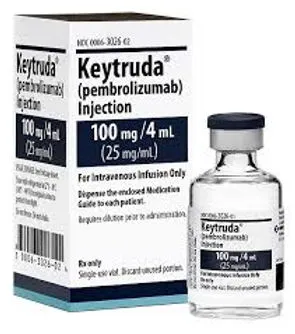
On June 17, 2019, Georgina V. Long published results in The Lancet Oncology from the ECHO-301/KEYNOTE-252 Phase III clinical trial comparing the oral IDO1 inhibitor epacadostat plus the anti-PD-1 antibody Keytruda (pembrolizumab) versus placebo plus Keytruda in patients with unresectable or metastatic malignant melanoma.

The ECHO-301/KEYNOTE-252 trial enrolled patients with unresectable or metastatic malignant melanoma (N=706) at multiple international sites in a 1:1 placebo-controlled randomized Phase III design.

  • Epacadostat combination arm: epacadostat 200 mg twice daily + Keytruda 200 mg every 3 weeks (N=354)
  • Placebo combination arm: placebo + Keytruda 200 mg every 3 weeks (N=352)

This trial was initiated following evidence that immune checkpoint inhibitors have meaningful activity in melanoma, and based on Phase 1/2 ECHO-202/KEYNOTE-037 data showing favorable antitumor activity of epacadostat + Keytruda in melanoma patients.

Results at a median follow-up of 12.4 months:

Progression-Free Survival (Primary Endpoint): Median PFS was 4.7 months in the epacadostat arm versus 4.9 months in the placebo arm. There was no significant difference in progression risk between the two arms (hazard ratio 1.00).

Overall Survival (Primary Endpoint): Median OS was not reached in either arm. There was no significant difference in survival risk between the two arms (hazard ratio 1.13).

Safety: Grade ≥3 adverse events occurred in 4% (N=14) of the epacadostat arm versus 3% (N=11) in the placebo arm. Serious adverse events occurred in 10% (N=37) of the epacadostat arm versus 9% (N=32) in the placebo arm. No patients died due to treatment-related adverse events.

Based on the ECHO-301/KEYNOTE-252 trial results, Georgina V. Long and colleagues concluded that epacadostat plus Keytruda did not significantly prolong progression-free survival compared with placebo plus Keytruda in patients with unresectable or metastatic melanoma. These results clearly demonstrate that IDO1 inhibition does not enhance the efficacy of anti-PD-1 therapy.

Source: Epacadostat plus pembrolizumab versus placebo plus pembrolizumab in patients with unresectable or metastatic melanoma (ECHO-301/KEYNOTE-252): a phase 3, randomised, double-blind study (Lancet Oncol. 2019 Jun 17. pii: S1470-2045(19)30274-8. doi: 10.1016/S1470-2045(19)30274-8.)

#Melanoma

  • Clinical trial drugs

Medical Supporter was formerly certified as an international medical visa guarantor by Japan's Ministry of Foreign Affairs and the Ministry of Economy, Trade and Industry (B-066).

Considering medical care in Japan? Need information and support?

We help you organize the information needed for medical travel to Japan, liaise with Japanese medical institutions, and arrange a second-opinion consultation.The first consultation is free; an advisor will help you clarify the next steps.

Fukuoka HQ: +81-92-984-3200
Formerly officially certified, No. B-066

Figure 1Figure 1

Figure 2Figure 2

Figure 3Figure 3

Figure 4Figure 4

Related Cancer Information

Related Reading