
(Liver Cancer, Lung Cancer) Investigating Why PD-1 Inhibitors Fail
Medical Supporter — إشعار معلوماتي
هذه المقالة ملخص لمعلومات طبية دولية وليست نصيحة طبية، ولا يمكن أن تحل محل تشخيص طبيبك المعالج أو خطة العلاج. المعلومات المعروضة مجمّعة من منشورات عامة وبيانات رسمية لكبرى المؤسسات الطبية اليابانية؛ وتختلف ملاءمة ونتائج أي علاج من مريض لآخر ويجب أن يقيّمها طبيب مؤهل لكل حالة على حدة.
Why Do PD-1 Inhibitors Sometimes Fail?
- November 12, 2019
- Reading time: 2 minutes
Some tumor infiltrates cannot be recognized by immune cells and show no response to PD-1 targeted therapy. This was discovered by Dr. Arthur G. James at Ohio State University's Cancer Center (OSUCCC-James) and his research team.
T cells are immune cells that detect abnormal cells and pathogens in the body. PD-1 is an immune checkpoint protein located on T cells — essentially a switch that prevents T cells from attacking other cells. PD-1 inhibitors are monoclonal antibody agents that selectively inhibit this protein, enabling the immune system to attack cancer cells that would otherwise evade immune responses.
According to the reported data, the reason some cancer patients do not respond to PD-1 therapy is that CD8 T cells in the tumor microenvironment (known as CD8 T cells) are unable to function properly. This state is referred to as a "Cold Tumor."
In this new research, Dr. Yiping Yang and team published data on the specific cellular mechanism suppressing CD8 T cell infiltration in the tumor microenvironment. CD8 T cell infiltration and tumor-associated macrophage-secreted chemokines are involved. Blocking Hedgehog signaling can reverse this process and promote CD8 T cell infiltration in the tumor microenvironment.
"Our data, based on preclinical models of liver and lung cancers, showed that combining a Hedgehog signaling inhibitor with a PD-1 inhibitor resulted in stronger tumor-killing activity compared to either agent alone," suggesting a potential method to enhance PD-1 therapy.
Dr. Yang's team published this research in the Journal of Clinical Investigation. The study was based on preclinical models of liver cancer and lung cancer. The OSUCCC-James team under Dr. Yang aims to translate important laboratory findings into clinical applications for cancer patients. The team is currently planning a Phase 1 trial combining PD-1 inhibitors and Hedgehog signaling inhibitors.
Tags: #PD1 #CD8 #LiverCancer #LungCancer
- Immunotherapy
- Clinical trial drug
Medical Supporter was formerly certified as an international medical visa guarantor by Japan's Ministry of Foreign Affairs and the Ministry of Economy, Trade and Industry (B-066).
هل تفكر في تلقّي العلاج في اليابان؟ هل تحتاج إلى معلومات ومساعدة؟
نساعدك في تنظيم المعلومات اللازمة للسفر الطبي إلى اليابان، والتواصل مع المؤسسات الطبية اليابانية، وترتيب استشارة رأي ثانٍ.الاستشارة الأولى مجانية؛ سيساعدك المستشار على توضيح الخطوات التالية.
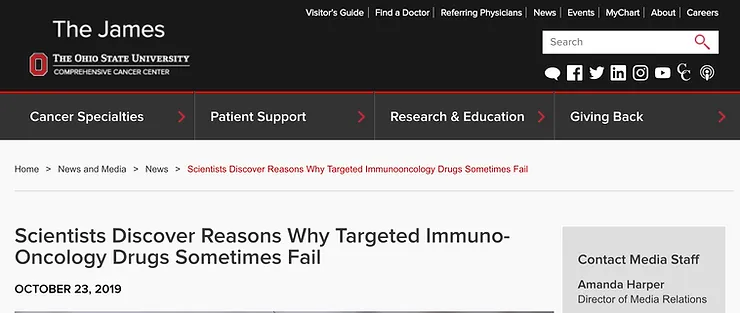 Figure 1
 Figure 2
 Figure 3
 Figure 4